
Auto Apply to Jobs with AI? Why It Now Backfires (2026)
Thinking of using AI to auto apply to jobs? Greenhouse, LinkedIn, Lever and Workday now flag mass-applied candidates. Here's the data — and what works instead.
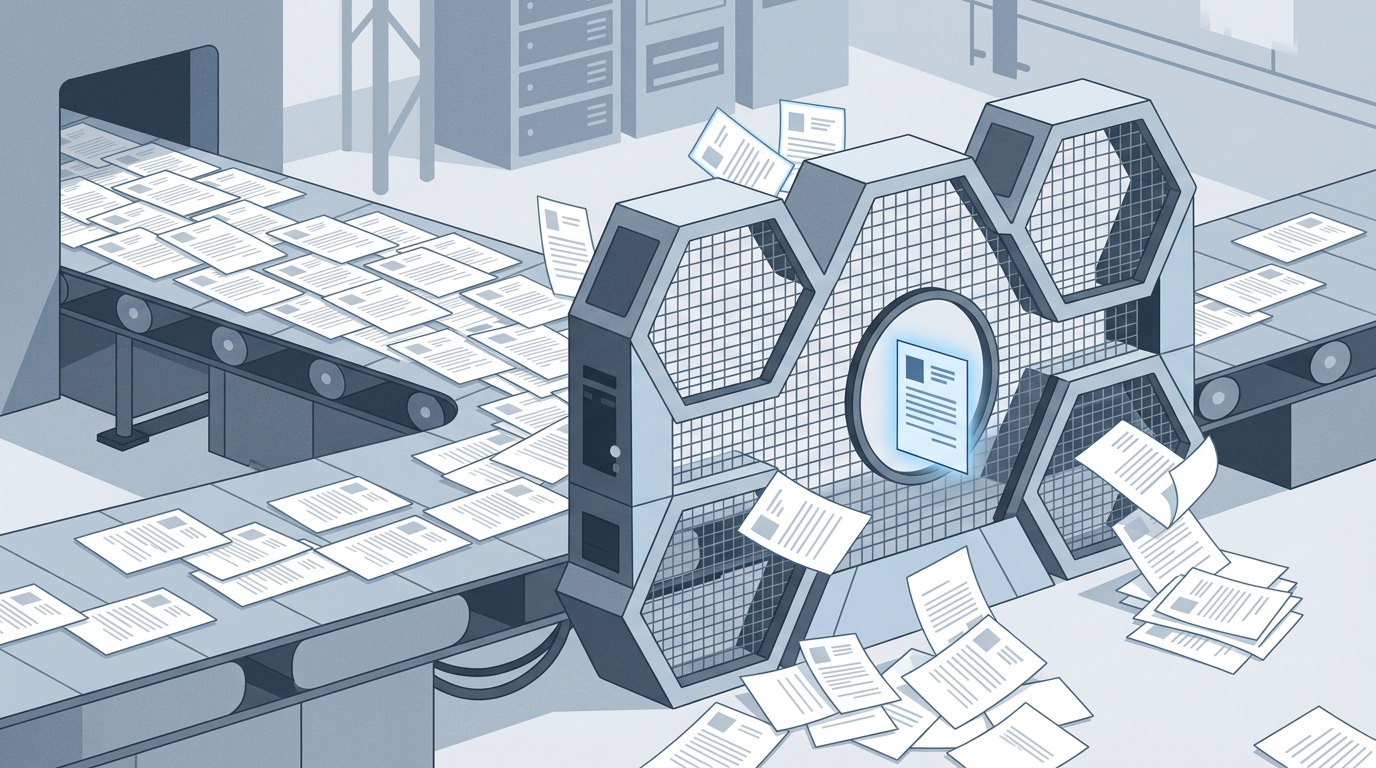
AI tools that auto apply to jobs promise to fire off hundreds of applications while you sleep. In 2026, that promise quietly inverted: the major applicant tracking systems now detect mass-applied candidates and filter them out before a recruiter ever sees them. If you're considering an auto-apply subscription, the money isn't the real cost — the real cost is applying to your best-fit jobs through a channel that employers are actively learning to ignore.
This isn't speculation. Greenhouse shipped a fraud-detection product. LinkedIn bans automated applying outright and now warns off unqualified applicants. Workday and Ashby put AI screeners between the flood and the recruiter, and Lever now scores every application for bot-like behavior. Below is exactly what each of them rolled out — and what the data says actually gets interviews.
The flood that triggered the crackdown
Job applications didn't grow because more people are job hunting. They grew because the same people, armed with AI, now apply to 10x more jobs in the same hour.
22%
of applicants now use bots to auto-apply; 28% submit content that trips fraud flags
source: HeroHuntRecruiters didn't get 4x more time to read applications. So the software they use grew an immune system.
First: every application you send goes through an ATS
When you hit "apply" — on a company careers page, through a job board, anywhere — your application almost never lands in a human inbox. It lands in an applicant tracking system (ATS): the software platform a company uses to collect, parse, screen and rank every application for a role. Greenhouse, Workday, Lever, Ashby and iCIMS are the names you'll meet most often; the majority of mid-size and enterprise employers run one of them.
Where your application actually goes
You apply
careers page, job board, Easy Apply
The ATS
parses your resume, screens it, scores it, flags spam
The recruiter
sees a ranked, filtered shortlist — not the pile
That middle box is why the ATS matters more than the job board you applied on: it decides what the recruiter sees and in what order — and increasingly, what the recruiter never sees. Auto-apply tools submit into that box at volume; the 2026 story is that the box started fighting back. (If you've never looked at how these systems read a resume, our ATS-friendly resume guide covers the parsing side.)
What each ATS and platform now does about it
This is the part most auto-apply marketing pages won't tell you. Every major system between you and a recruiter shipped a countermeasure, most of them in the last twelve months.
| Platform | Defense shipped | What it does to auto-applied candidates |
|---|---|---|
|
| Real Talent — bot & mass-application detection, spam blocklists (IP + email domain), identity verification with CLEAR (selfie + government ID) | Flags "unusual or risky application patterns" before a recruiter opens them; unverified or pattern-flagged applications get deprioritized or blocked |
|
| Automation ban (User Agreement §8.2) with documented permanent account bans, Easy Apply rate limits, and new warnings telling under-qualified applicants they're likely not a fit | Bot-driven accounts get restricted or banned outright; high-volume low-fit applying now costs you the account you job-hunt with |
|
| HiredScore AI grading + Illuminate recruiter agents — AI ranks every applicant against the role before humans look | Generic, untailored applications score low and sink; GM cut screening time 70% with the recruiter agent — the time saved is time not spent on weak matches |
|
| AI-Assisted Application Review — evaluates every applicant against recruiter-defined criteria, with cited evidence | A resume that doesn't concretely evidence the job's criteria gets marked as such — at flood volume, "maybe" reads as "no" |
|
| Fraud Signals — email validity, virtual phone numbers, bot-like application behavior, and consistency checks on employment history | In Lever's own one-week pilot it flagged 30 of 121 applicants as suspicious; flags surface to the recruiter rather than auto-rejecting — your application arrives pre-labeled |
| HR Employers themselves 2025–2026 | Deliberate friction: custom written questions, assessments, verification steps — added specifically because bots can't do them well | Auto-apply tools either skip these postings or botch the answers; recruiters use the friction as the filter |
Greenhouse went as far as citing a Department of Justice case in which hundreds of US companies were targeted by fraudulent applicants. When an ATS vendor's flagship 2026 launch is an anti-fraud product, the era of consequence-free mass applying is over.
And it's no longer just the ATS vendors. A specialist detection layer now plugs into them: Endorsed evaluates 400+ identity and fraud signals per applicant and integrates with 26 ATSs — Workday, Greenhouse, Lever and Ashby included — with Korn Ferry among its customers; Crosschq ApplicantX flags burst application activity and pattern anomalies in real time — mass-application behavior, by name, is on the detection list. These vendors sell cross-employer networks: the application pattern you create at one company is increasingly visible to the next.
Not all tools that auto-apply to jobs are the same
To be fair to the category: two very different products get called "auto-apply," and the distinction decides whether the crackdown applies to you.
Generally fine
Assistants — you still press submit
Tools that speed up the work around applying while you make the calls. Autofill extensions fill forms you chose to open; job-workflow tools like CVJet's surface matching jobs and tailor your resume honestly for each one — but every application is reviewed and submitted by you. Recruiters have no quarrel with either; they remove typing, not judgment.
What the defenses target
Fire-and-forget mass appliers
Services that select jobs and submit for you at volume — "apply to 1,000+ jobs while you sleep" is the actual sales pitch of tools like LoopCV, JobCopilot, LazyApply and AIApply's auto-apply mode. These produce exactly the patterns Real Talent, Lever's Fraud Signals and LinkedIn's systems are built to catch.
The tools in the second column aren't scams — they do submit the applications they promise. The problem is what happens after submission, on infrastructure they don't control and that is now optimized against them.
The math was broken before the crackdown
Here's the part that matters even if no ATS ever flagged you: mass applying already lost on the numbers.
Huntr analyzed 1.39 million tracked applications (Q2 2025) and found tailored applications more than double your interview rate:
Interview rate per application · 1.39M applications (Huntr, 2025)
A 115% difference — before any 2026 anti-bot filtering is applied on top. Source: jobstrack.io's analysis of Huntr data.
Run the numbers on a typical auto-apply subscription: 500 generic applications at 2.68% is ~13 interviews' worth of probability — spread across jobs a bot picked, under a SHRM-reported 68% rate of hiring managers using automated filters, with your name now attached to spam-pattern signals in systems that remember. Two hundred tailored applications beats it on interviews alone, and every one of them lands as a real candidate.
The uncomfortable truth: auto-apply tools optimize the metric that was never the bottleneck. Applications were always cheap. Interviews come from fit and evidence — the two things a fire-and-forget bot cannot manufacture.
So what's the best you can do to get a job in 2026?
Not zero volume — tailored volume, run as a daily system instead of a bot. Three moves cover it:
Know exactly how ATS read you — before you apply anywhere
Run your resume through a free ATS check first. It shows the parsed output — the exact artifact HiredScore grades and Ashby's review evaluates — plus how your profile fits the market you're applying into. A resume that parses badly is a generic resume no matter how good it reads to humans.
Run a job workflow system — not a bot
A workflow system gives you what auto-apply tools promise — efficient, high-volume applying — without the spam pattern: a live job feed sorted newest-first (fresh postings get read before the pile forms), one-click tailoring per posting, and tracking for every application you send. Ten real applications a day, ten minutes at a time, every one submitted by you on the employer's own page.
Tailor honestly — highlight what's true, fabricate nothing
Real tailoring reorders and rephrases your actual experience to match what the posting asks for — it never invents skills you don't have. That distinction now has teeth: misrepresentation is exactly what Real Talent-class systems are built to detect. Honest tailoring is both the ethical move and the one that survives verification.
That's the entire play: be the applicant the 2026 filters are designed to surface, not the pattern they're designed to catch.
FAQ: AI Auto-Apply Tools
Q: Does auto applying to jobs actually work? A: It works at submitting — the tools do send the applications they promise. It underperforms at the part that matters: auto-applied, untailored applications convert at roughly half the interview rate of targeted ones, and that's before the detection systems above deprioritize them. Volume helps; automated volume through flagged channels doesn't.
Q: Does LinkedIn Easy Apply count as auto-apply? A: No — Easy Apply is a shorter form, submitted by you, one job at a time. What LinkedIn bans is automation driving Easy Apply (bots clicking it at volume). Used manually on well-fitting roles, it's legitimate — though a tailored resume still decides what happens after the click.
Q: Does this mean I shouldn't use AI to tailor my resume? A: No — tailoring is still exactly what recruiters expect, and none of these systems penalize it. The defenses in the table target behavior (bot submissions, burst volume, fake contact details) and fabrication (skills you don't have, work history that doesn't check out — what Lever's consistency checks and Real Talent's verification catch). AI tailoring done genuinely — reordering and rephrasing your real experience to match each posting, submitted by you — sits on the right side of both lines. It's not just tolerated; against AI screeners that grade every resume for role fit, it's the thing that gets you past them.
Q: Can an ATS actually tell my application came from an auto-apply tool? A: Increasingly, yes. Greenhouse Real Talent flags mass-application patterns, IPs and email domains; LinkedIn detects automation behavior directly. No system reads your mind — they read patterns, and 400 identical applications in a week is a pattern.
Q: Will using an auto-apply tool get me blacklisted everywhere? A: There's no industry-wide blacklist yet — but specialist vendors like Endorsed and Crosschq are building proprietary cross-employer fraud networks, so the direction of travel is toward patterns following you. Today the realistic risks are per-platform (a banned LinkedIn account, a flagged profile at a company you actually wanted) and statistical — your applications quietly scoring below the review line. That's worse than a visible rejection, because you never learn why.
Q: How many jobs should I apply to per day? A: The data favors 10–15 genuinely tailored applications per weekday over any amount of generic volume. That's ~100 applications in two weeks at a 5%+ interview rate instead of 2.7% — double the interviews with a fraction of the spend.
The takeaway
- The application flood (+412% since 2023) forced every major hiring platform to build defenses, and they shipped them: Real Talent, LinkedIn bans and warnings, HiredScore grading, criteria-based AI review.
- Fire-and-forget auto-apply tools now feed your applications into systems explicitly designed to discount them. Autofill helpers you control remain fine.
- Tailored applications ran 5.75% vs 2.68% interview rates across 1.39M tracked applications — quality-at-volume was already winning before the crackdown made it mandatory.
Ready to run the workflow the filters reward? CVJet gives you a live job feed, one-click tailored resumes, and a free ATS view of every version — ten real applications a day, no bots involved. Try it free →
Free ATS check
How do ATS rank your resume?
Drop it here and find out — the free scan shows exactly what the parser sees.
Drop your resume here
PDF or DOCX · 60 seconds · no sign-up

Founder of CVJet. Previously at Spotify, The New York Times, and Anchor FM. 14+ years building products used by millions.
Ready to build a better resume?
CVJet uses AI to tailor your resume for every job application. Upload once, generate unlimited tailored versions.
Try CVJet FreeRelated Articles
Are ATS Resume Checkers Worth It? (Honest Review)
ATS resume checkers promise higher scores, but do they work? Honest review of top tools, their limitations, and what actually gets you past ATS.
How AI Is Changing the Job Search in 2026 (And How to Use It)
AI resume builders are reshaping hiring. Learn how AI is changing job search in 2026 and how to use an AI resume builder to land more interviews.