
More resume templates
Browse all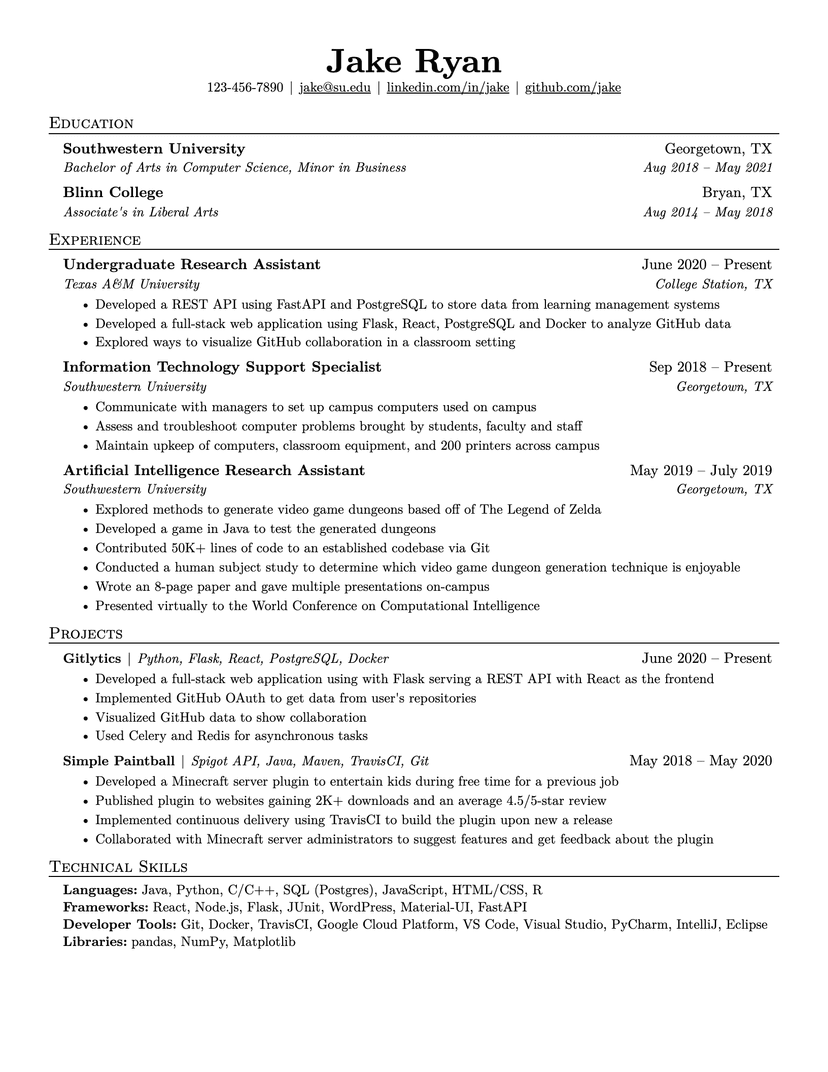
Jake's Resume
dense · serif
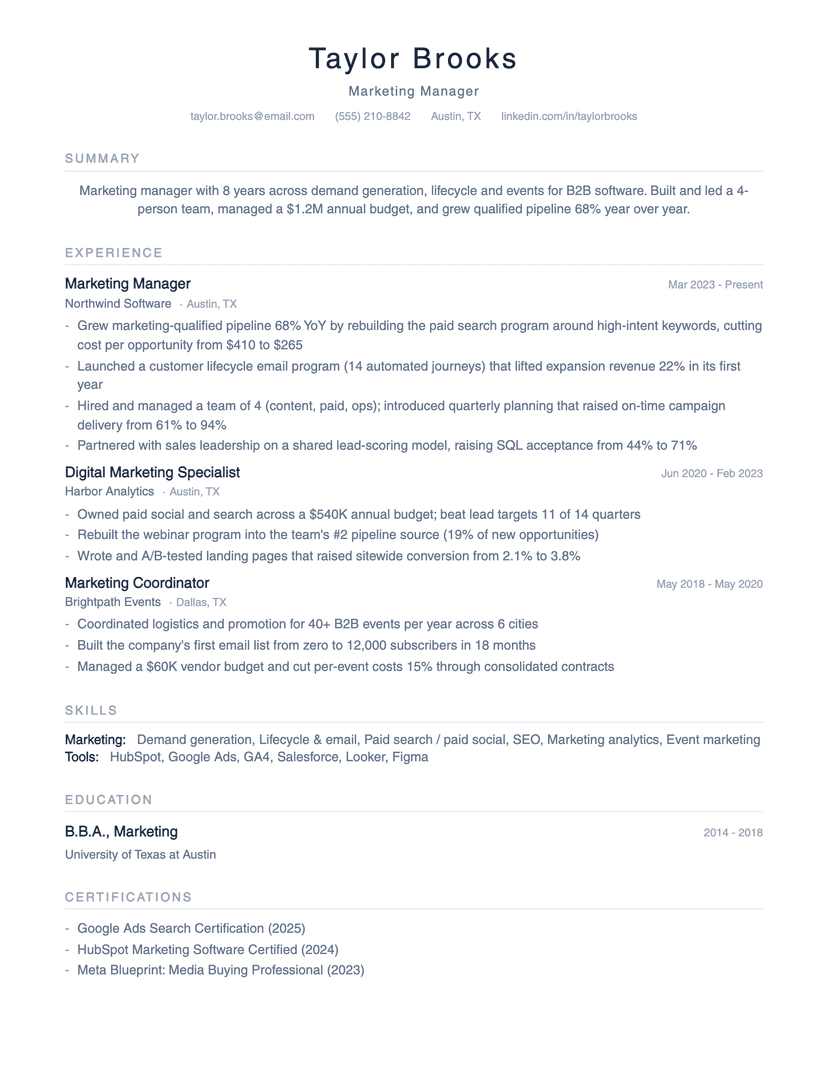
Minimalist
minimalist · whitespace
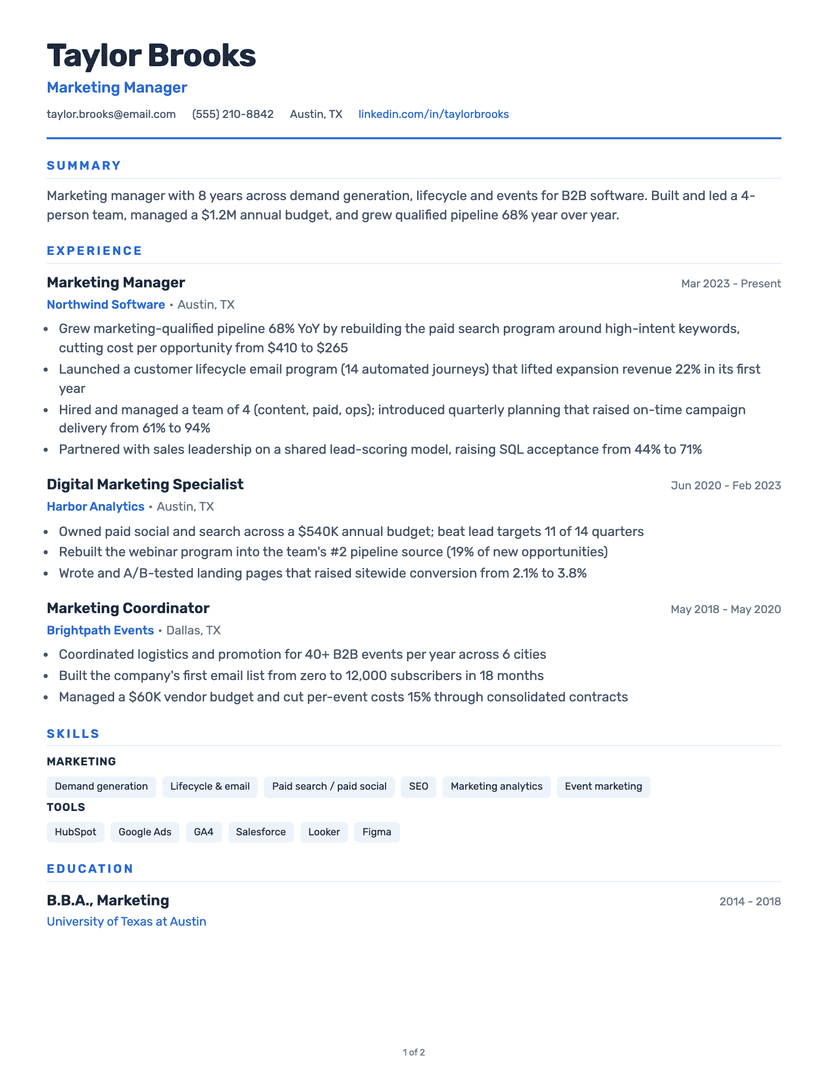
Classic
clean · traditional
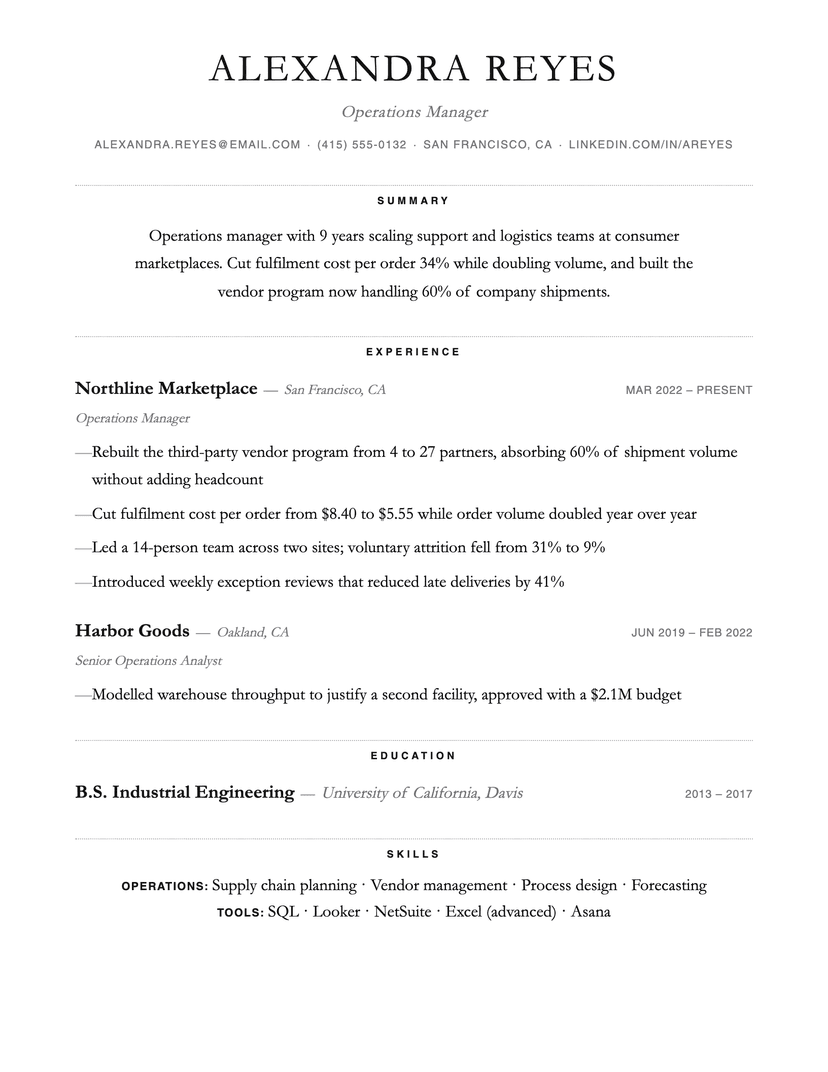
Dotted
minimal · centered
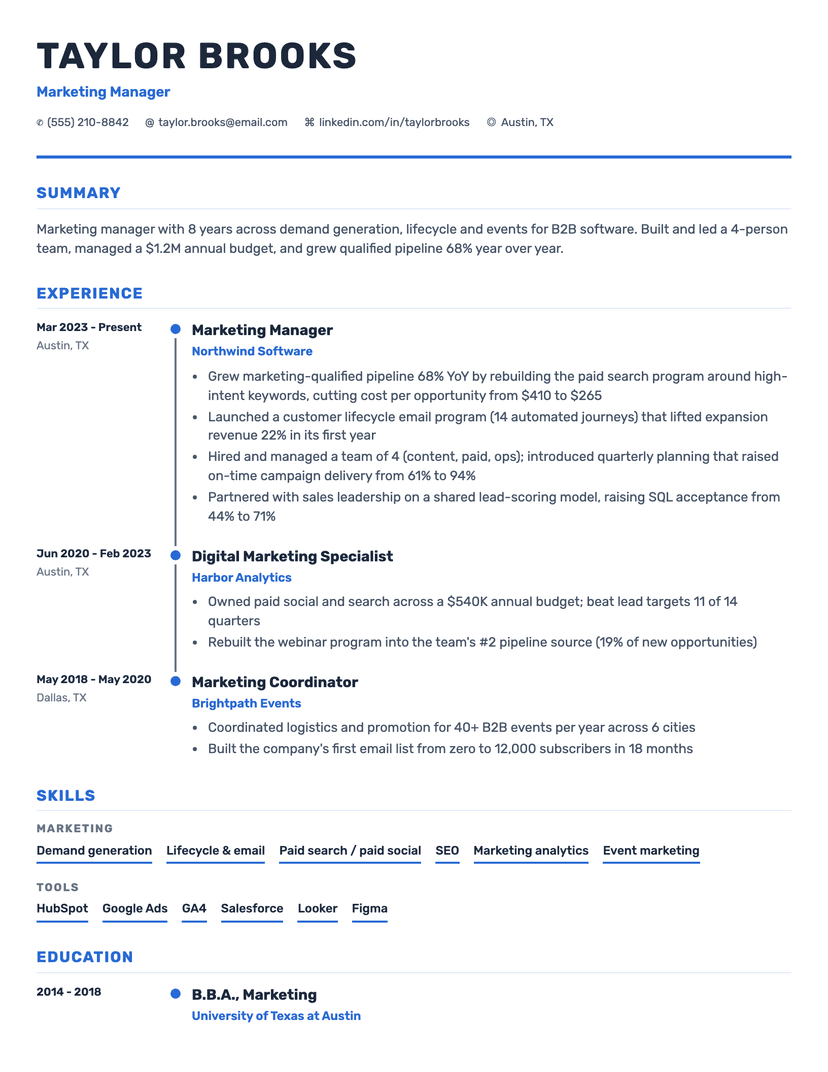
Timeline
timeline · visual
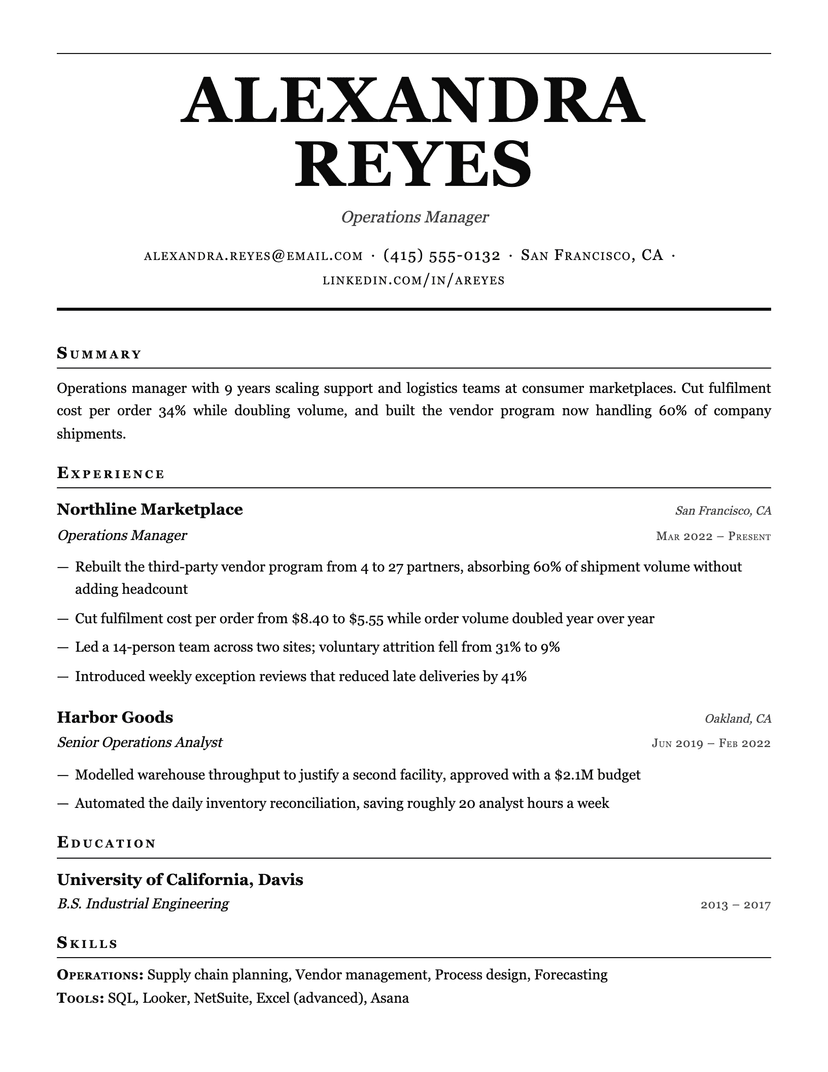
Broadsheet
serif · traditional
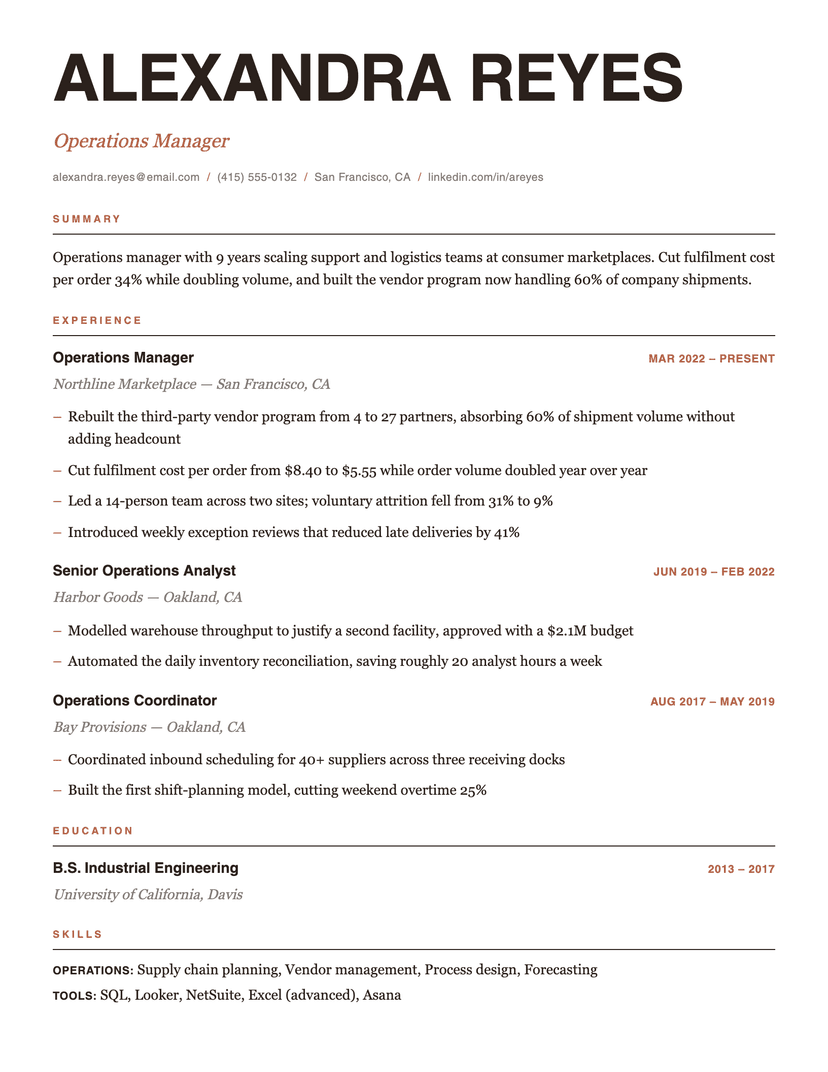
Editorial
modern · editorial
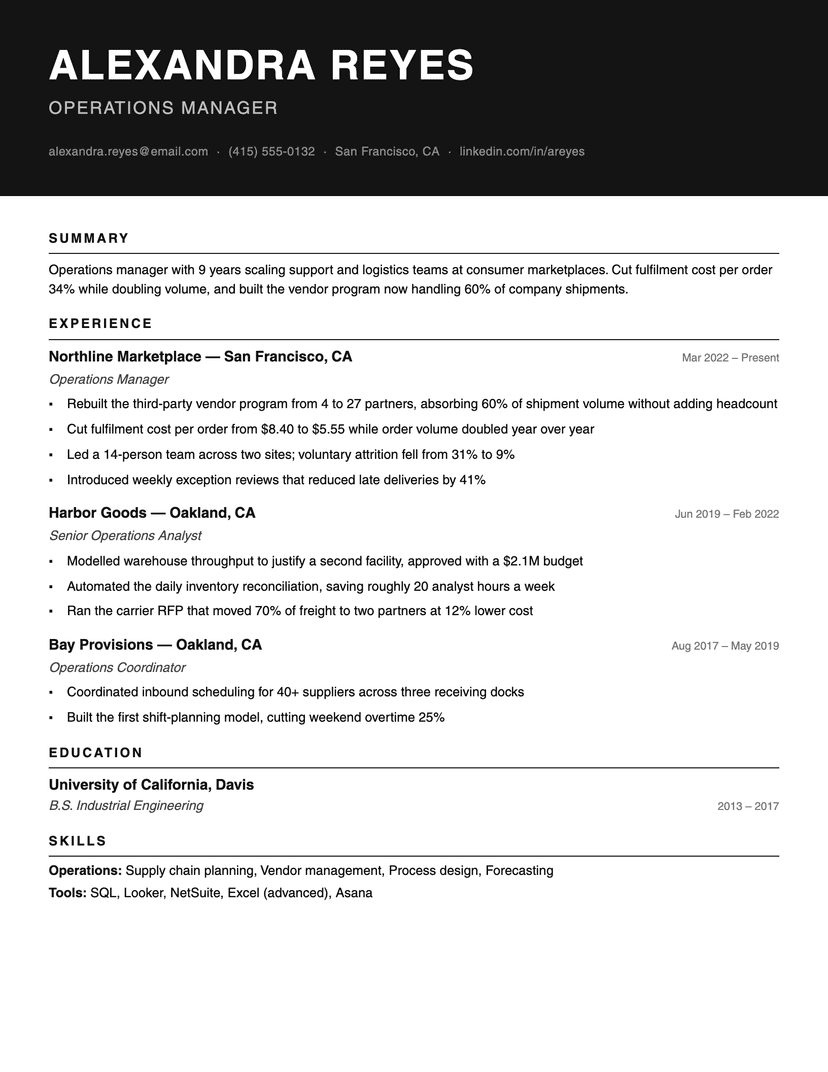
Ink Block
bold · monochrome
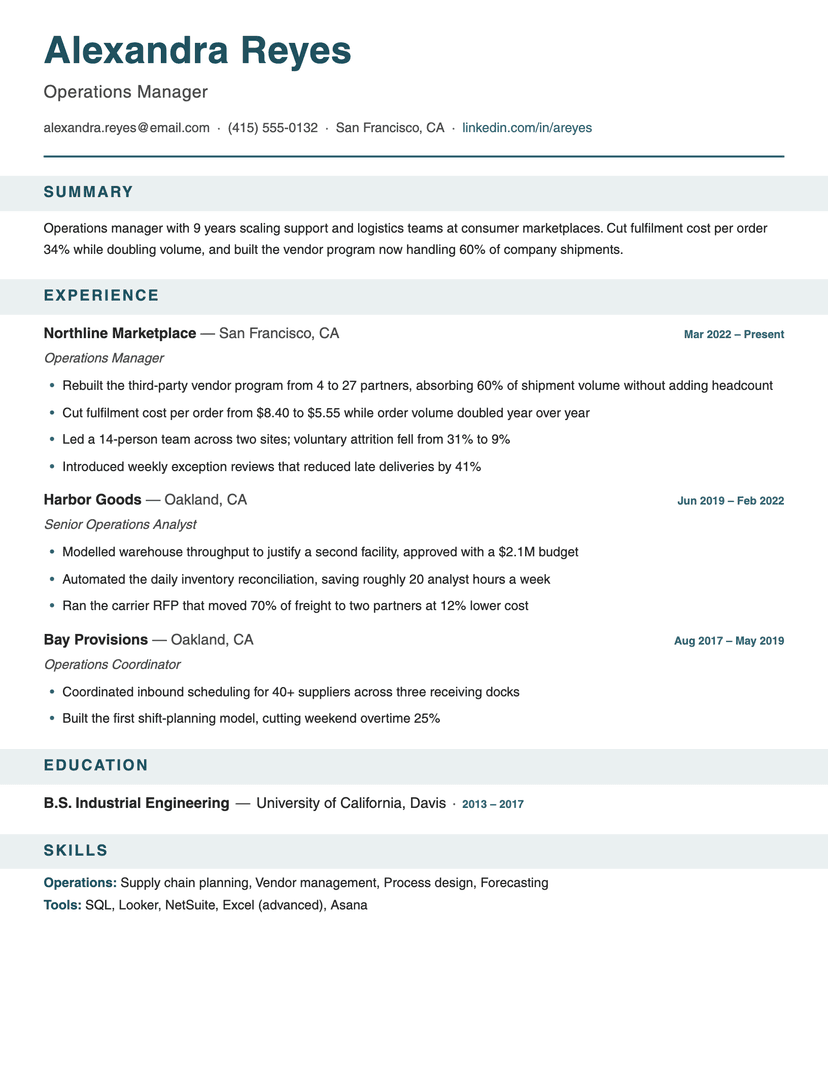
Banner
bold · structured
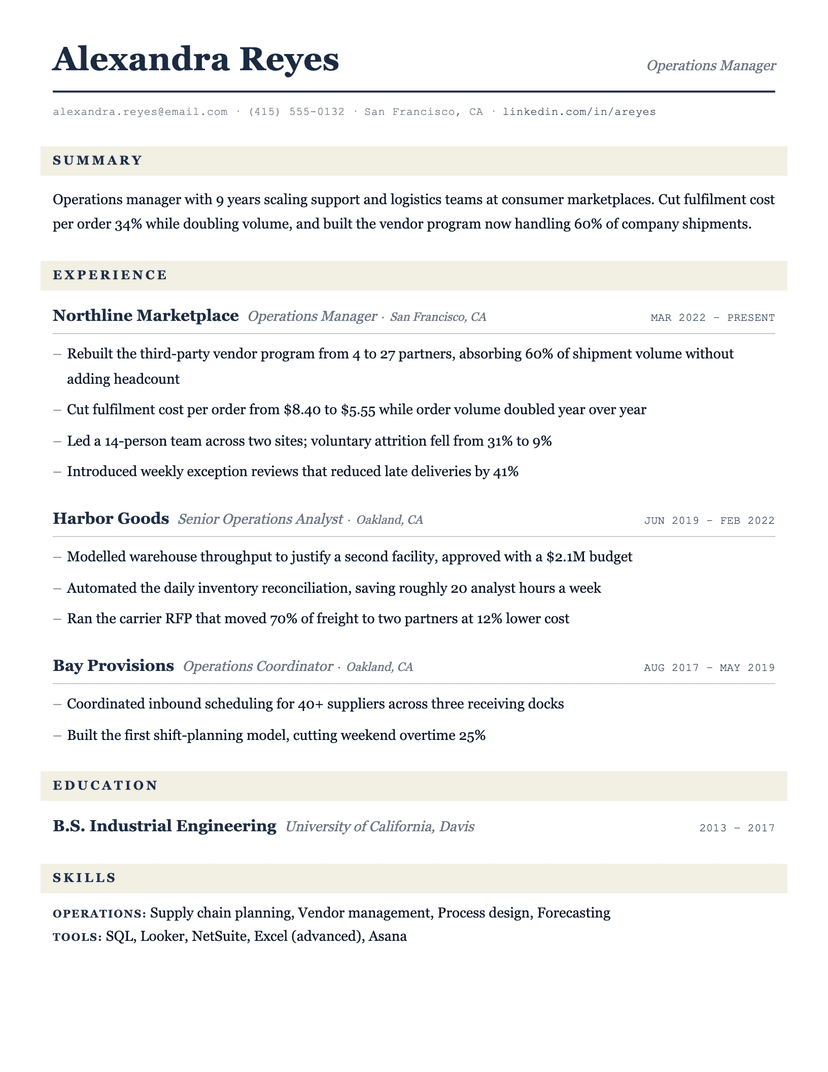
Ledger
serif · traditional
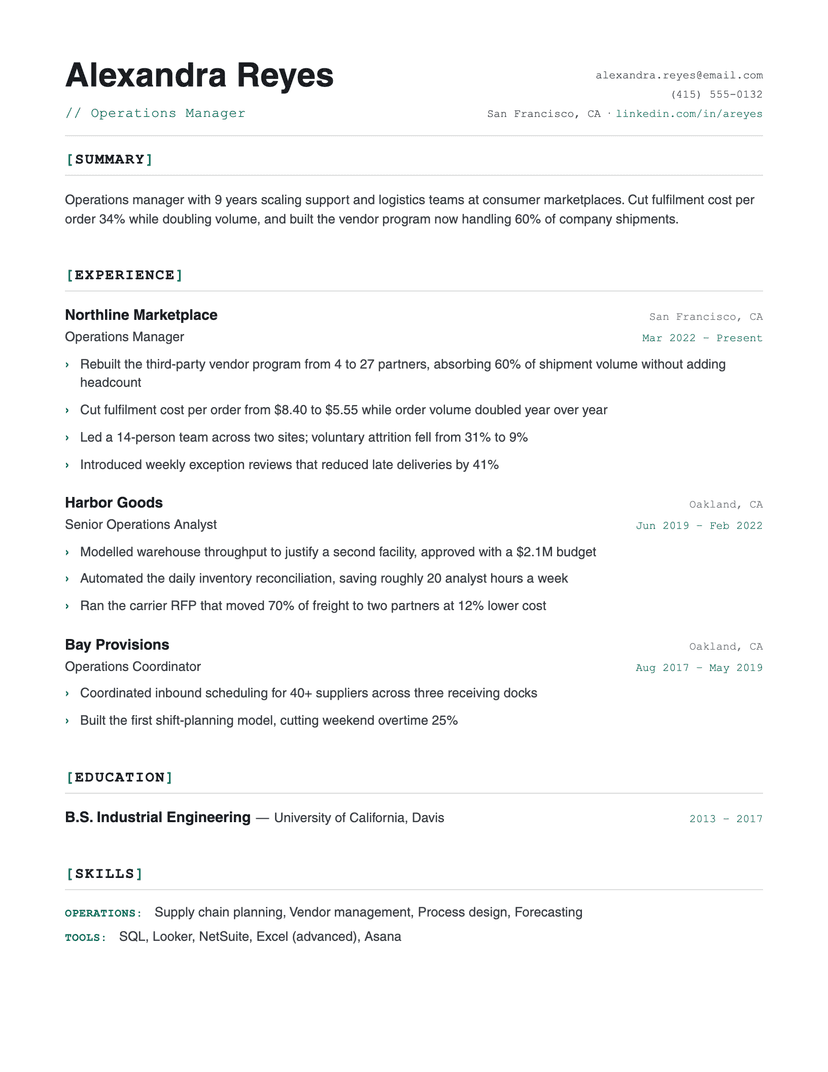
Bracket
technical · monospace
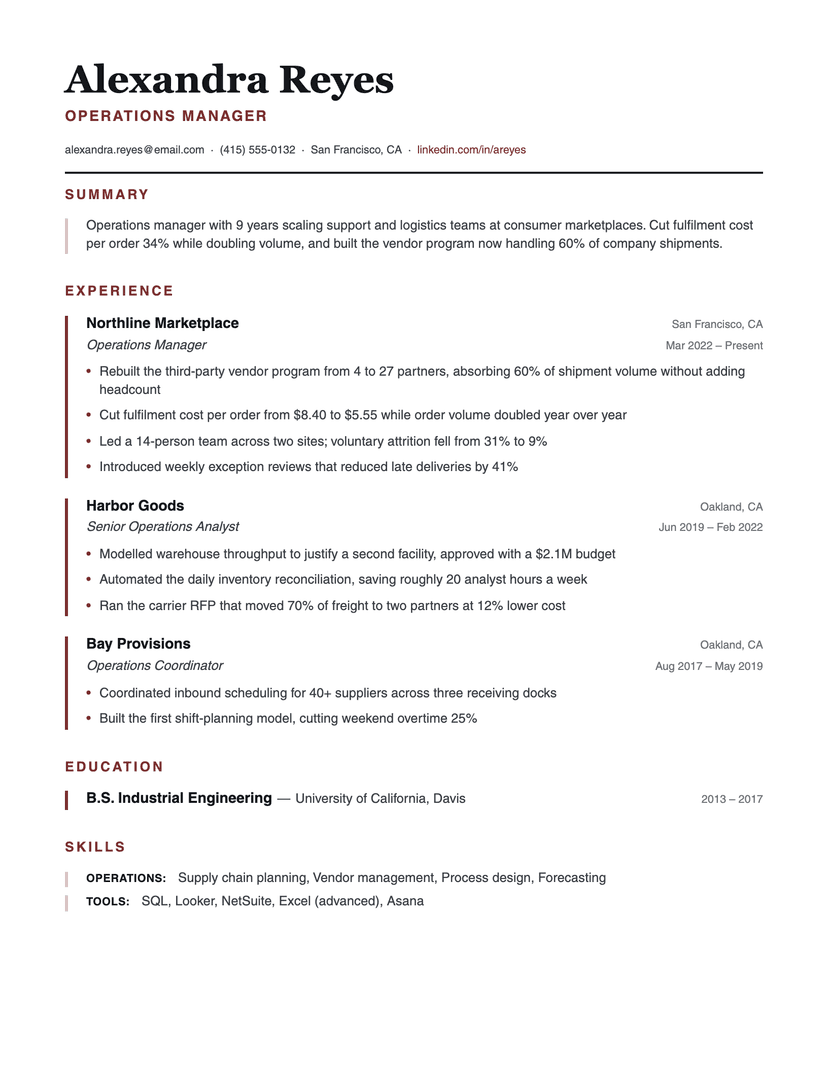
Left Rule
structured · serif-header
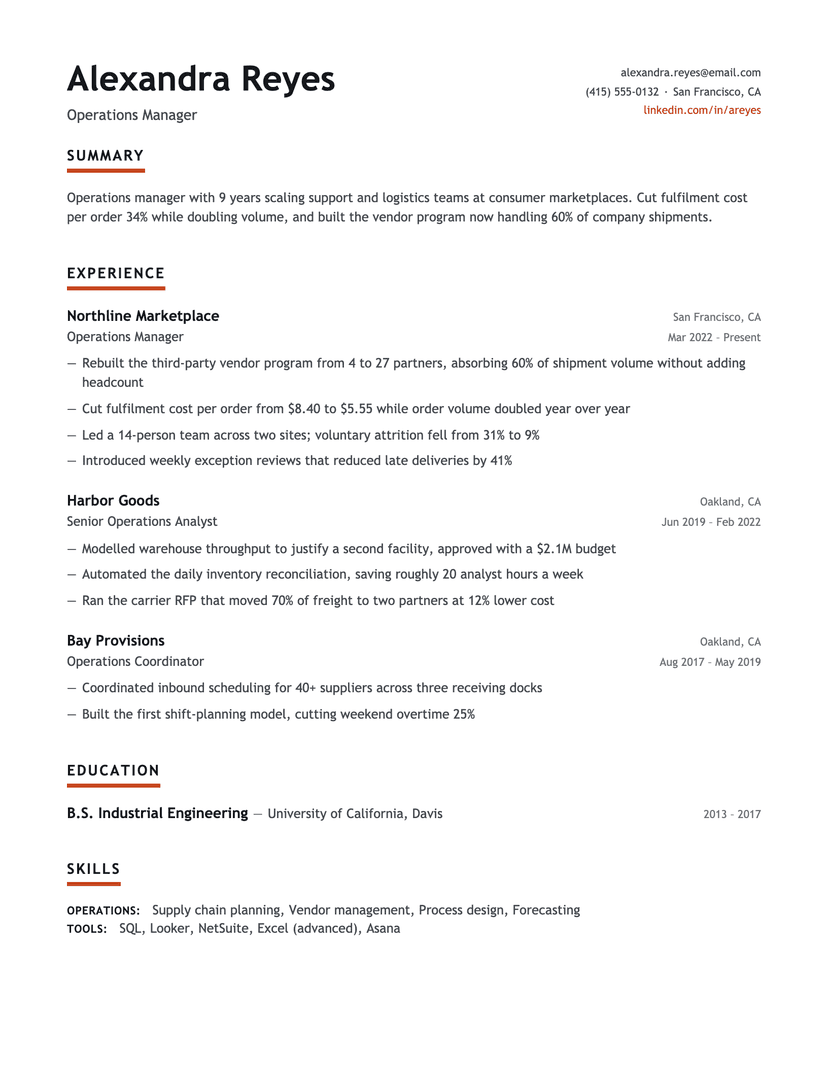
Underline Accent
modern · monochrome
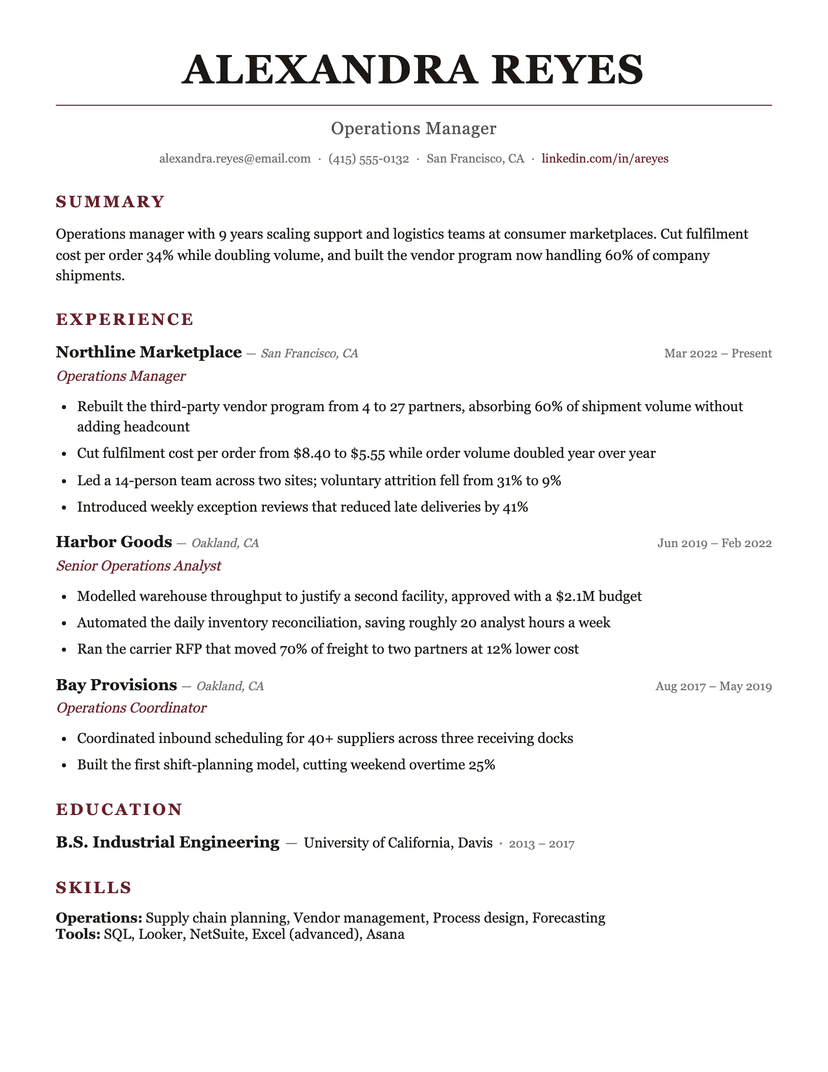
Burgundy
formal · serif
About the Harvard template
What actually makes a resume "Harvard format"
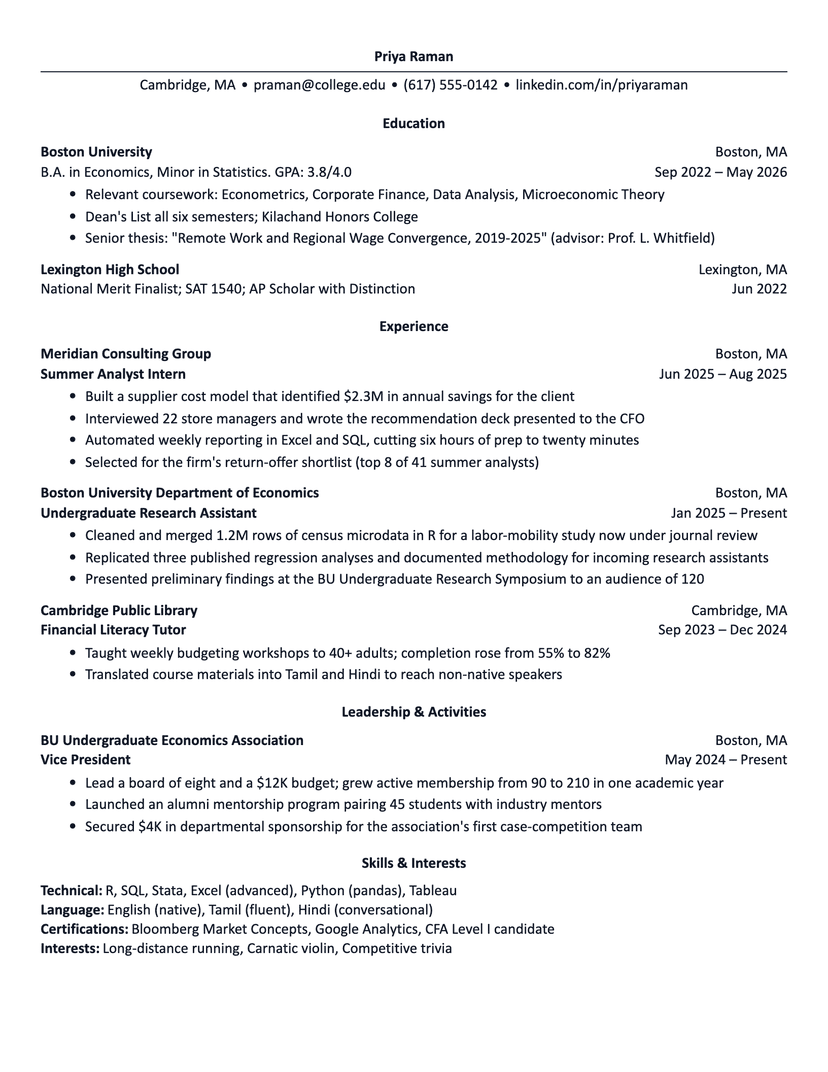
Three conventions do most of the work. Education sits at the top, because the format was written for students whose degree is their strongest credential. Each entry leads with the ORGANIZATION in bold, with your title in italics on the line beneath — the reverse of most commercial templates, and a deliberate choice: recruiters scanning a page of unfamiliar names anchor on where you worked first. And every bullet is an accomplishment statement, not a duty: an action verb, what you did, and a measurable result.
Everything else is restraint. One page, one column, no colour, no photo, no skill bars, no icons. Harvard's guide is blunt that the content carries the application and the format's only job is to stay out of its way.
Bullet format vs paragraph format
Harvard's career office publishes two variants. The bullet-point version — the one on this page — is what nearly everyone means by "the Harvard resume template", and it is the right default for internships, new-grad roles and most industry applications. The paragraph version replaces bullets with a short descriptive block under each role, and is mainly used for academic and research contexts where methodology matters more than metrics.
If you are applying through any online portal, use bullets. Parsers handle them cleanly, and a screener reading forty resumes will skim bullets and skip paragraphs.
How it parses: what an ATS sees
This is close to the safest structure you can submit. Single column, so reading order and parsing order match. Standard section names — Education, Experience, Leadership & Activities, Skills — that map directly onto the fields Workday, Greenhouse and Taleo expect. Dates in a consistent right-hand position tied to the entry they belong to. No text boxes, no tables, no headers or footers, which is where most attractive templates quietly lose their contact details.
One caveat specific to this format: because the organization is the bold line, a few older parsers read it as the job title. It is not worth avoiding the format over — those same parsers mangle every layout — but it is a reason to make sure your title is spelled conventionally rather than creatively.
Where the Harvard format works against you
Its education-first ordering stops helping the moment your work history is stronger than your degree, which for most people is about three years after graduating. At that point the same content reads better with Experience on top — you can reorder the sections here without leaving the template.
It is also visually anonymous by design. In a stack of applications for a design, brand or front-of-house role, where presentation is part of the evaluation, plainness reads as a lack of effort rather than as discipline. For those, use a template with more presence and keep the single-column structure.
Who the Harvard template is for
Great fit
- Students and recent graduates applying to internships and new-grad roles
- Consulting, finance, policy and research applications, where this format is the expected convention
- Career changers who need a plain structure that puts achievements, not job titles, first
Look elsewhere if
- Senior professionals — education-first ordering undersells a strong work history (reorder the sections or use Classic)
- Design and creative roles where visual presentation is part of the assessment
- Anyone who needs two pages — the format's discipline is built around fitting one
Frequently asked questions
What is the Harvard resume template?+
It is the one-page, single-column bullet-point resume format published by Harvard's Mignone Center for Career Success for its own students: education at the top, each entry led by the organization in bold with the title italicized beneath, and accomplishment bullets that begin with an action verb and end with a measurable result.
Is the Harvard resume template ATS-friendly?+
Yes — it is one of the most parseable formats in circulation. It is single-column with standard section names, conventional date placement, and no text boxes, tables, headers or graphics, which are the four things that most commonly break applicant tracking system parsing.
Can I download the Harvard resume template for free?+
Yes. Download it here as Word (.docx), PDF or Google Docs with no sign-up, or drop your existing resume onto this page and get it reformatted into the Harvard layout in seconds. Harvard's career services site also publishes its own original .docx.
Should I use the bullet or paragraph Harvard template?+
Bullets, unless you are applying to an academic or research position. The bullet version is what recruiters expect, it skims faster, and it parses more reliably. The paragraph variant suits research and academic CVs where describing methodology matters more than listing metrics.
Do you have to go to Harvard to use this resume template?+
No. Harvard publishes the format publicly as career-advice guidance, and it is widely used well outside the university. This page is not affiliated with or endorsed by Harvard University — we credit the original and link to it.
Already have a resume? See exactly what an ATS parses out of it.
Or rewrite it in the CVJet Resume Editor, where your ATS score updates as you edit and any template above is one click away.