
Browse resume templates
Browse all
Jake's Resume
dense · serif
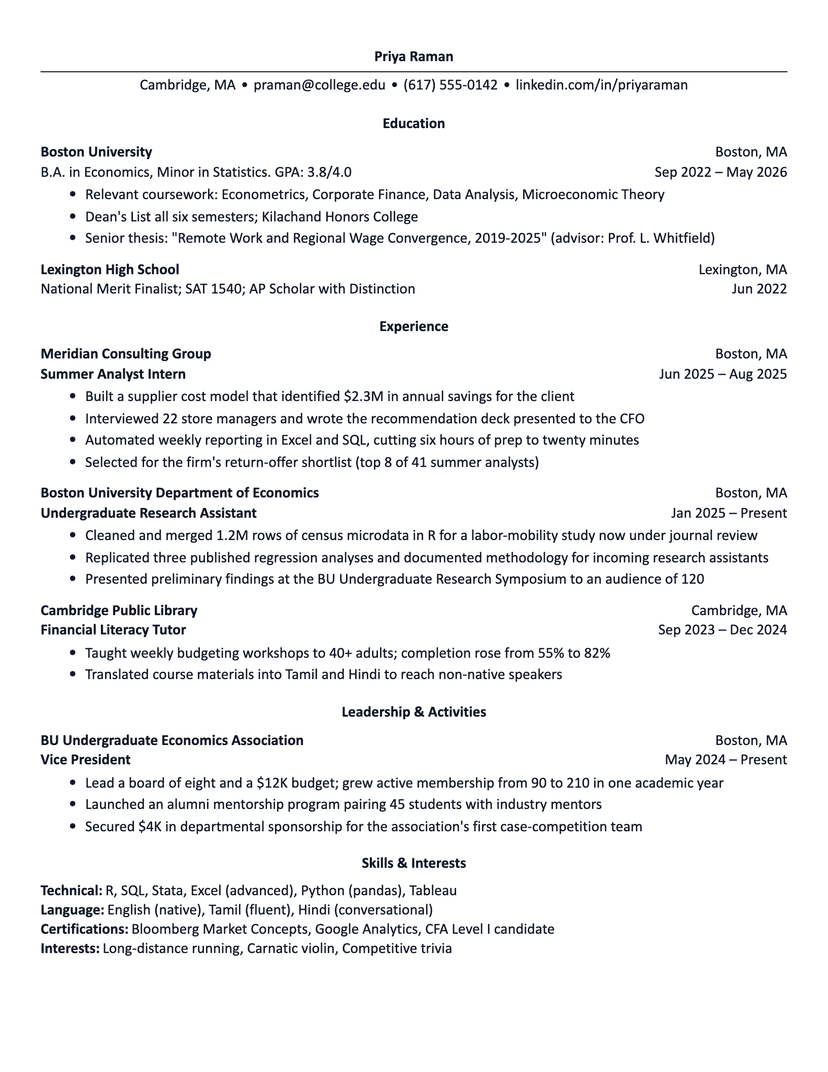
Harvard
academic · plain
Minimalist
minimalist · whitespace

Classic
clean · traditional

Timeline
timeline · visual
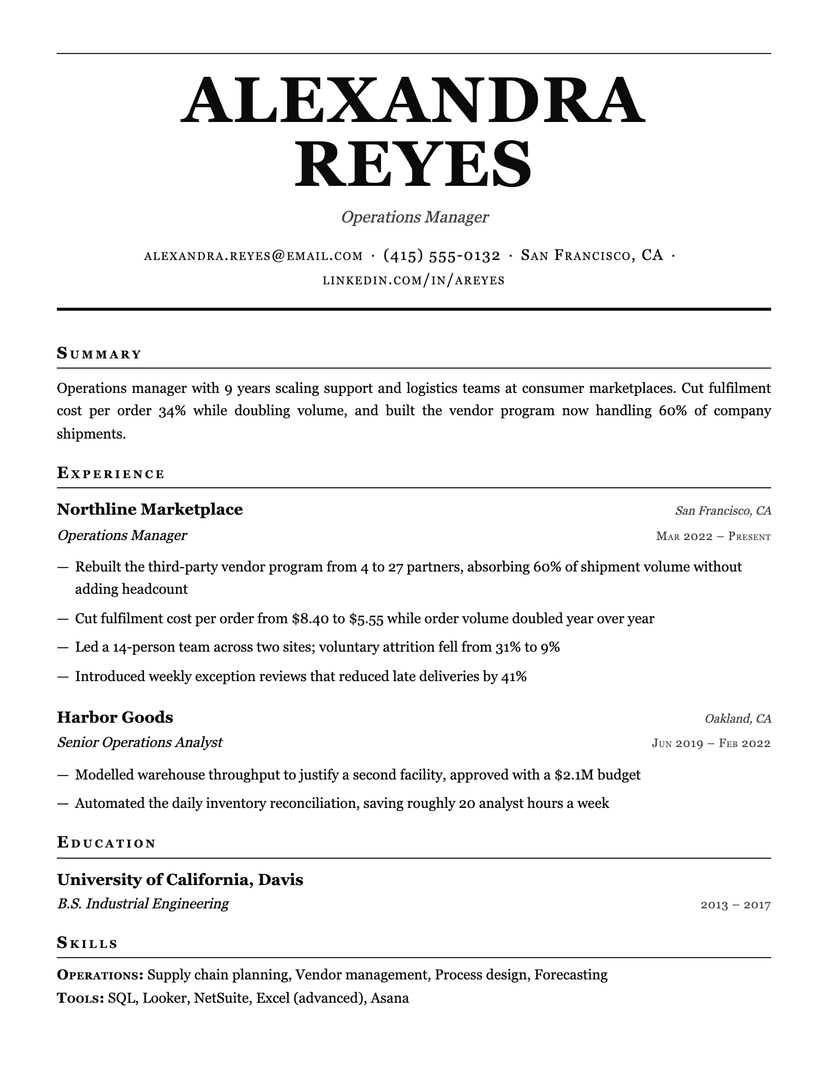
Broadsheet
serif · traditional

Editorial
modern · editorial
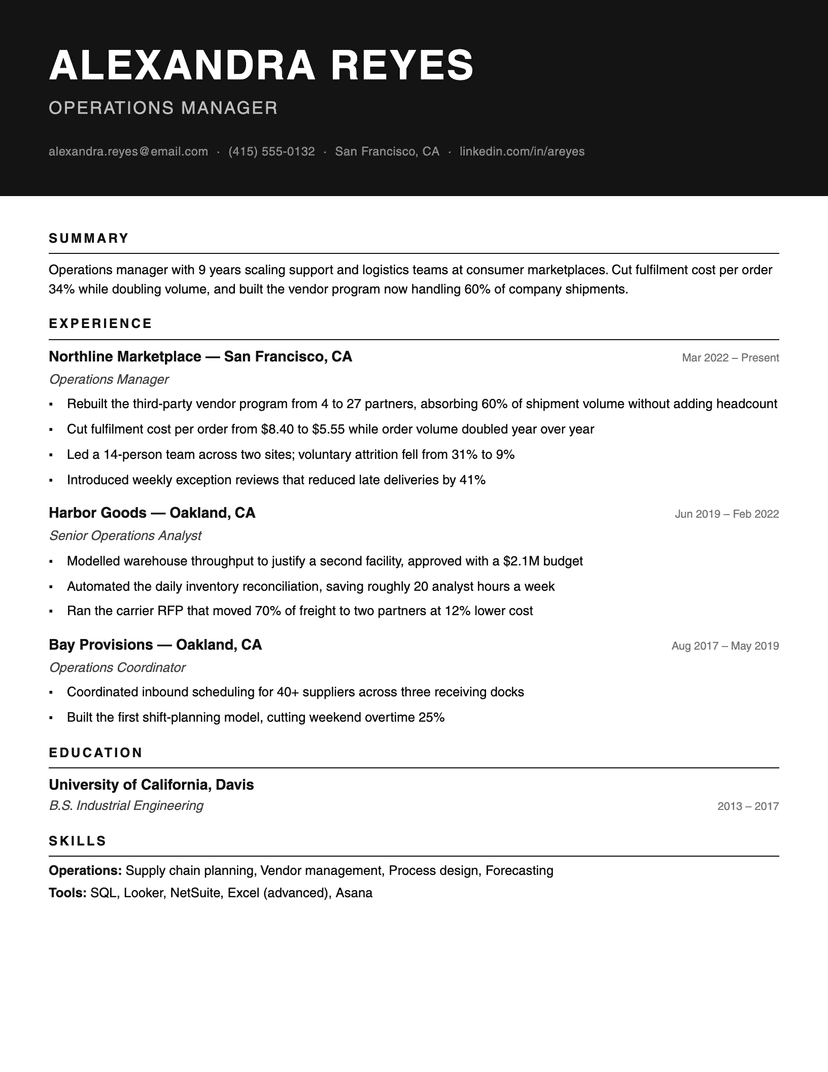
Ink Block
bold · monochrome
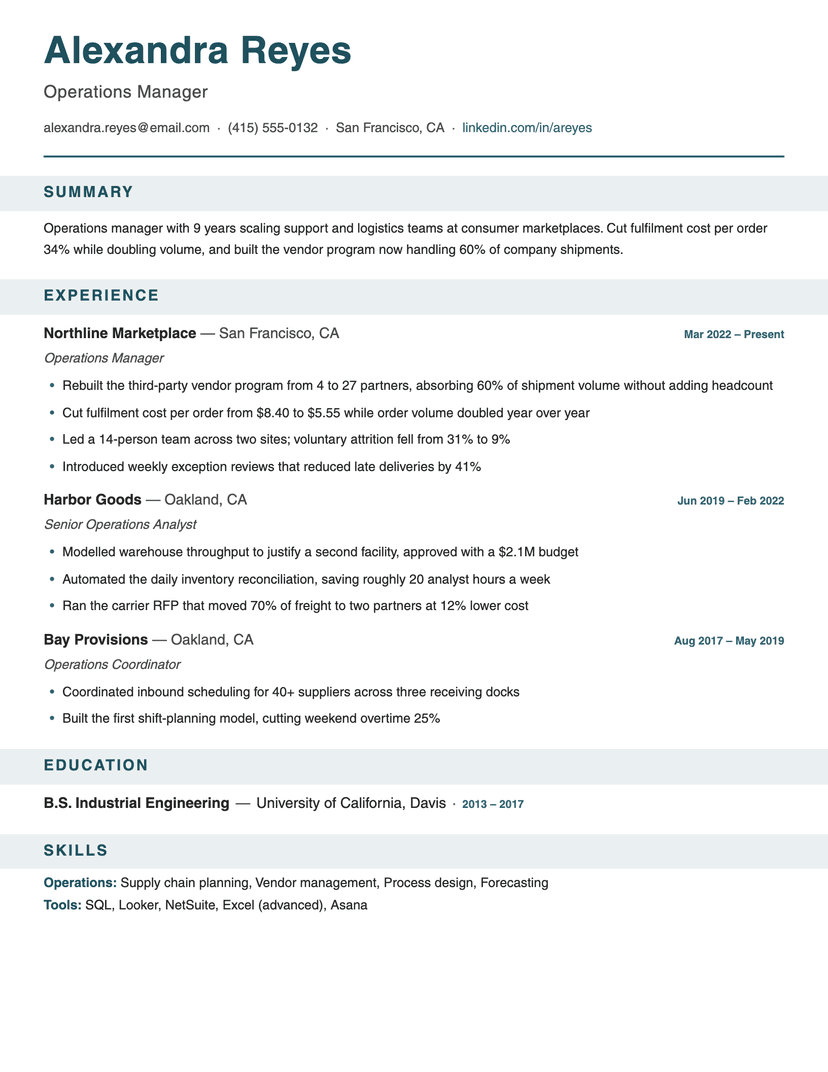
Banner
bold · structured
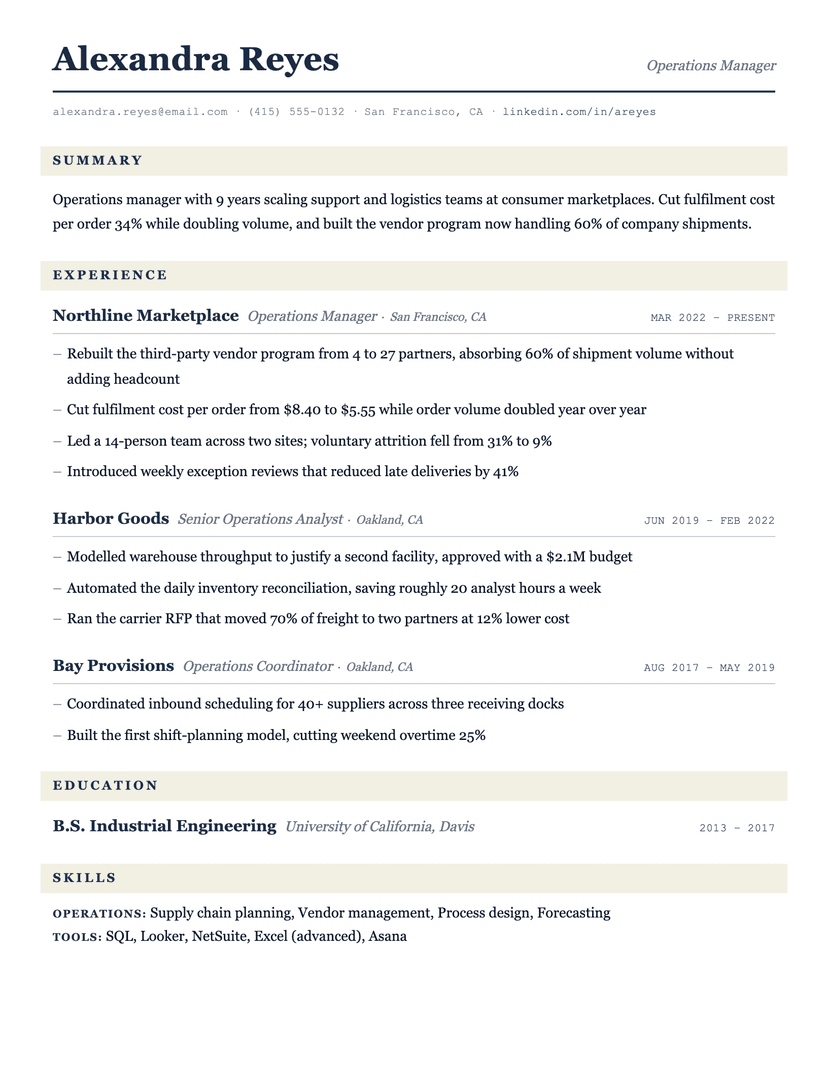
Ledger
serif · traditional
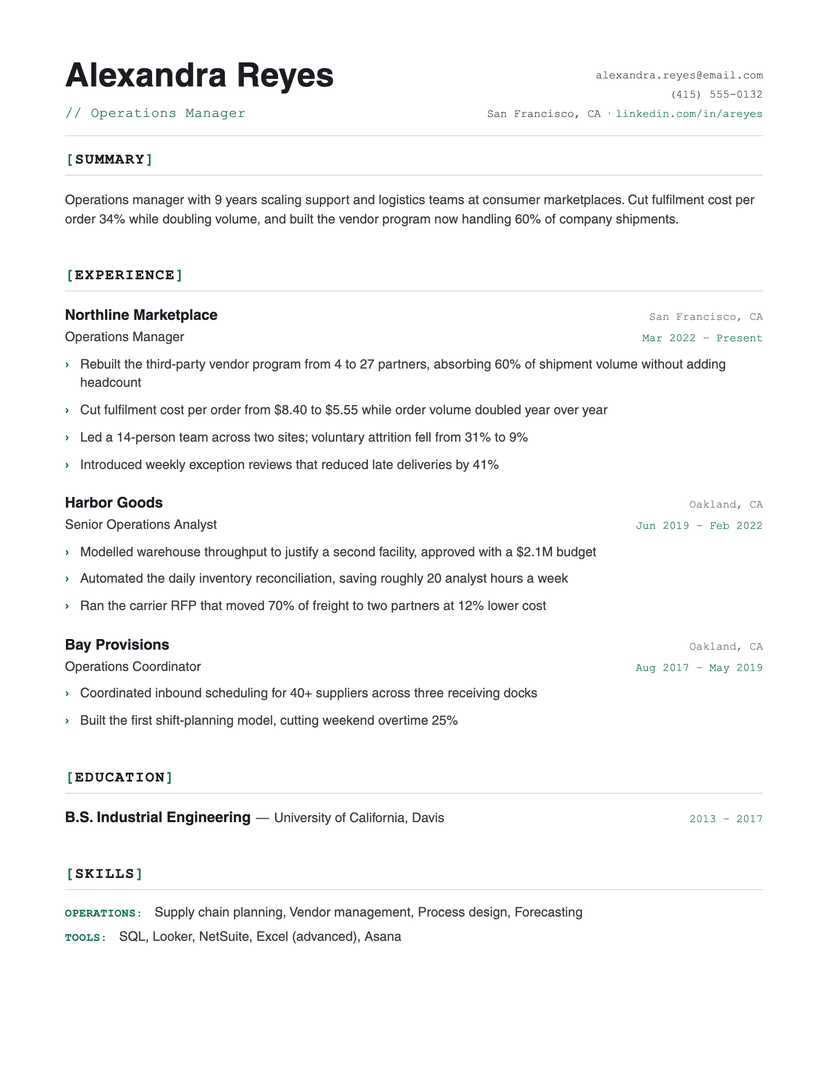
Bracket
technical · monospace
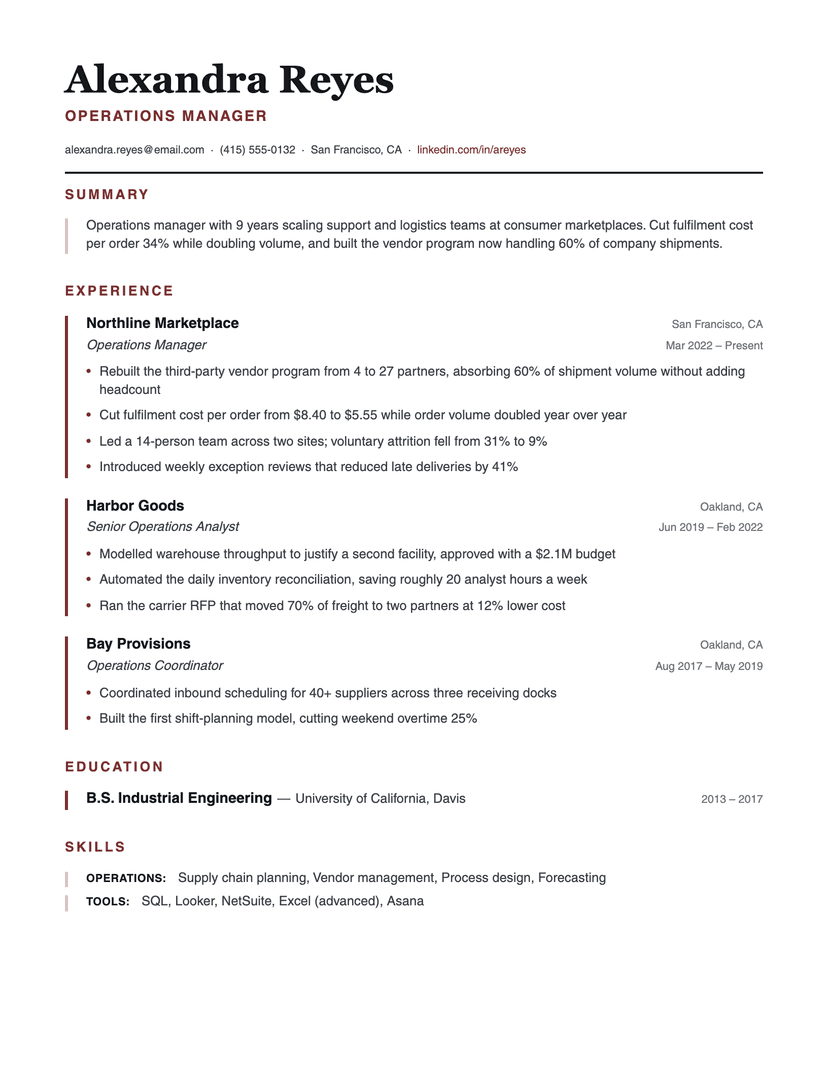
Left Rule
structured · serif-header
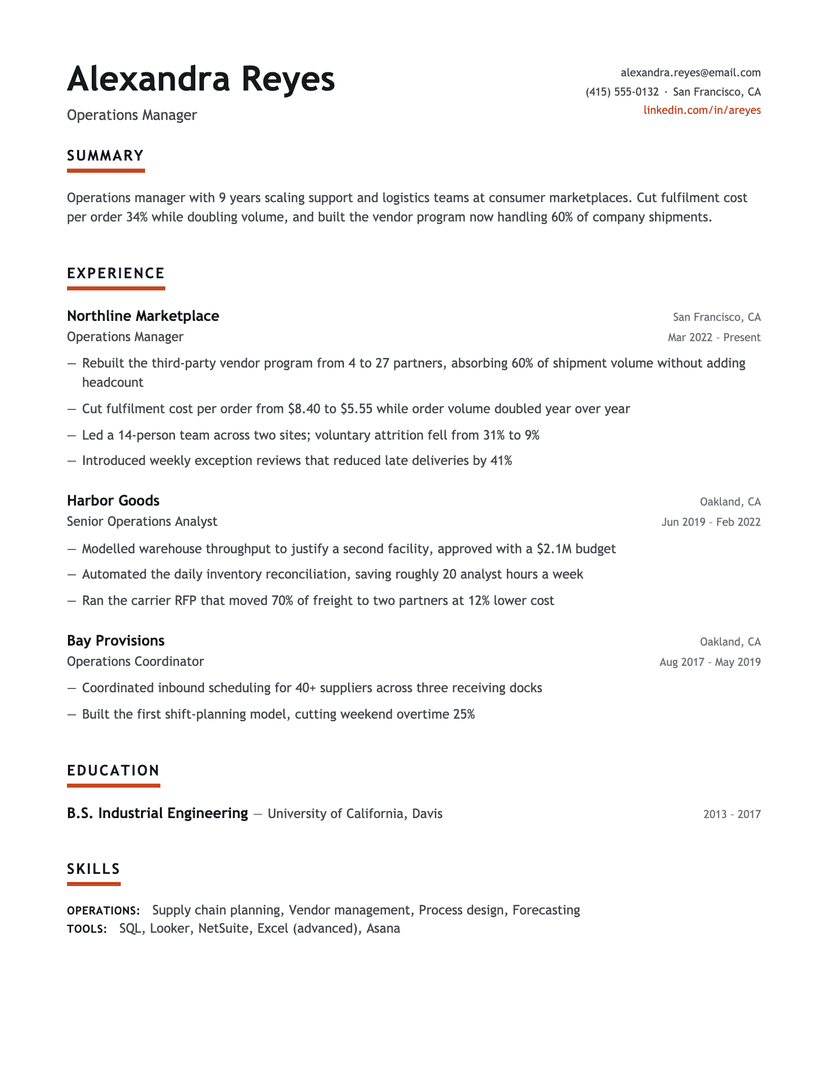
Underline Accent
modern · monochrome
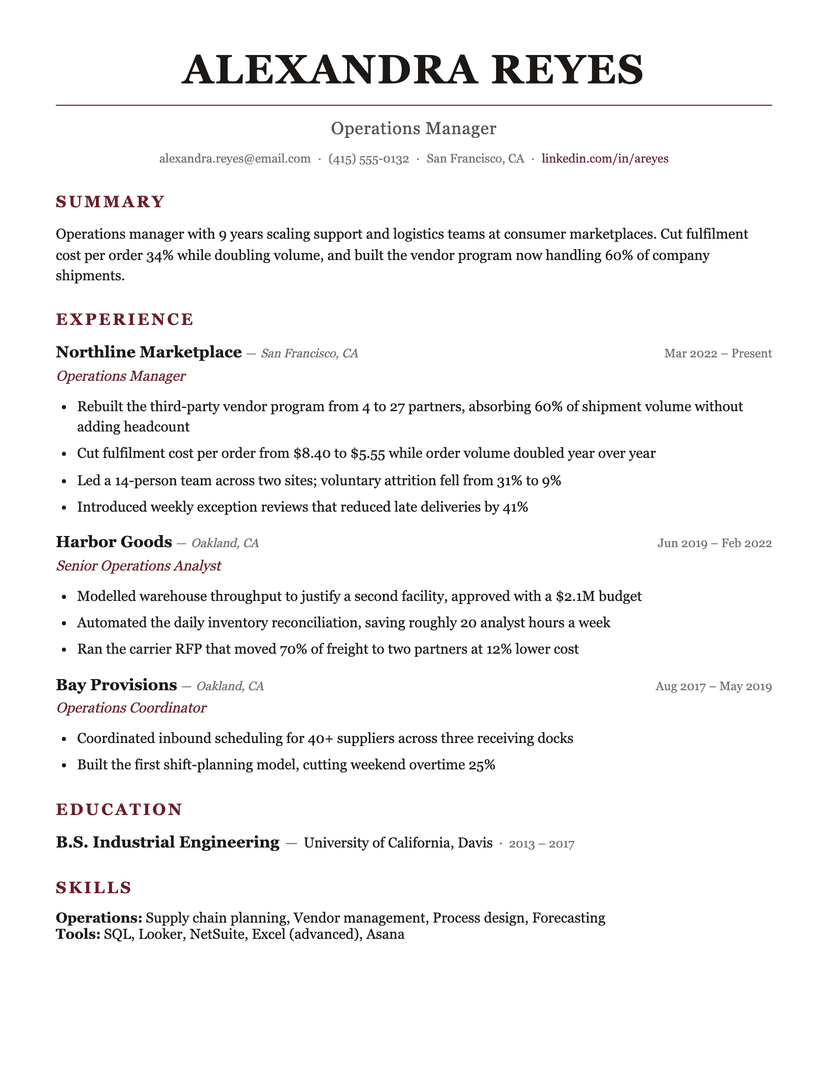
Burgundy
formal · serif
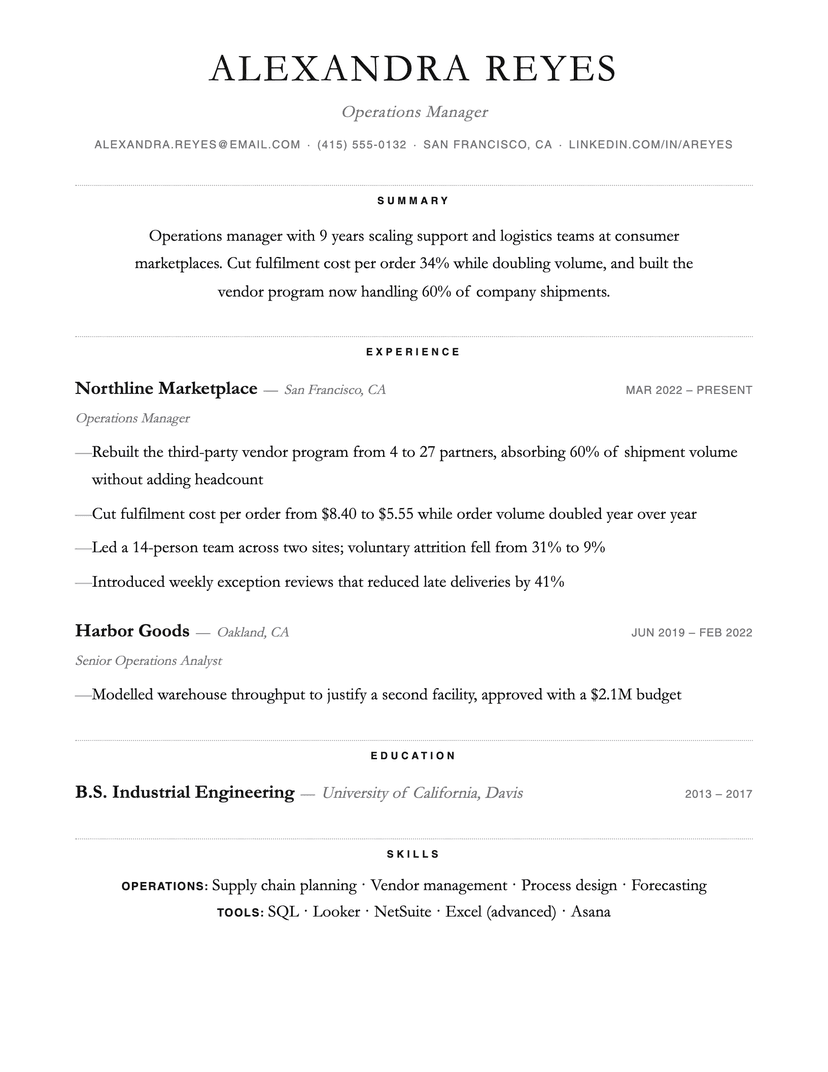
Dotted
minimal · centered

Numbered
systematic · editorial
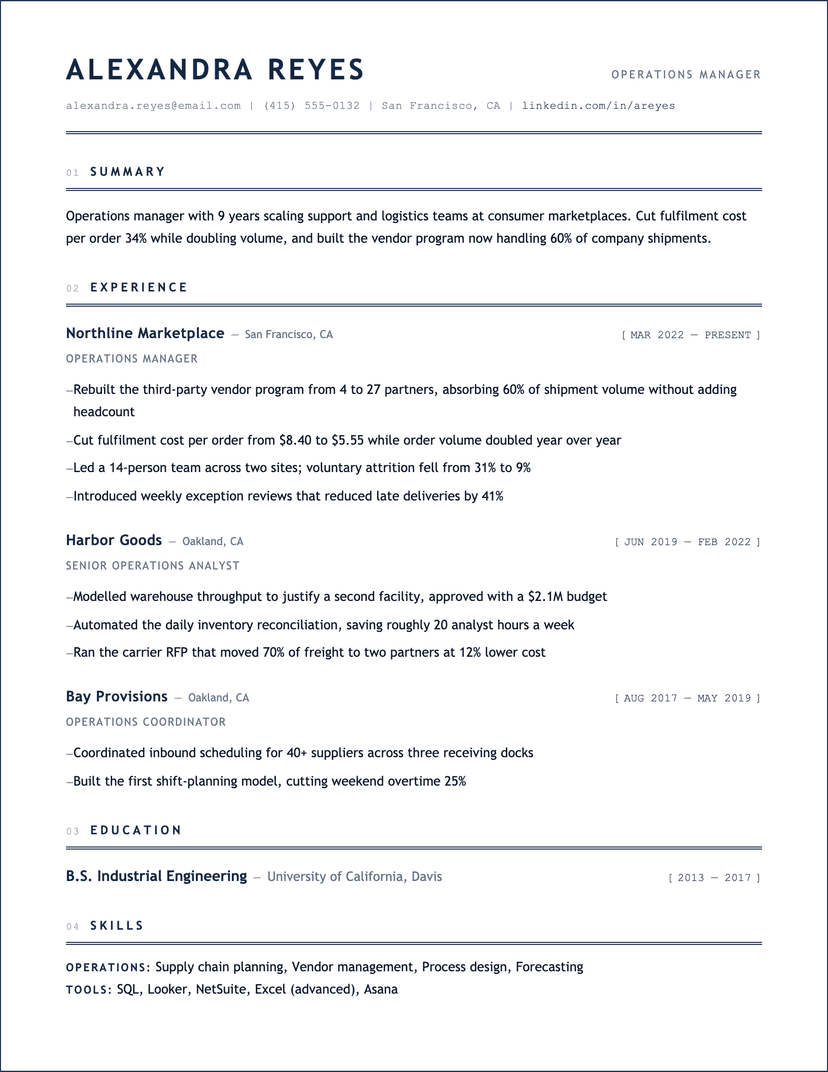
Blueprint
technical · structured
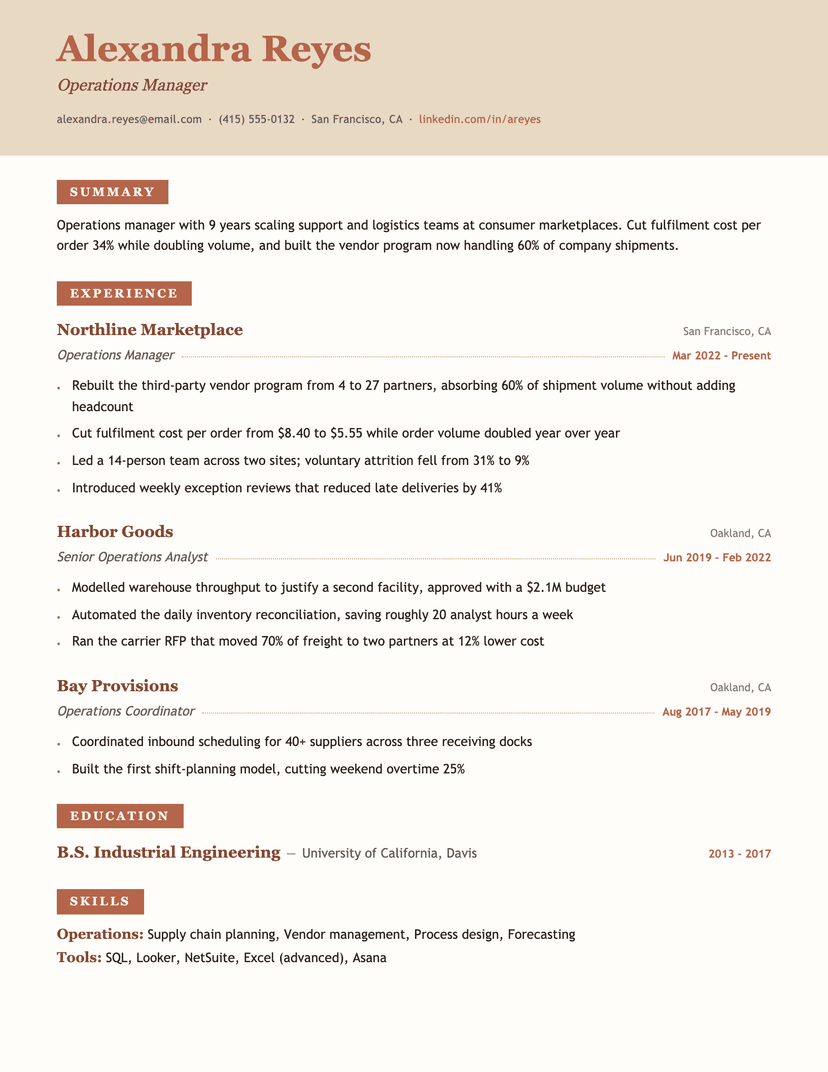
Terracotta
warm · serif
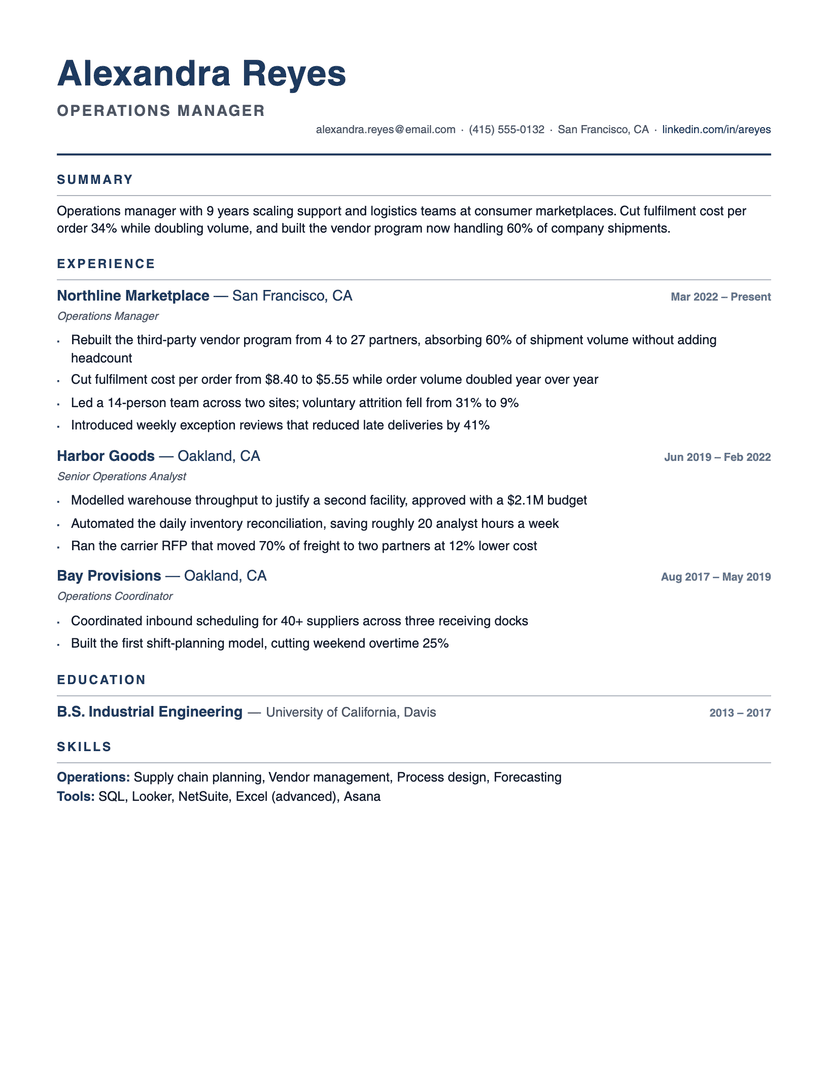
Compact Pro
compact · dense
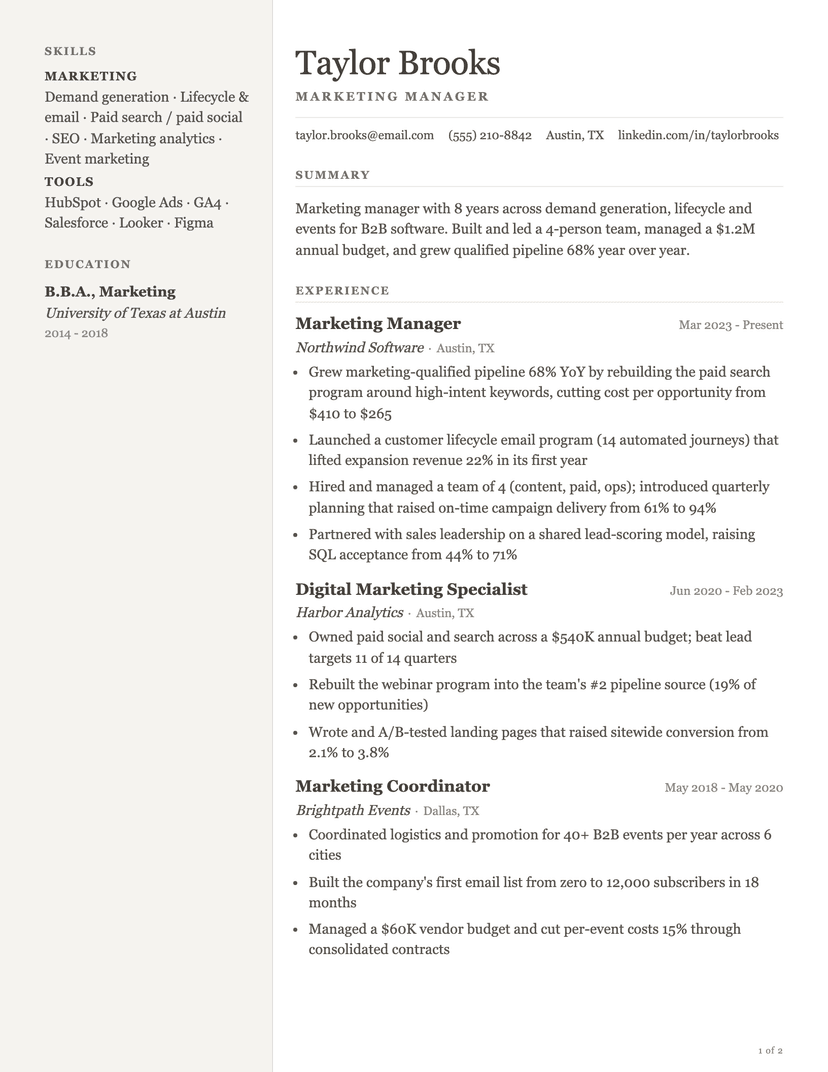
Pallas
serif · two-column
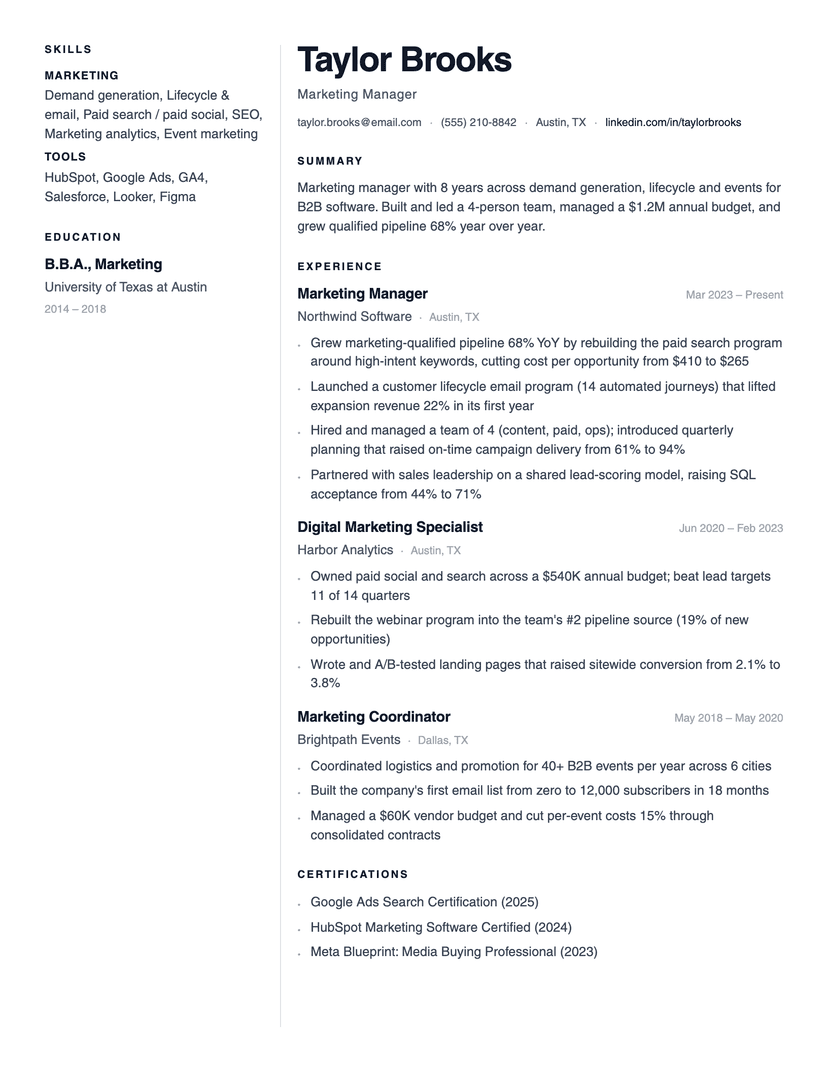
Lumen
minimal · two-column
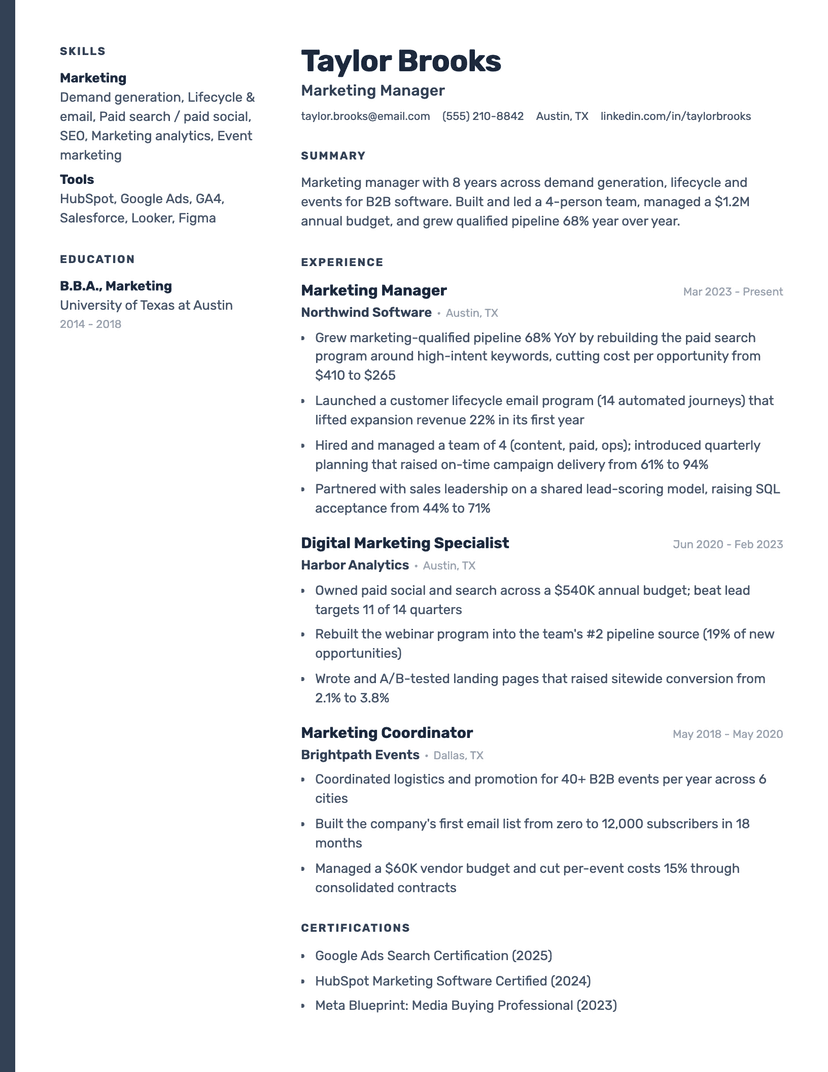
Slate Rail
two-column · modern
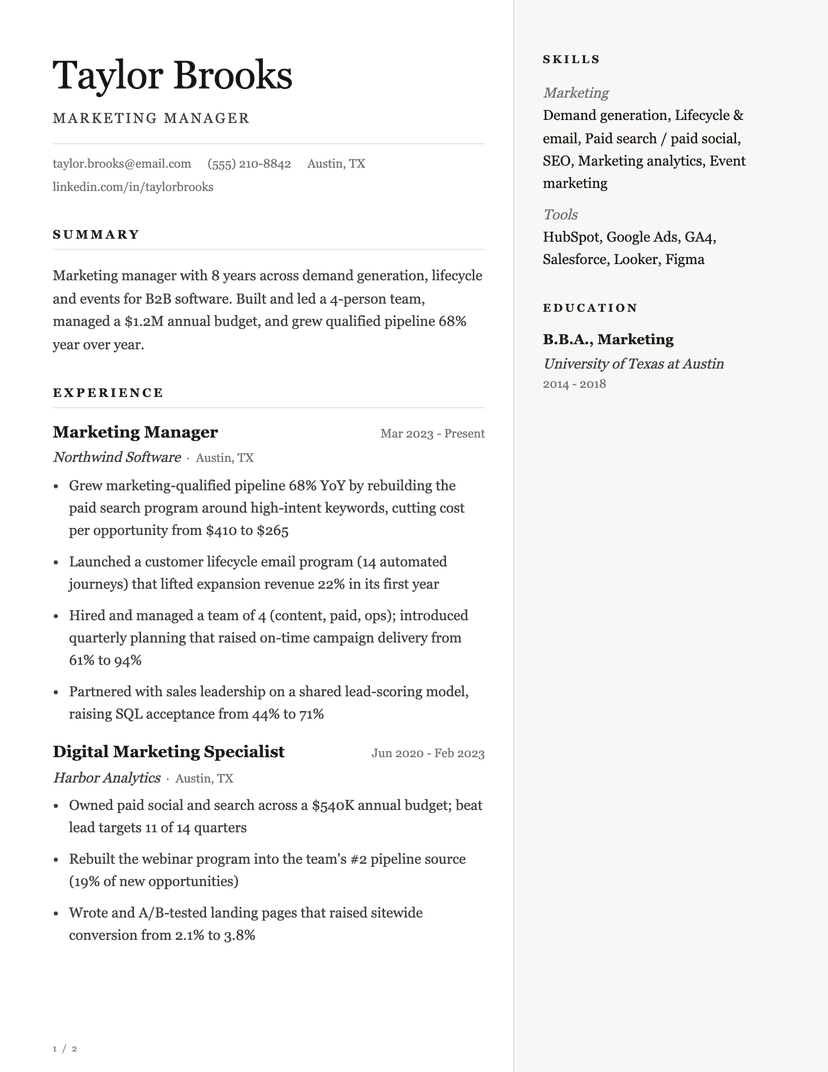
Ovation
serif · monochrome
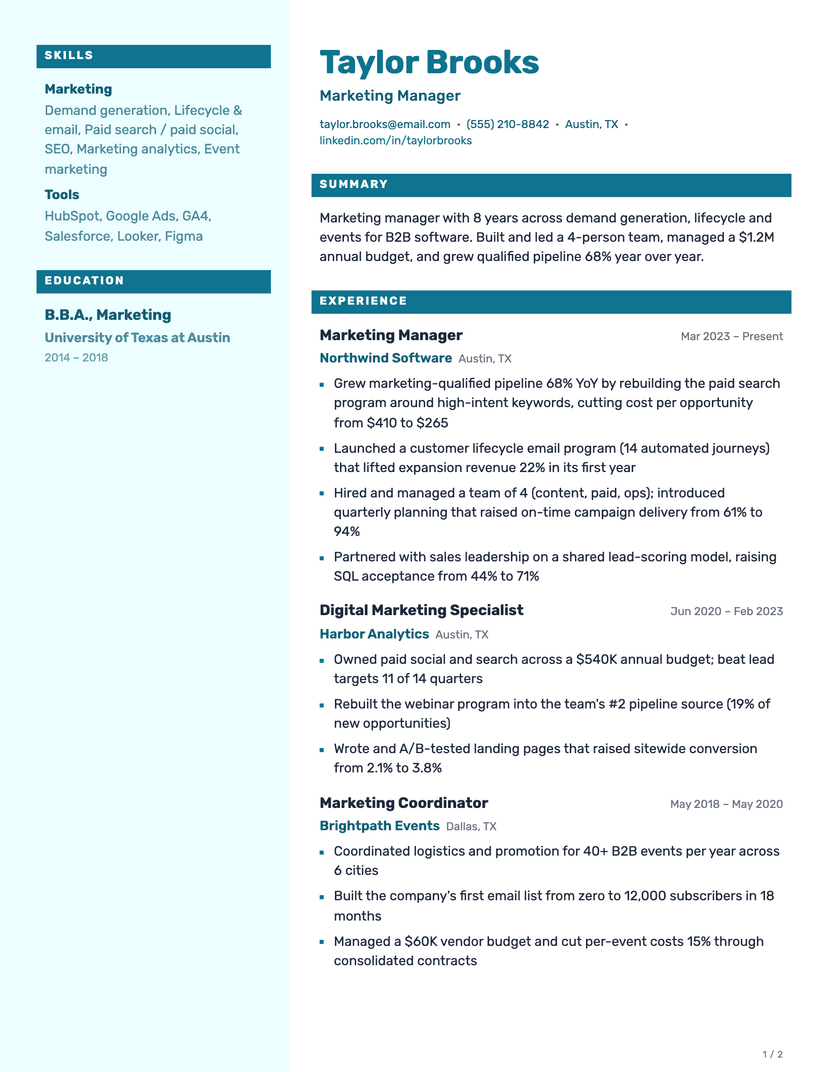
Fathom
two-column · modern

Aperture
two-column · modern
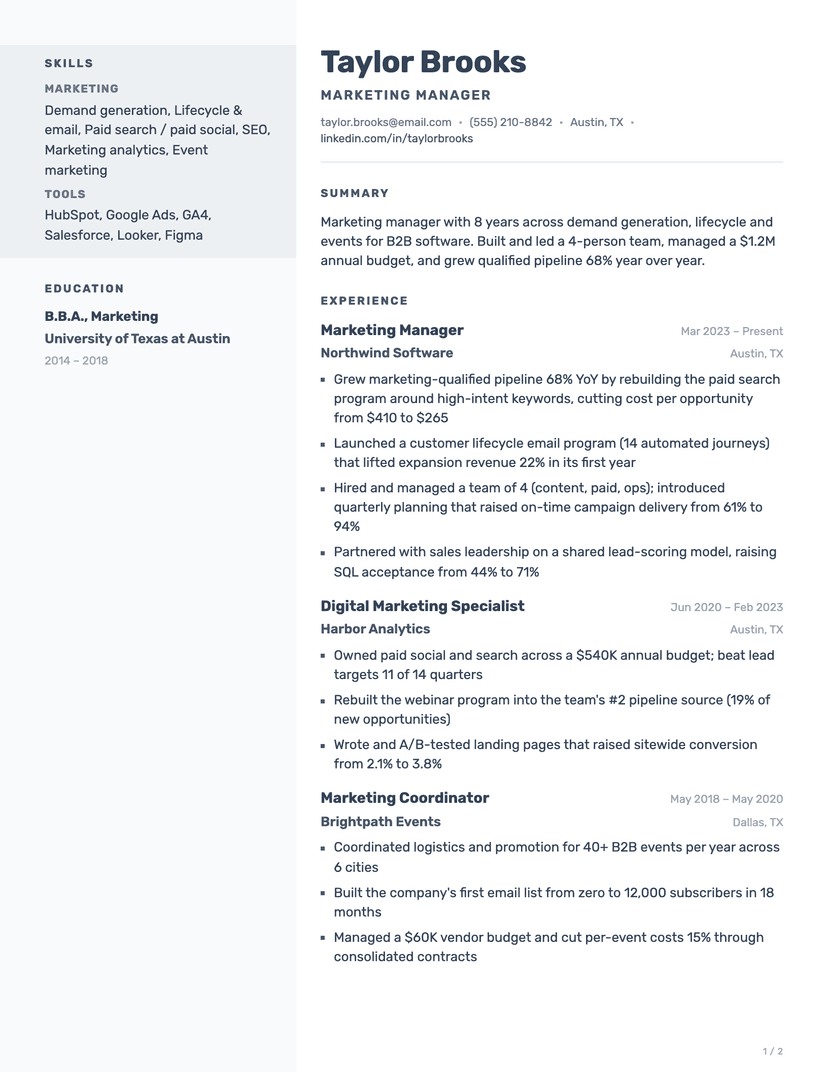
Cadence
two-column · modern
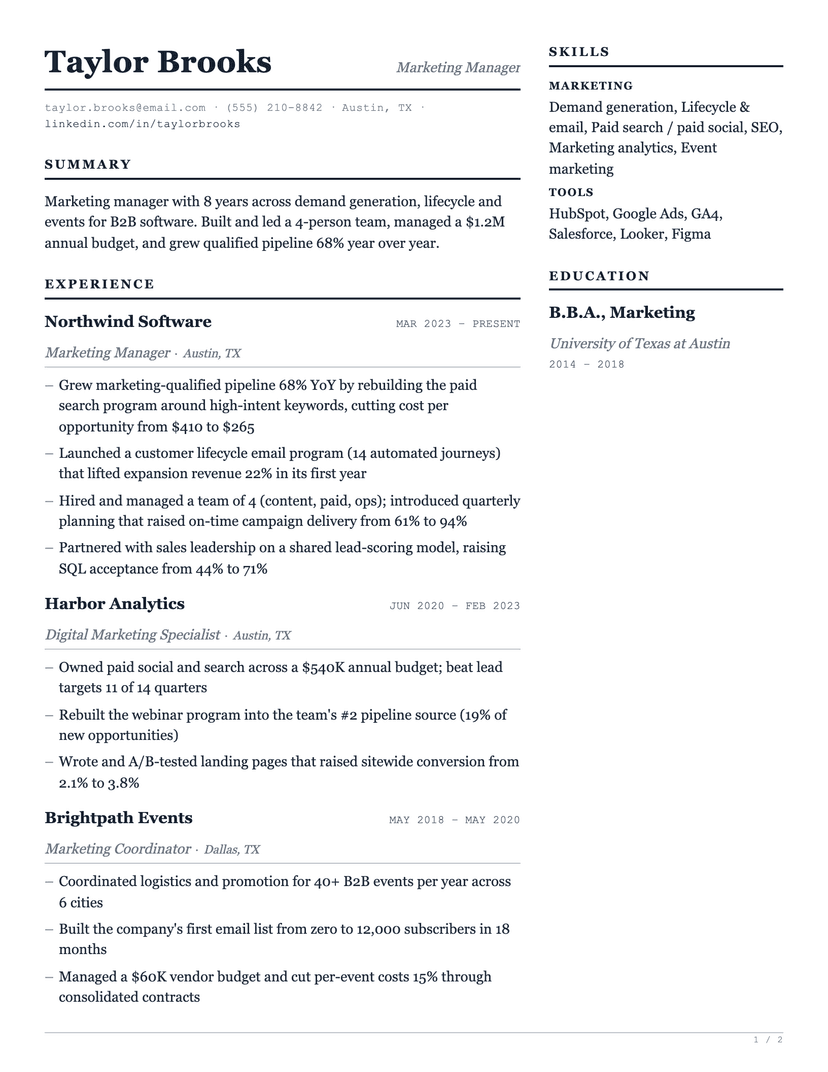
Ledger Two
two-column · serif

Porcelain
minimal · light
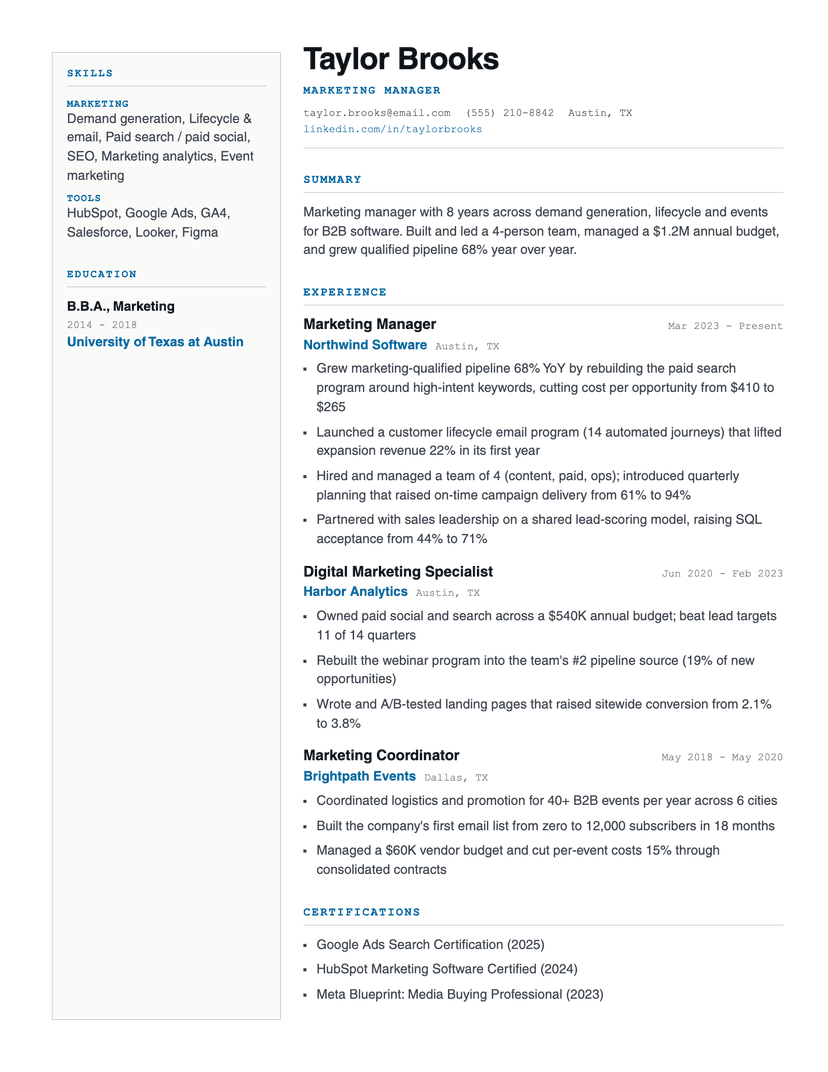
Foundry
two-column · technical
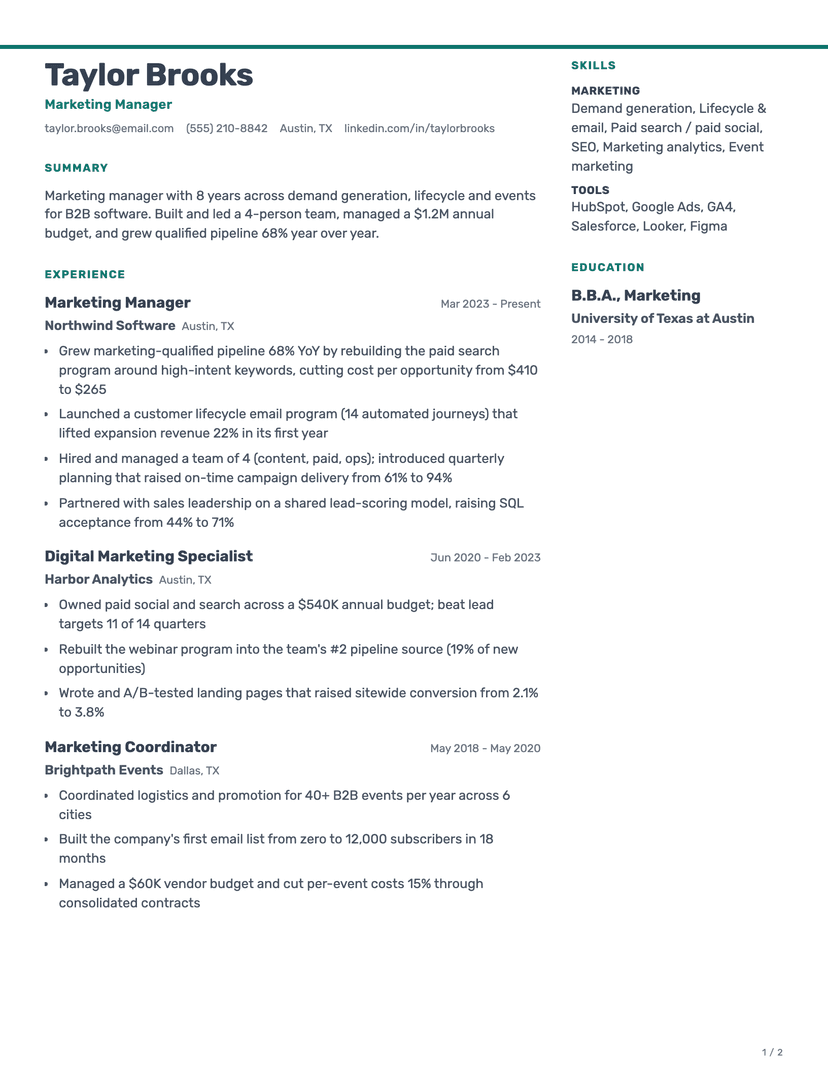
Halyard
two-column · modern
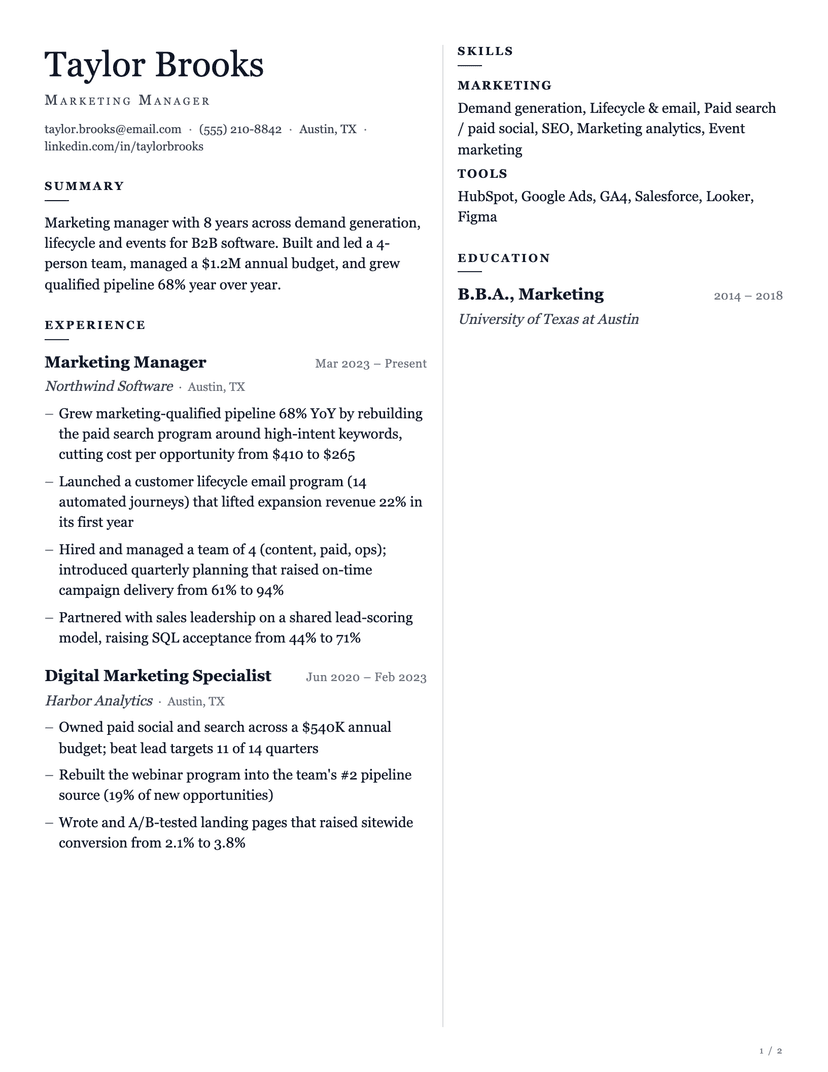
Corbel
two-column · serif
Writing a marketing resume
Channel and tool keywords the screen is matching
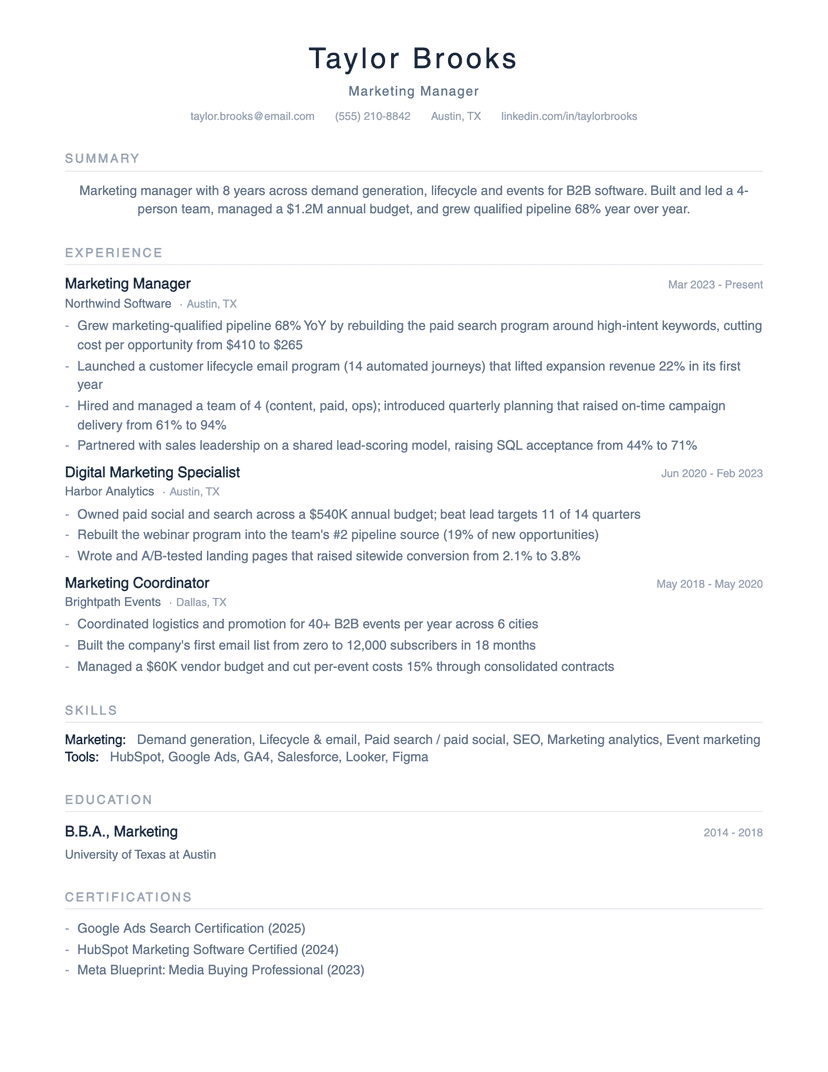
Marketing postings are screened on two distinct keyword families and you need both. Channels: SEO, paid search, paid social, lifecycle/email, content, CRO — written the way postings write them (a posting that says "demand generation" is not matched by "growing the funnel"). Tools: HubSpot (or the posting's CRM — Marketo, Salesforce), GA4, and your channel-specific stack (Google Ads, Klaviyo, Ahrefs). This template's two-group skills section exists precisely because parsers and recruiters treat channels and tools as separate checklists.
Mirror generational tool shifts literally: if the posting says GA4, don't write only "Google Analytics" — post-UA-sunset, teams burned by the migration screen for the specific term. And place tools inside bullets where they earned money ("HubSpot lifecycle program that lifted trial-to-paid from 9% to 14%"), because a tool in the skills list says trained, a tool in a revenue bullet says operator.
Metric-first bullets: pipeline, CAC, conversion
The three numbers marketing leaders trust most are pipeline (or revenue) generated, acquisition cost, and conversion rate — because they're the numbers they answer for. Lead every bullet you can with one: "Grew qualified pipeline from $2.4M to $7.5M on flat budget" or "cut blended CAC 34%." Soft metrics (impressions, followers, "brand awareness") are supporting evidence at best; a resume that leads with them signals you haven't been held to revenue.
Always anchor the metric with its scale and constraint: percentage moved, from what base, on what budget. "Increased conversions 300%" from 3 to 12 signups is a different claim than 9% to 14% on a paid trial funnel — and hiring managers know it. The from-to-on-budget pattern (9% to 14%, $60K/month, 18 months) is the marketing equivalent of showing your work, and it's what separates operators from people who watched a dashboard.
Portfolio and campaign links: the proof layer
Marketing is a portfolio discipline that mostly ships portfolio-free resumes. Fix that with a short links section: a portfolio page with two or three campaign case studies (goal, budget, what you did, measured result), a published piece of work you're proud of, or a teardown you wrote. A hiring manager who can click into a real campaign story before the first call treats the interview as confirmation rather than interrogation — and almost no other applicant gives them that option.
Curate hard. Two case studies with real numbers beat a link farm of every asset you've touched, and anything you link will be read as your quality bar — a portfolio page with a broken image or 2019-era work is worse than none. If client confidentiality blocks specifics, anonymize the company and keep the numbers ("B2B SaaS, ~$8M ARR"); the structure of your thinking is what's being evaluated, and this template's links block sits above education so it gets seen.
Frequently asked questions
What skills should I put on a marketing resume?+
Split them the way screeners check them: channels (SEO, paid search, paid social, lifecycle/email, content, CRO) and tools (HubSpot or the posting's CRM, GA4, Google Ads, and your channel stack — Klaviyo, Ahrefs, Looker Studio). Mirror the exact terms from each posting, and back your core skills with a metric bullet in experience.
How do I quantify a marketing resume?+
Lead with the numbers marketing leaders answer for — pipeline or revenue generated, CAC, and conversion rate — and anchor each with its base and budget: "cut blended CAC 34% ($410 to $270) on $60K/month spend." Impressions and follower counts are supporting evidence only. If you're early-career, quantify scope instead: budget managed, subscribers, pages tested.
Should I use a Canva template for a marketing resume?+
Risky for anything submitted through an application portal. Canva's resume layouts are image-heavy and multi-column, which parses unreliably in systems like Workday and Taleo — and its marketing-relevant options are generic templates, not built around what marketing screeners check. A clean single-column document with a portfolio link shows design judgment and survives parsing.
Do I need a portfolio for a marketing resume?+
Not strictly required, but it's the cheapest differentiator in the field: most marketing applicants don't include one. Two or three campaign case studies with goal, budget, actions and measured results — linked from a short links section like this template's — let the hiring manager verify your work before the first call. Anonymize client names if you must, but keep the numbers.
Templates for other roles
Already have a resume? See exactly what an ATS parses out of it.
Run the free ATS checker