

Browse resume templates
Browse all
Jake's Resume
dense · serif
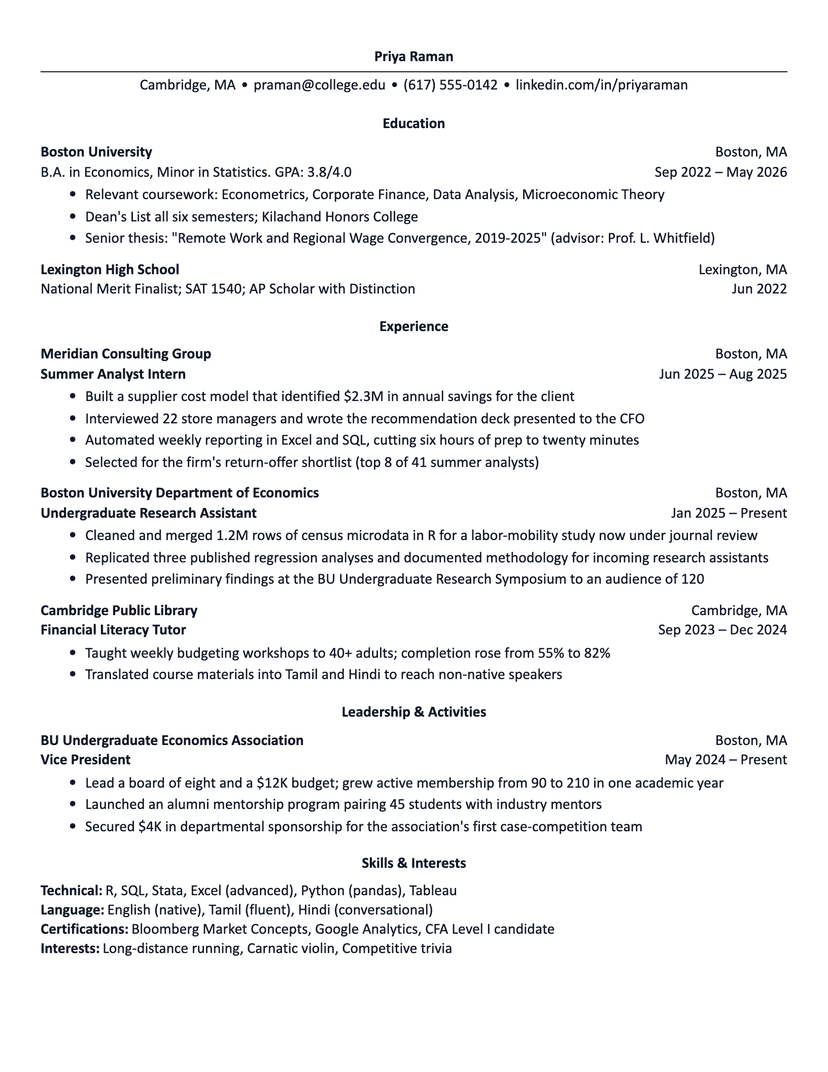
Harvard
academic · plain
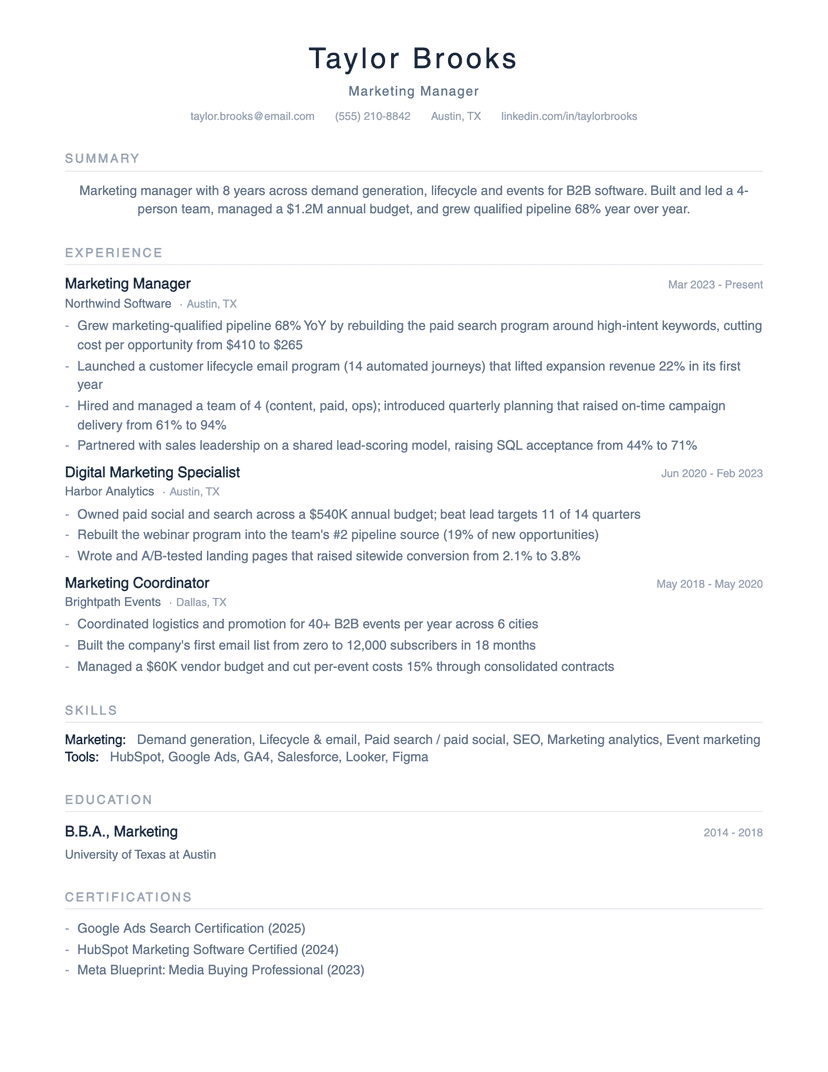
Minimalist
minimalist · whitespace
Classic
clean · traditional

Timeline
timeline · visual
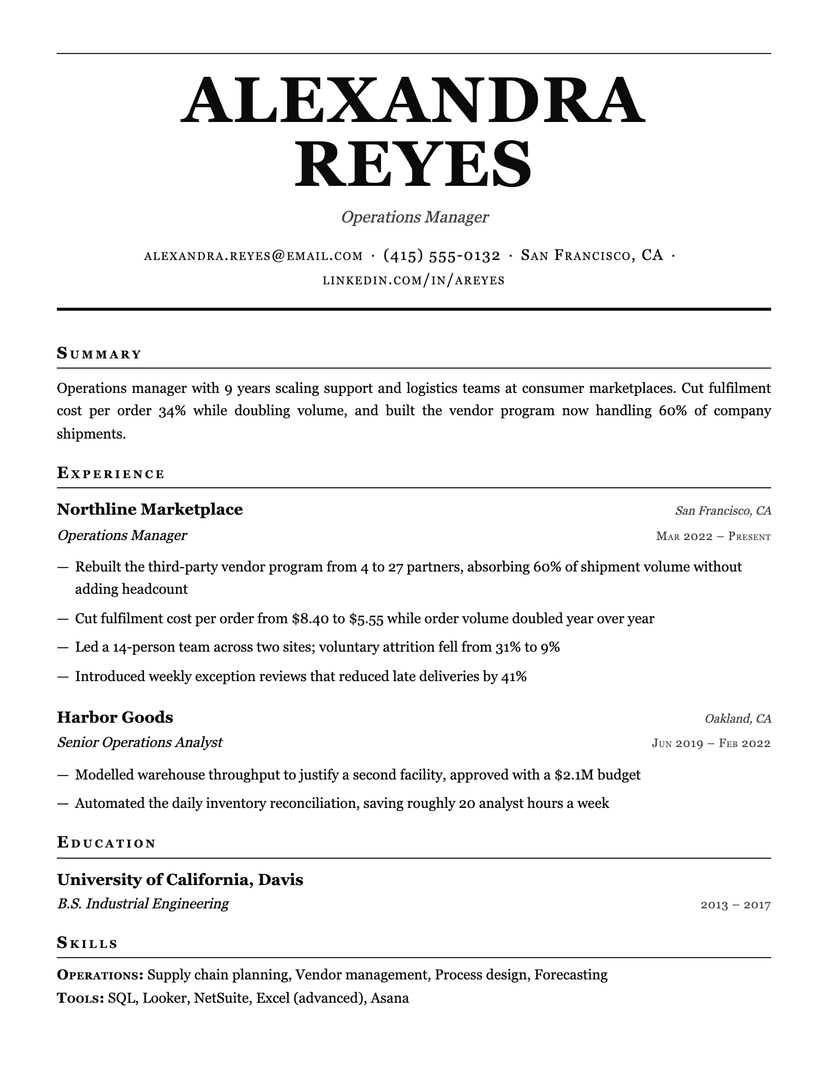
Broadsheet
serif · traditional

Editorial
modern · editorial
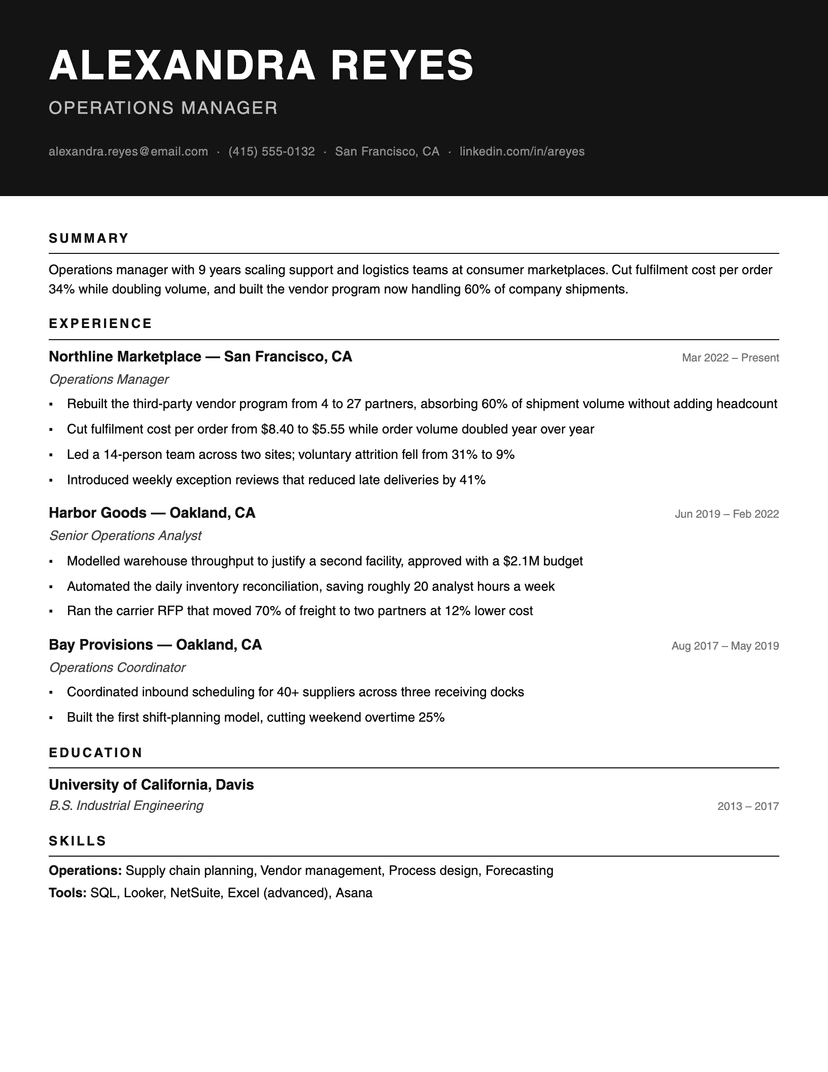
Ink Block
bold · monochrome
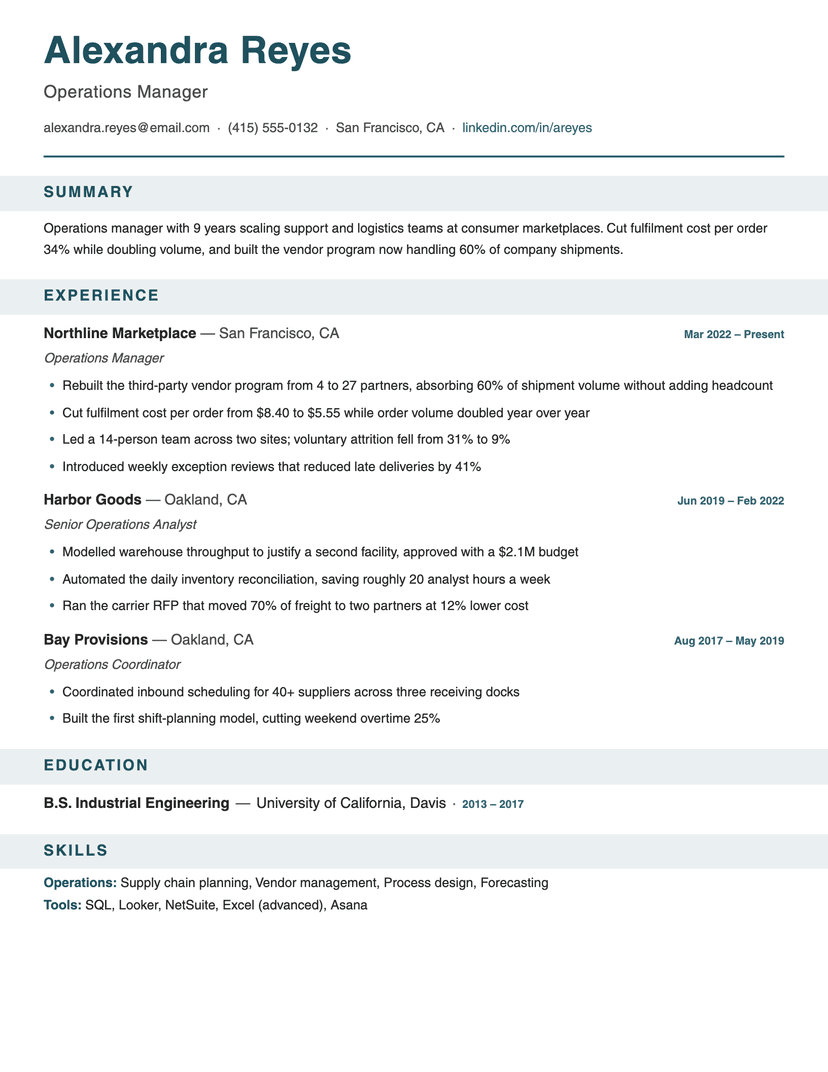
Banner
bold · structured
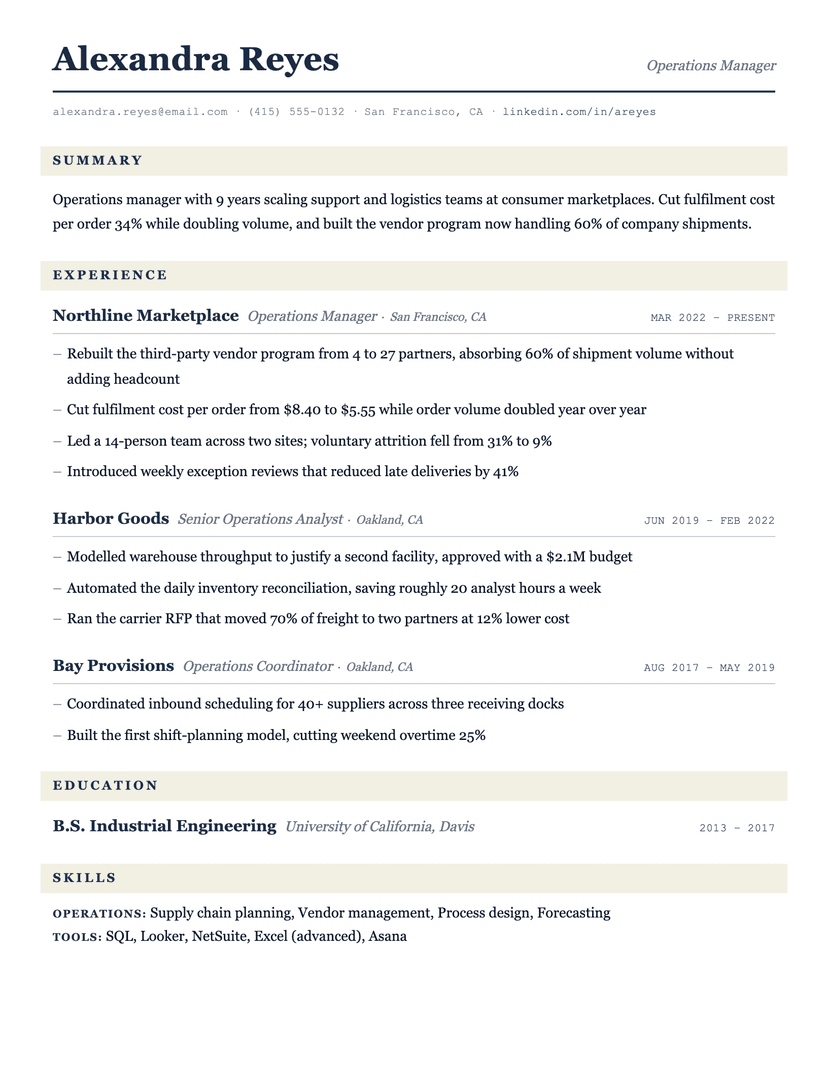
Ledger
serif · traditional
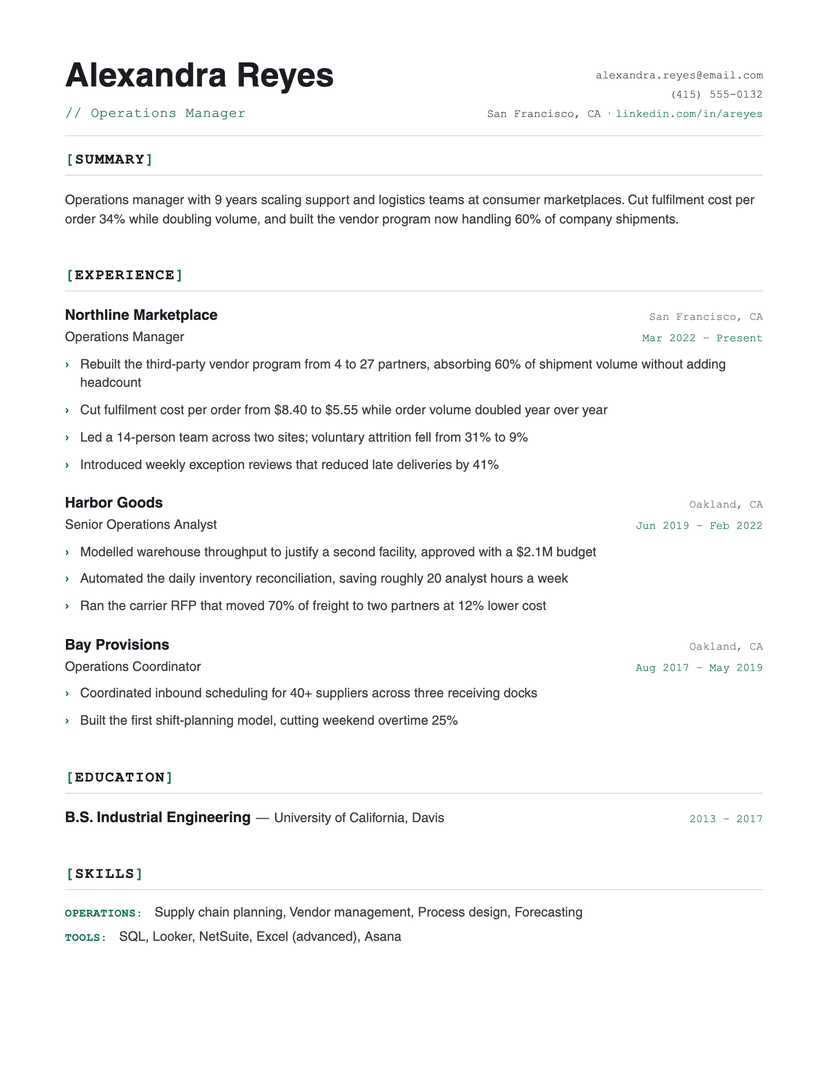
Bracket
technical · monospace
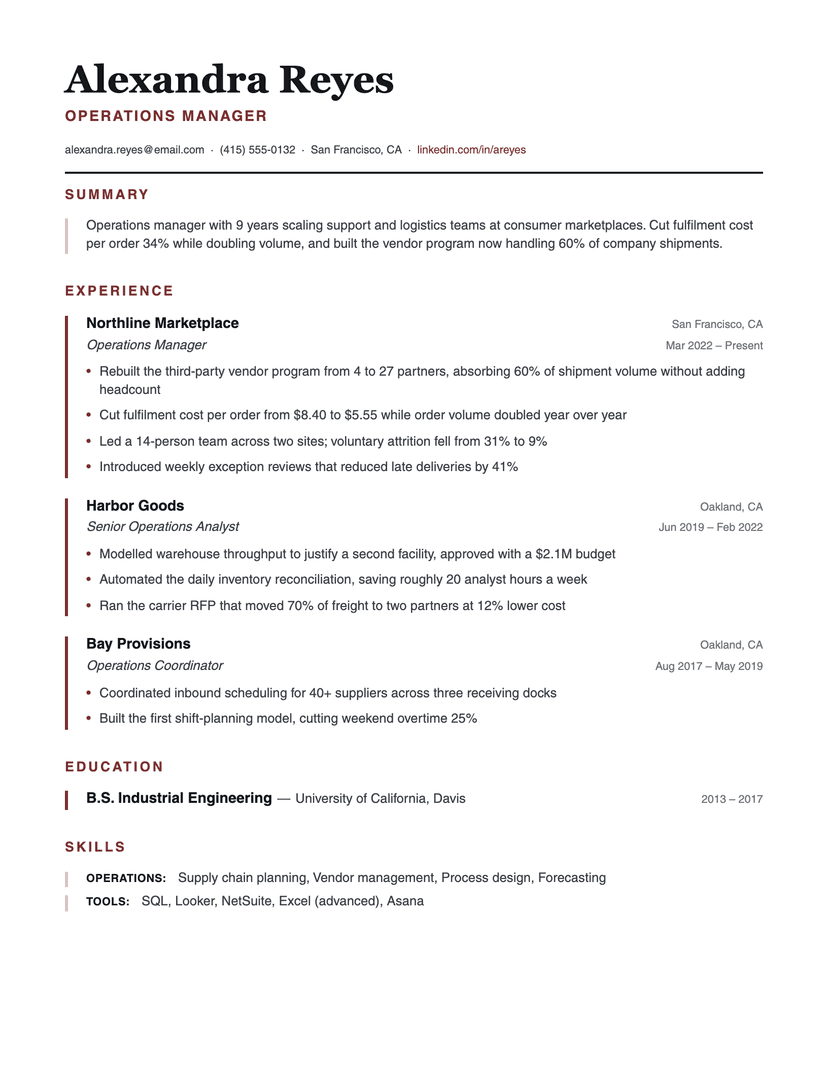
Left Rule
structured · serif-header
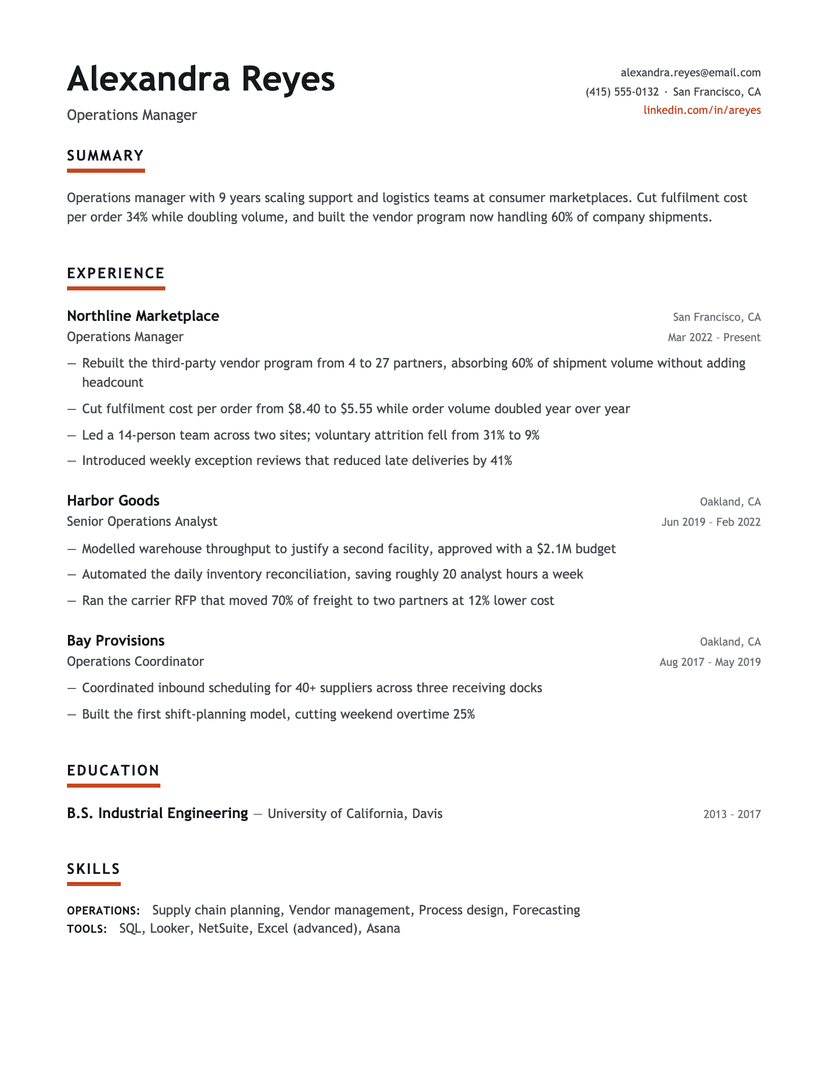
Underline Accent
modern · monochrome
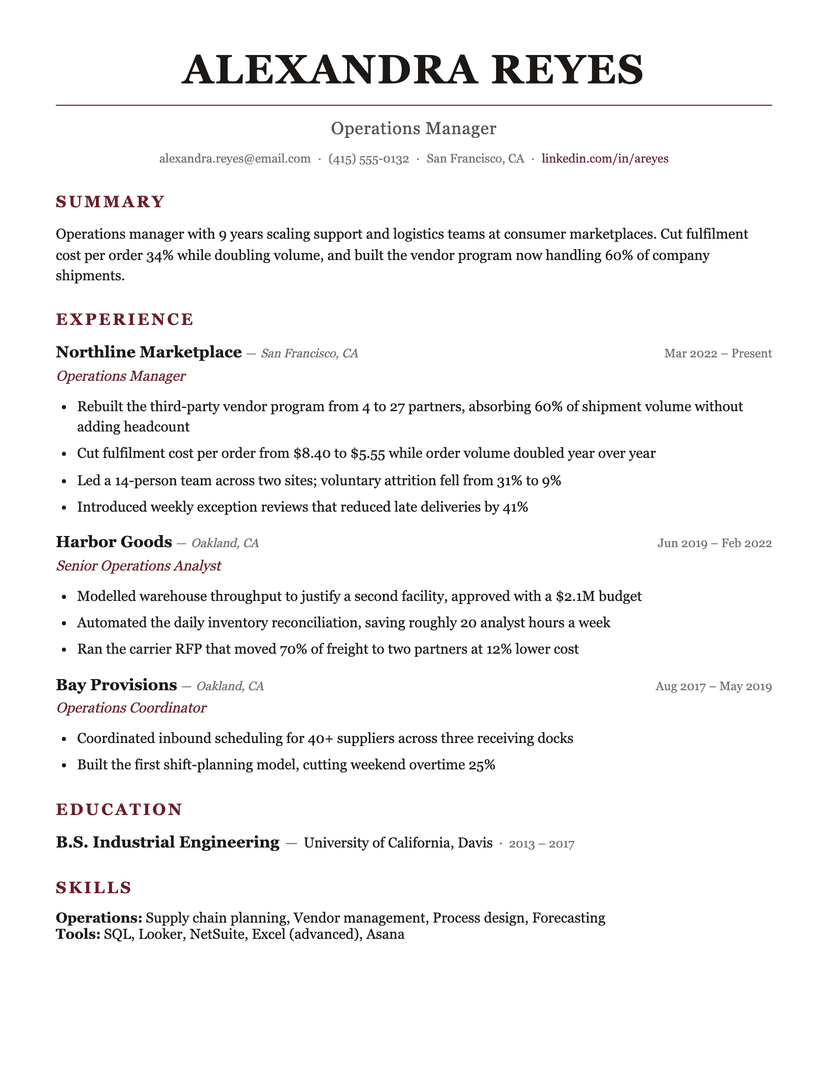
Burgundy
formal · serif
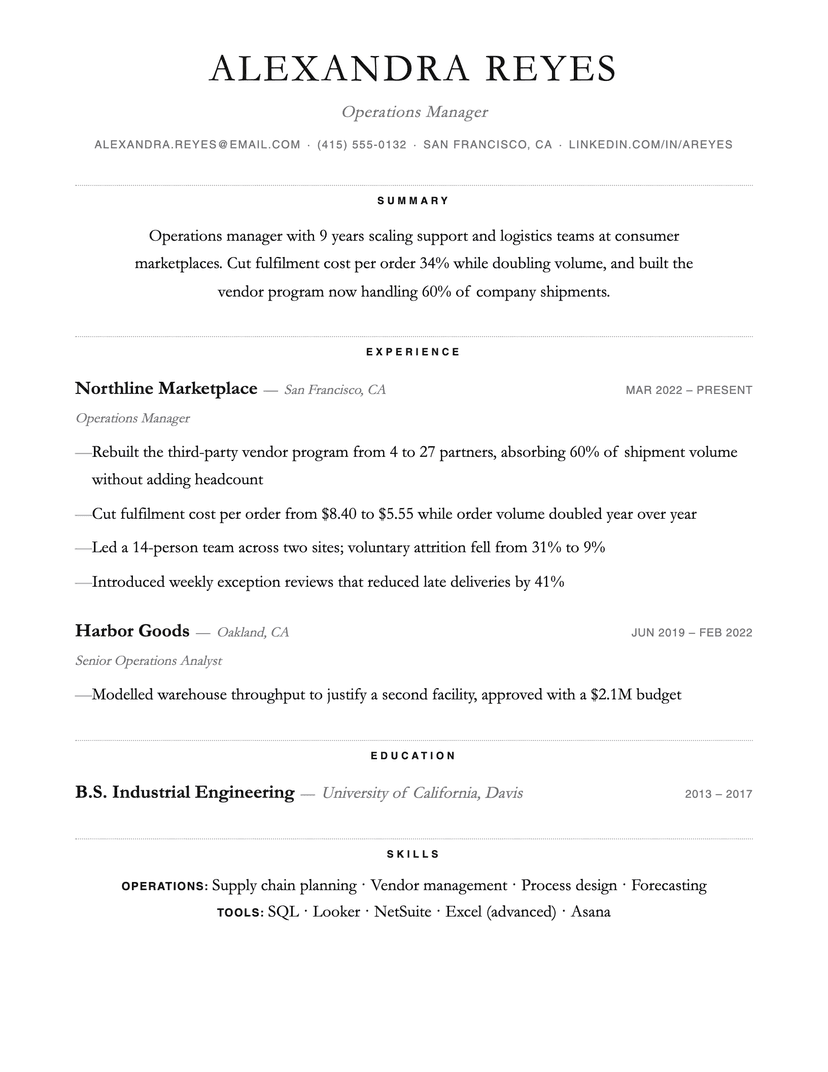
Dotted
minimal · centered

Numbered
systematic · editorial
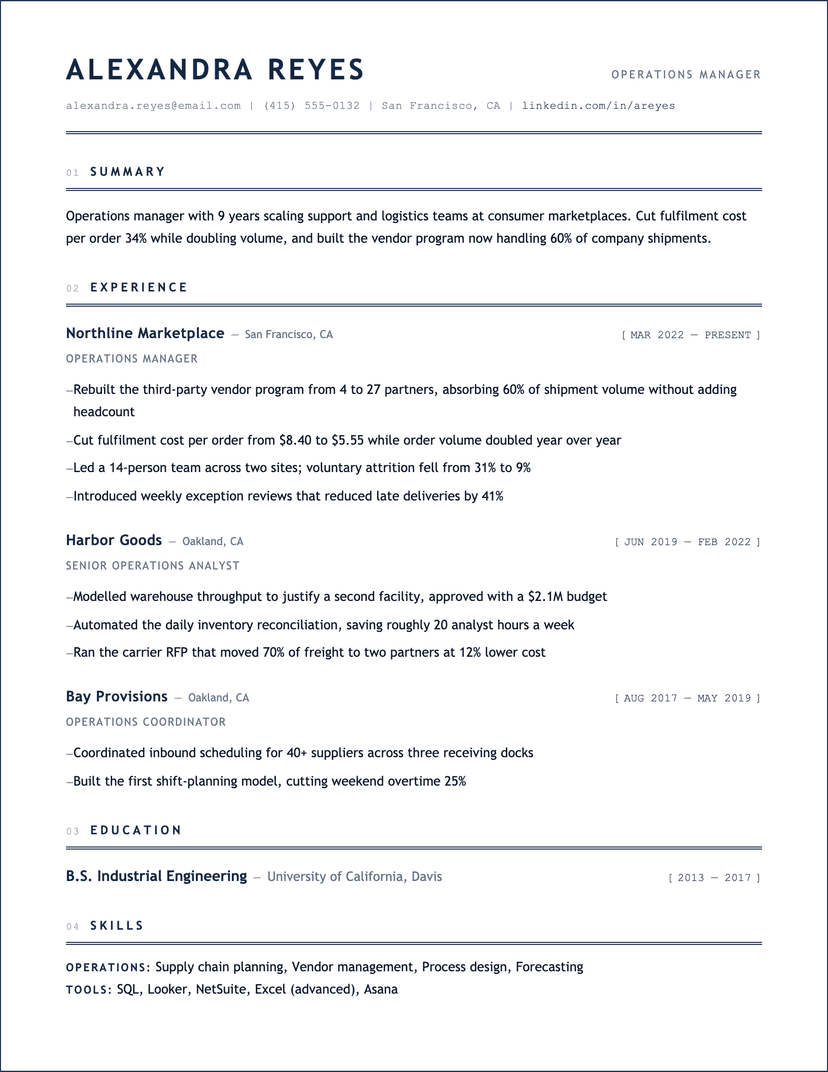
Blueprint
technical · structured
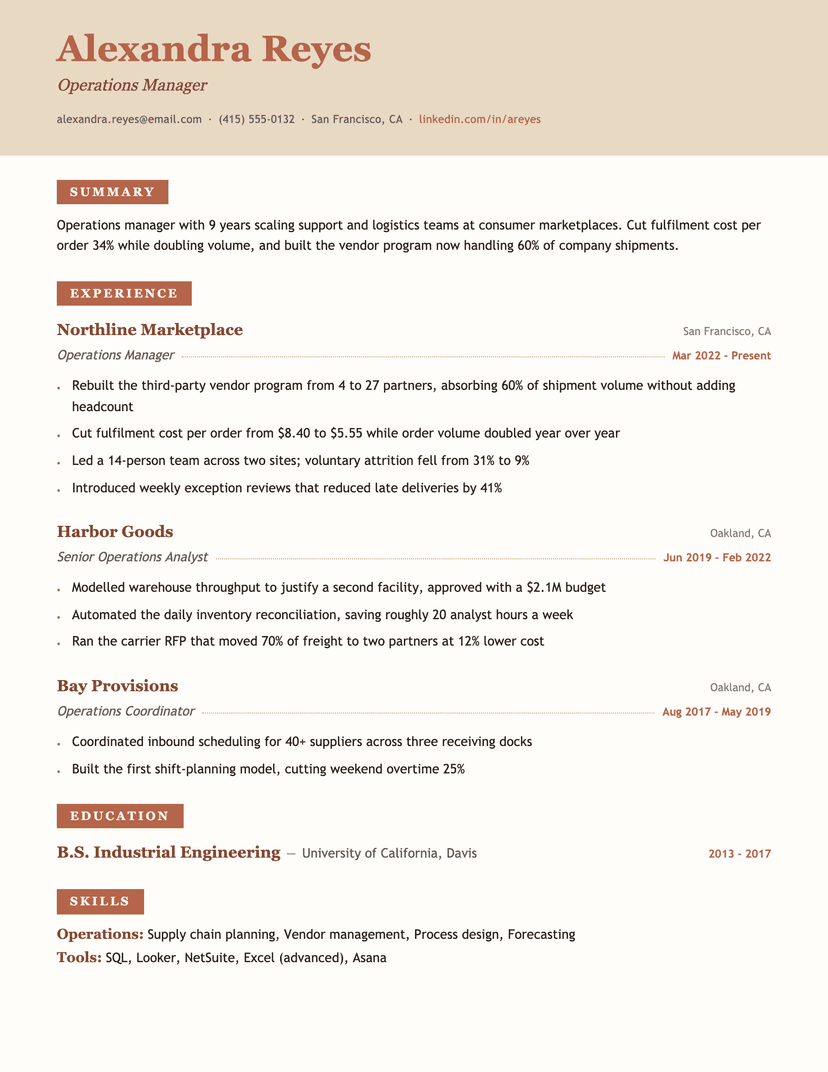
Terracotta
warm · serif
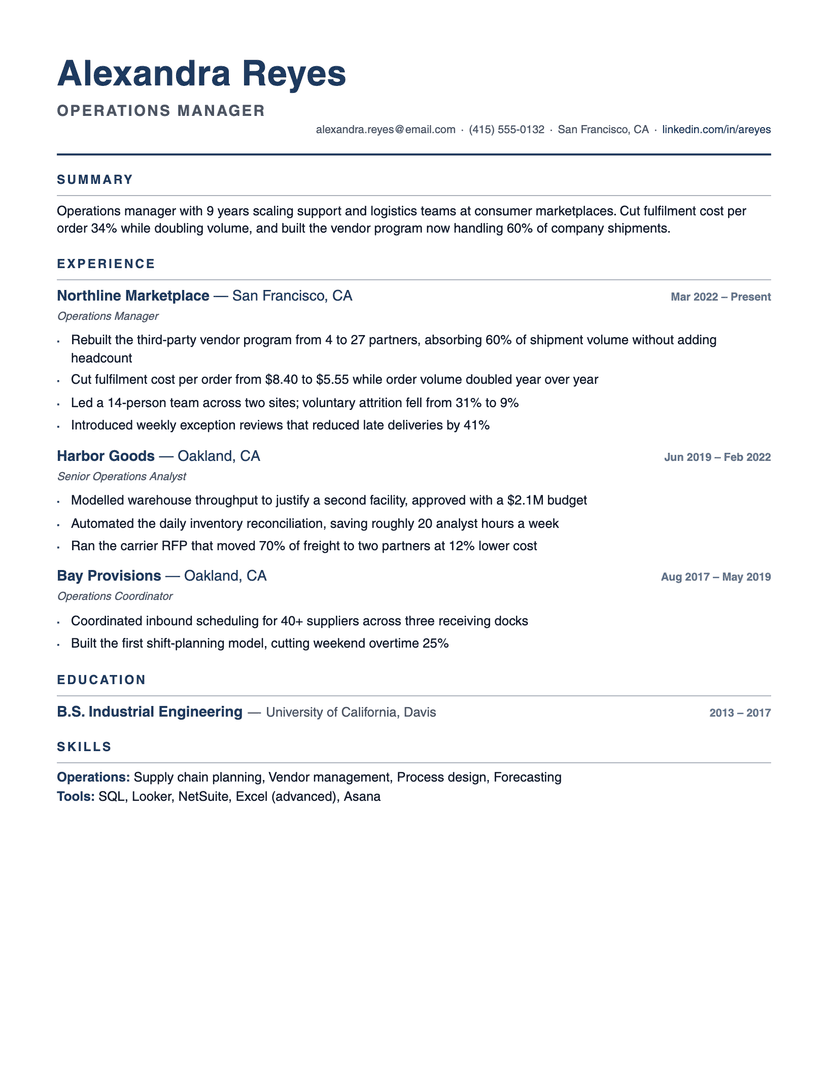
Compact Pro
compact · dense
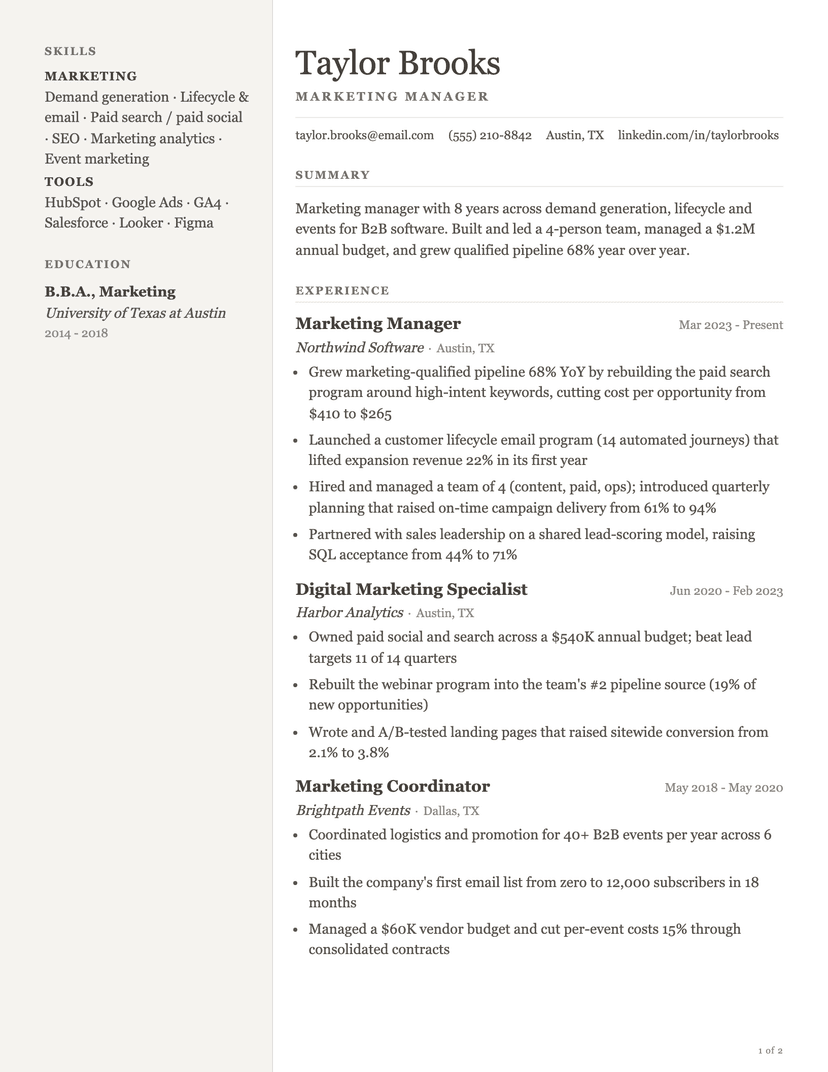
Pallas
serif · two-column
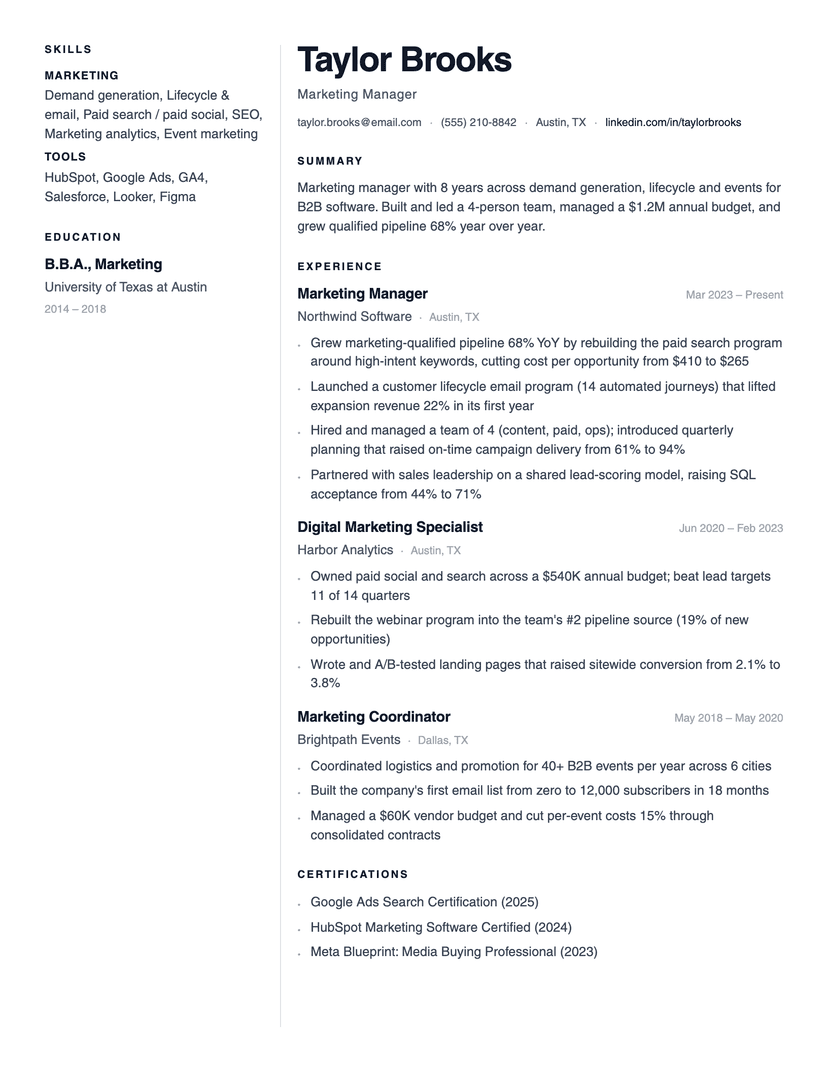
Lumen
minimal · two-column
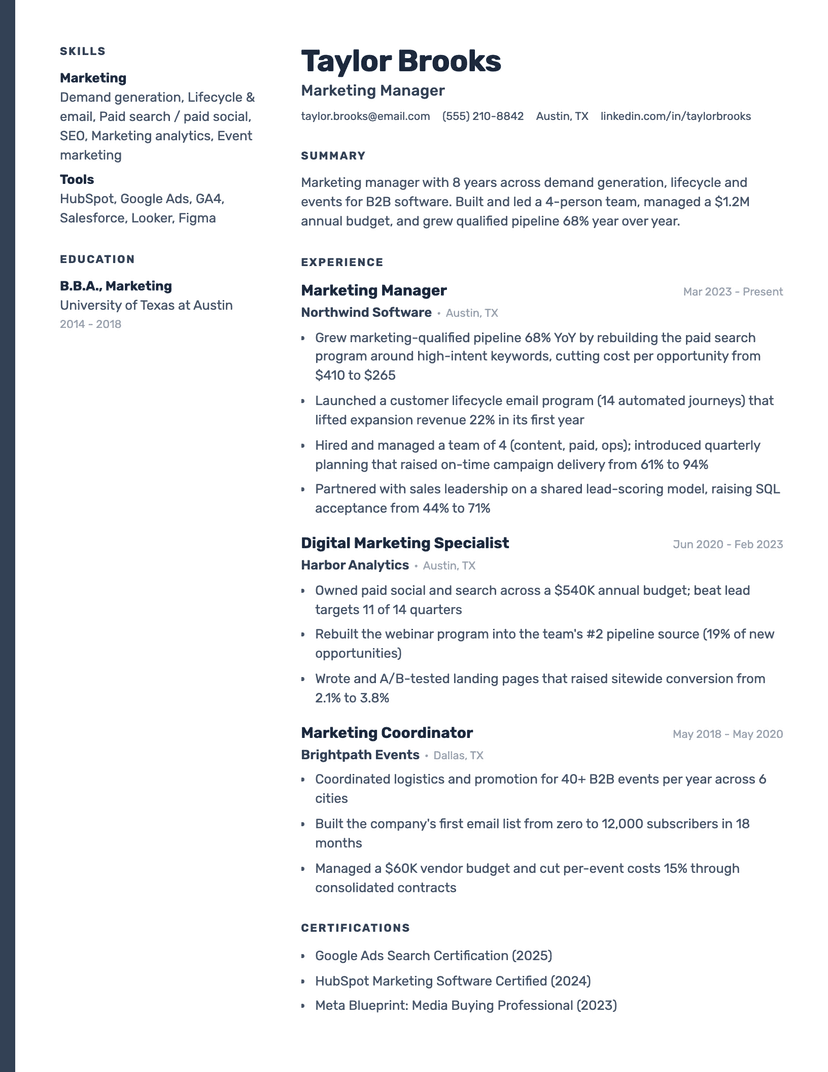
Slate Rail
two-column · modern
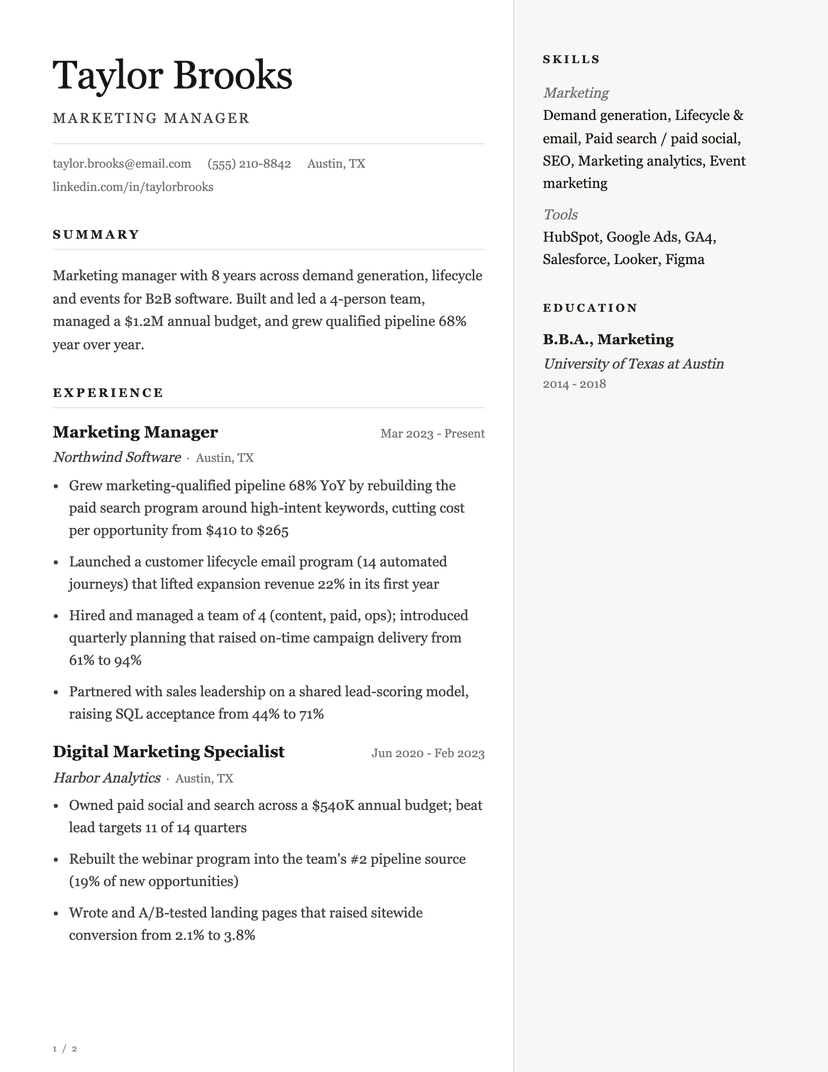
Ovation
serif · monochrome
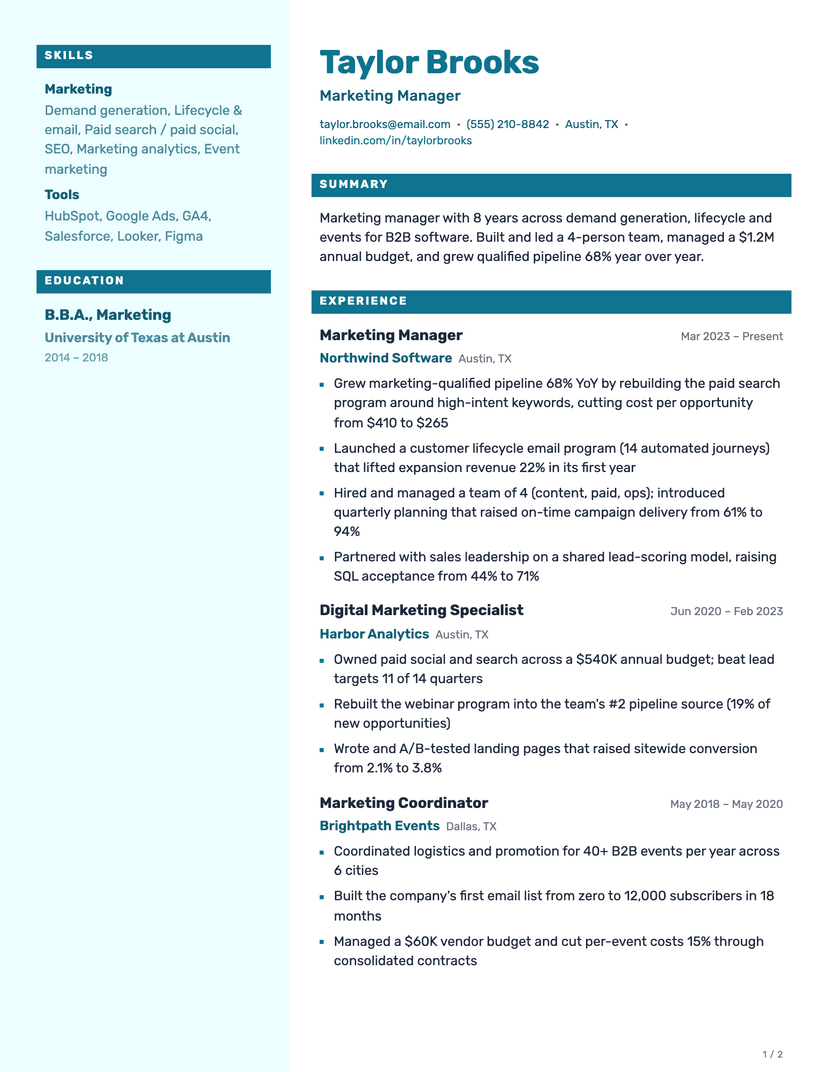
Fathom
two-column · modern

Aperture
two-column · modern
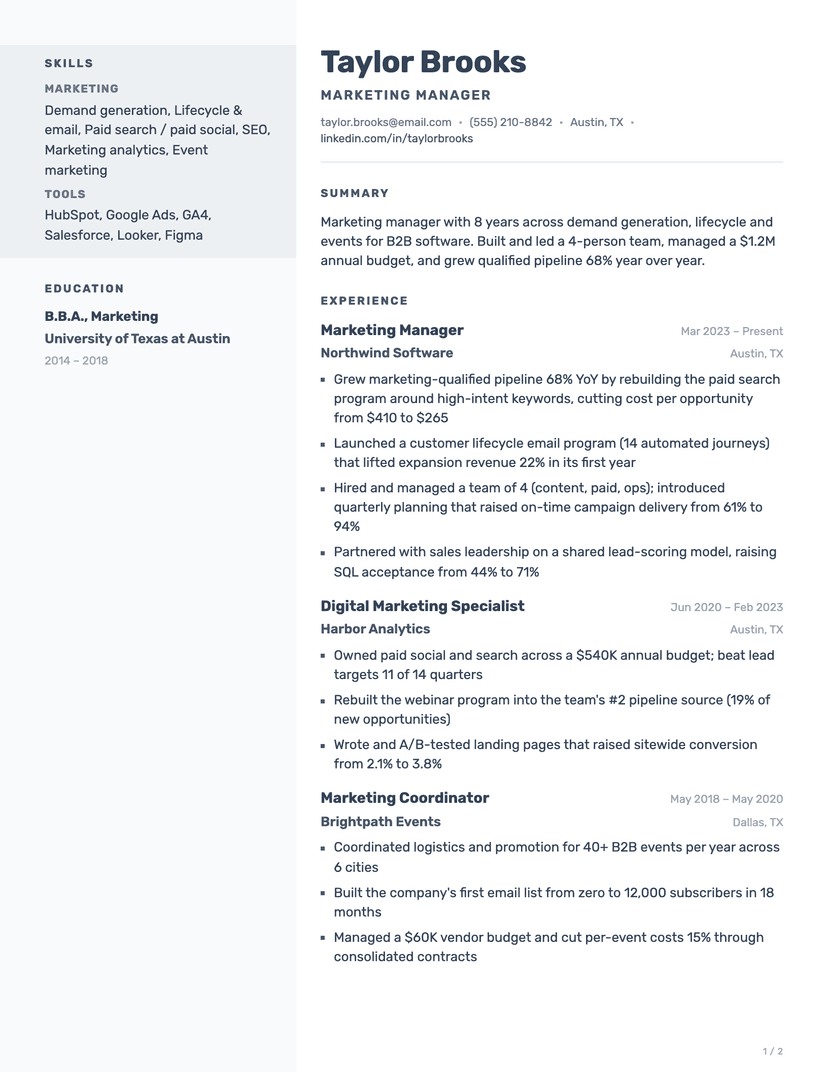
Cadence
two-column · modern
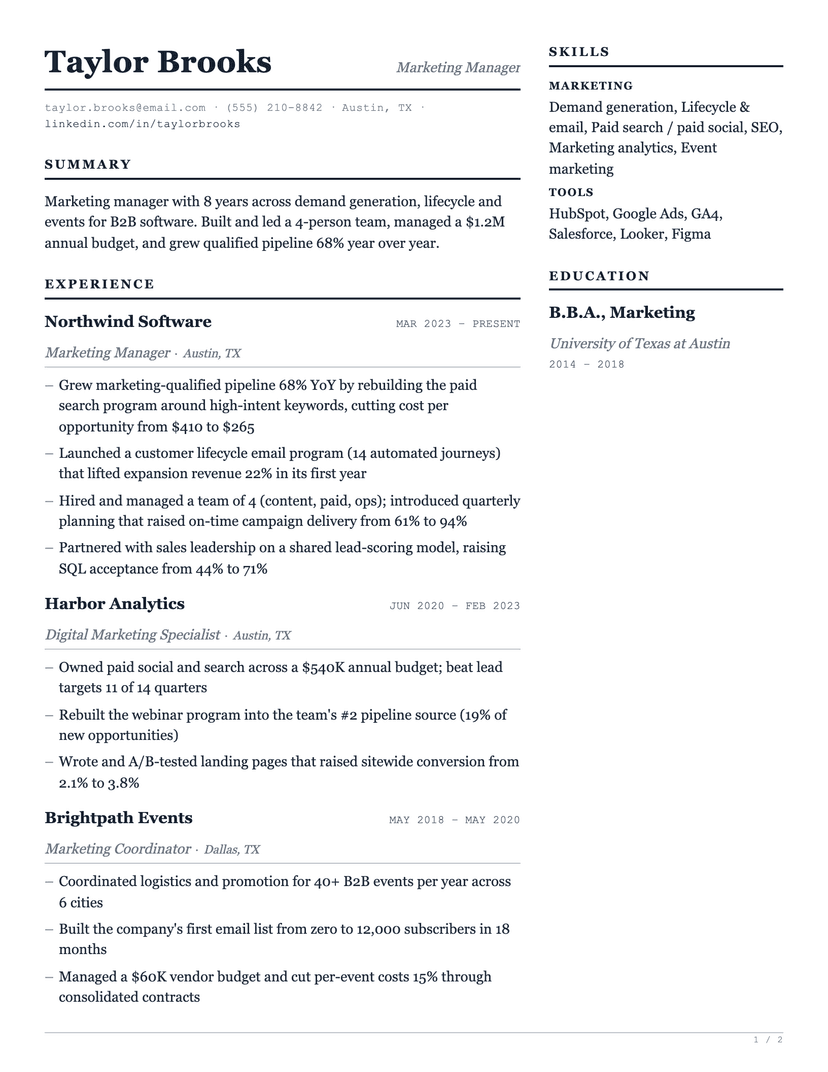
Ledger Two
two-column · serif

Porcelain
minimal · light
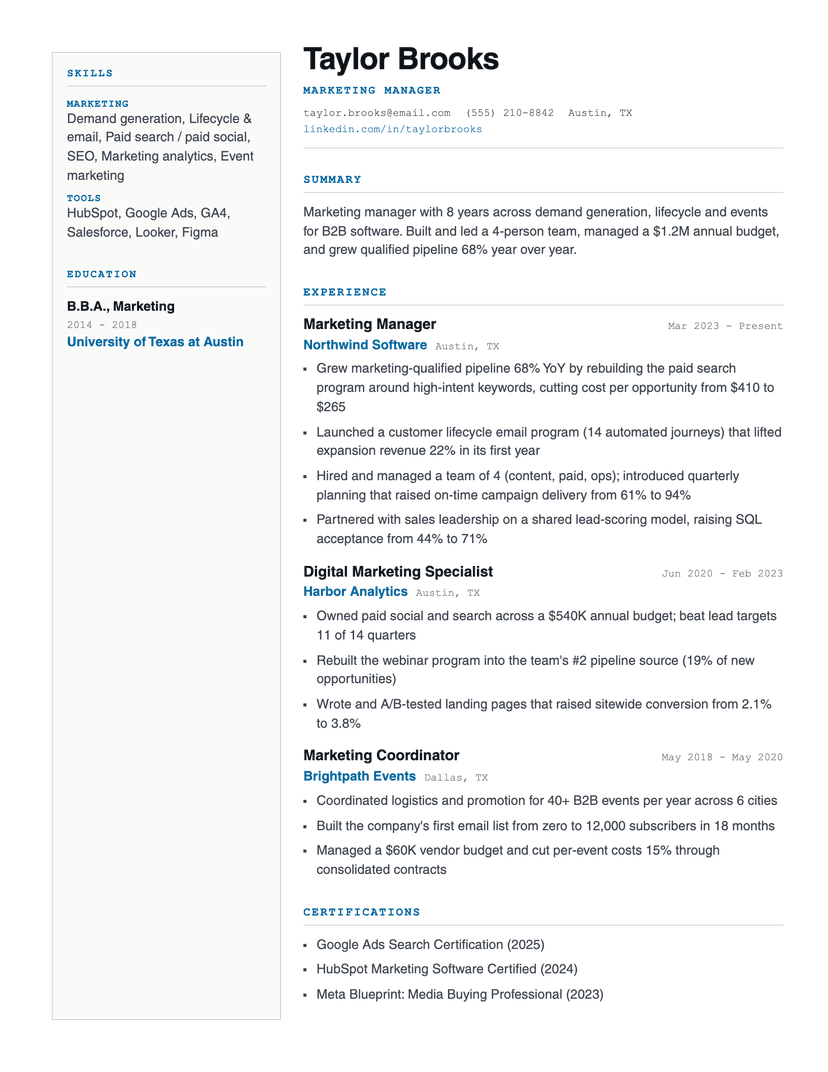
Foundry
two-column · technical
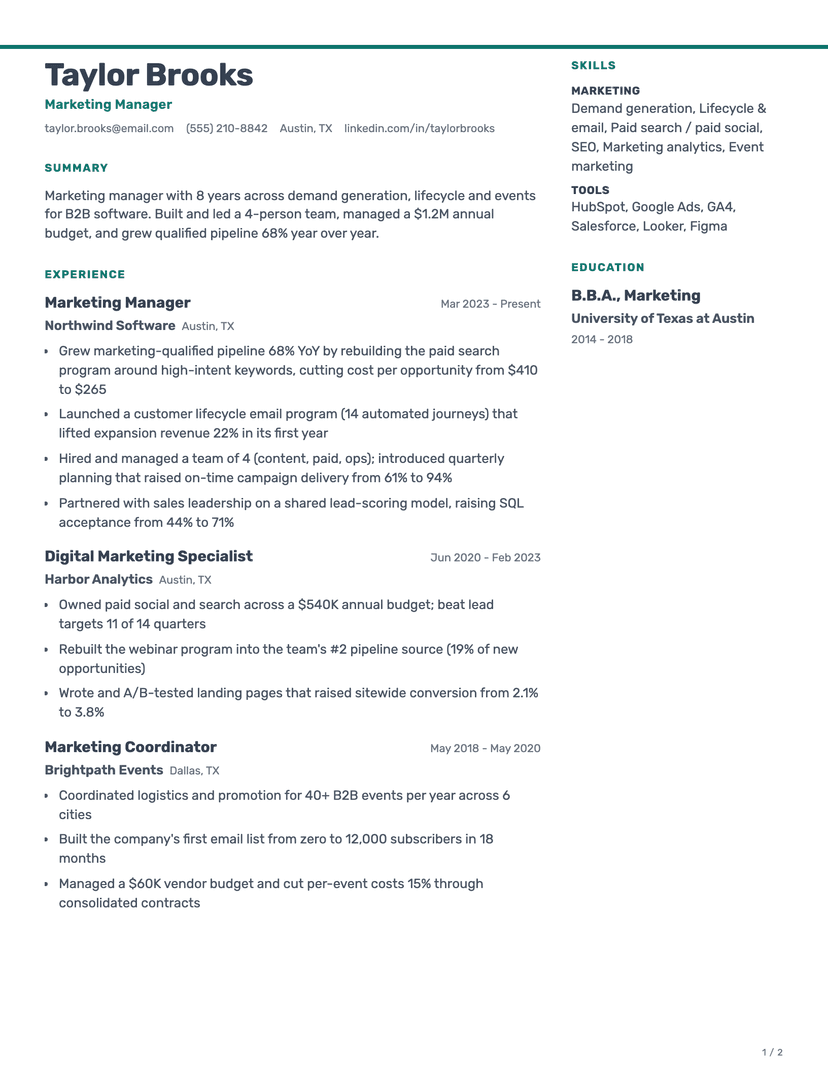
Halyard
two-column · modern
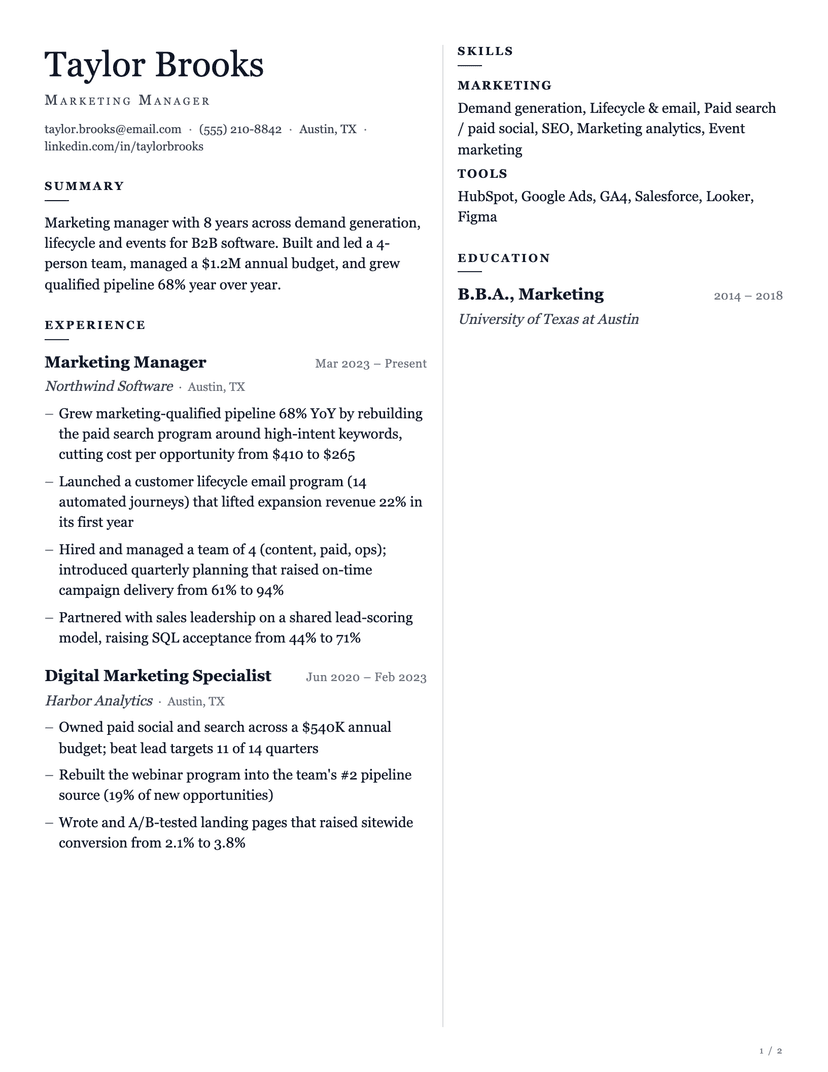
Corbel
two-column · serif
Writing a medical assistant resume
Split your skills the way the job is split: clinical vs. administrative
Medical assistant postings are written in two halves — back-office clinical duties (rooming, vitals, EKGs, phlebotomy, injections, point-of-care testing) and front-office administrative work (scheduling, insurance verification, prior authorizations, referrals, charge entry). Practice managers screen for coverage of both, so mirror that structure: separate Clinical and Administrative skill groups make the match instant for both the ATS keyword scan and the 20-second human skim.
Then prove the skills in your bullets, not just the list. "Phlebotomy" in a skills section is a claim; "30-40 draws/week" in an experience bullet is evidence. Name your EHR explicitly — Epic, athenahealth, eClinicalWorks, Cerner — because clinics filter hard on it: an MA who already knows their system starts producing in days instead of weeks, and hiring managers know it.
CMA, RMA, CCMA — get the certification details exactly right
The three main MA credentials are certifying-body specific: CMA is issued by the AAMA, RMA by American Medical Technologists (AMT), and CCMA by the National Healthcareer Association (NHA). Postings often name one specifically ("CMA (AAMA) preferred") but nearly all accept equivalents — so write yours with the full name, the certifying body, and its expiration: "Certified Clinical Medical Assistant (CCMA), NHA, expires 2027." The abbreviation alone can miss a keyword match against a posting that spells it out, and vice versa.
Put certifications in their own section directly under your summary, and get the credential into your title line too ("Certified Medical Assistant (CCMA)") — it's the single strongest filter in MA screening. Add BLS/CPR with the issuing body, plus supplemental credentials like a phlebotomy technician certificate (CPT) or EKG technician certificate where you hold them. If you're newly graduated with the exam scheduled, write "CCMA exam scheduled [month year]" — certification-pending candidates get interviews; resumes silent on certification often don't.
The numbers that make an MA resume concrete
Almost everything a medical assistant does is countable, and volume is exactly what clinics are trying to gauge: patients roomed per day (20+ signals a busy practice), providers supported (a 3-provider team is a different job than a solo practice), draws per week, EKGs per day, prior authorizations processed, and specialty context — cardiology, pediatrics, family medicine each carry different skill implications. "Assisted providers with patient care" says nothing; "roomed 24 patients/day for a 3-provider cardiology team" tells a practice manager precisely what pace you sustain.
Process improvements carry extra weight because MA workflows directly drive clinic throughput and revenue: wait-time reductions, recall-list completion rates, clean-claim rates on charge entry, referral turnaround times. If you're a new graduate, quantify your externship the same way — site, specialty, hours, and daily volumes — and list your diploma program's clinical hour count. One real number from 160 externship hours beats a paragraph of coursework descriptions.
Frequently asked questions
What is the difference between CMA, RMA and CCMA on a resume?+
They're equivalent-level credentials from different certifying bodies: CMA from the AAMA, RMA from AMT, and CCMA from the NHA. Most employers accept any of the three even when a posting names one. List yours with the full credential name, the certifying body, and expiration date — and put the abbreviation in your resume title line, since it's the first thing MA screeners search for.
What skills should a medical assistant resume include?+
Both halves of the job: clinical skills (patient rooming and vitals, EKG, phlebotomy, injections/immunizations, point-of-care testing) and administrative skills (scheduling, insurance verification, prior authorizations, referrals, charge entry) — plus the EHR systems you've used by name, like Epic, athenahealth or eClinicalWorks. Grouping them into Clinical and Administrative sections mirrors how postings are written and makes the match obvious.
How do I write a medical assistant resume with no experience?+
Lead with your certification (or scheduled exam date) and your diploma program, then treat your externship as your first job: site, specialty, total hours, and daily volumes — patients roomed, draws performed, systems used. Add transferable customer-facing work (retail, food service, reception) framed around pace and volume, since sustained patient throughput is exactly what clinics screen for.
Is this medical assistant resume template ATS-friendly?+
Yes — single column, standard section headings, no tables or graphics, and certifications in the document body where parsers can read them. It parses cleanly through the systems clinics and health networks hire through, including Workday, Taleo and iCIMS, and the Word export uses real document structure rather than layout boxes.
Templates for other roles
Already have a resume? See exactly what an ATS parses out of it.
Run the free ATS checker