

Browse resume templates
Browse allJake's Resume
dense · serif
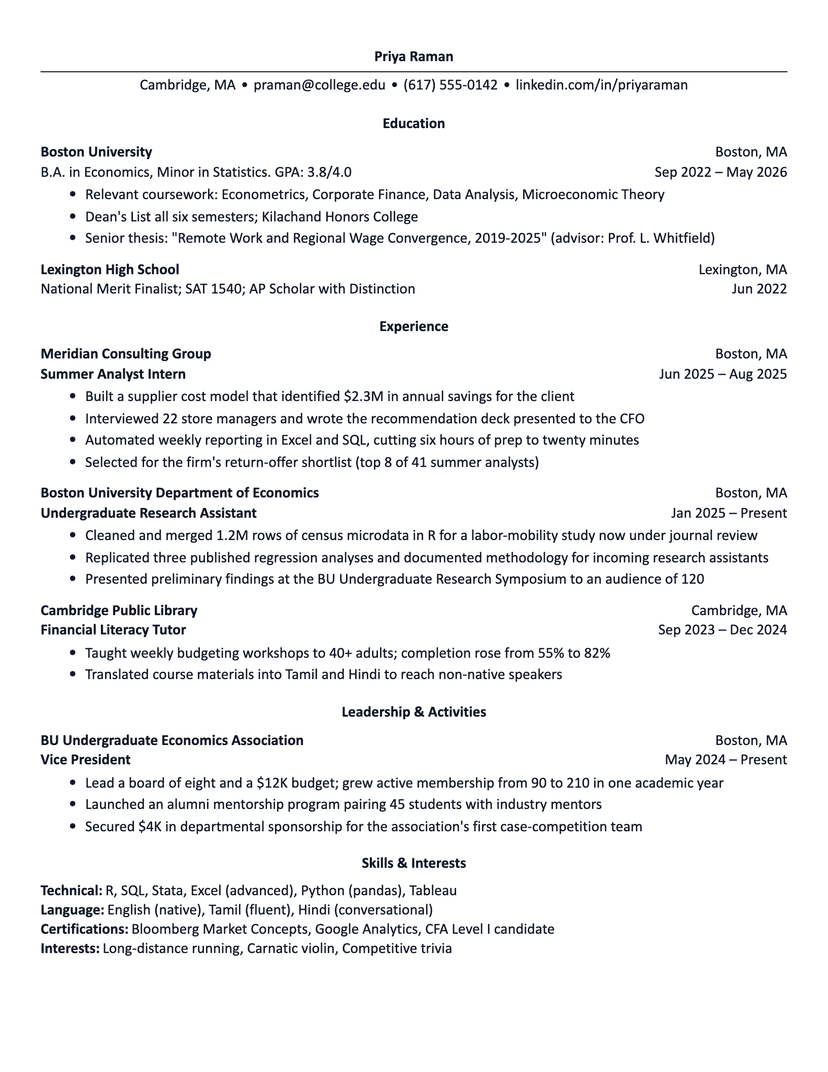
Harvard
academic · plain
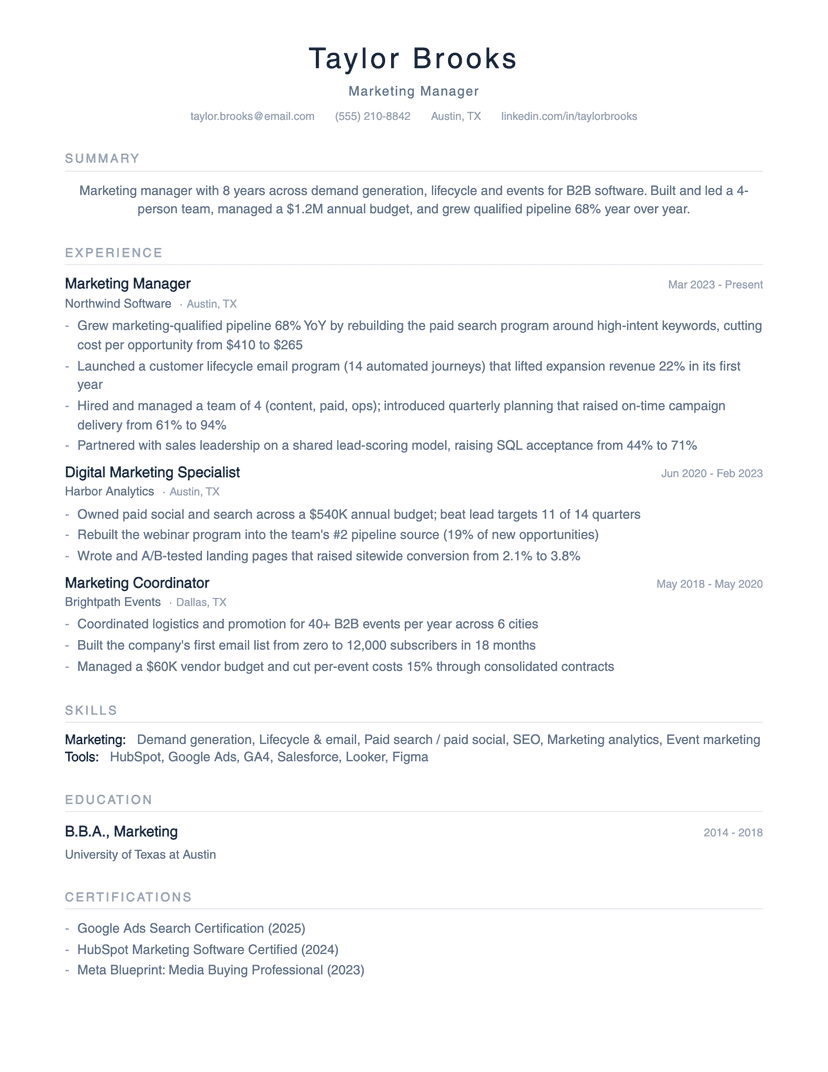
Minimalist
minimalist · whitespace

Classic
clean · traditional

Timeline
timeline · visual
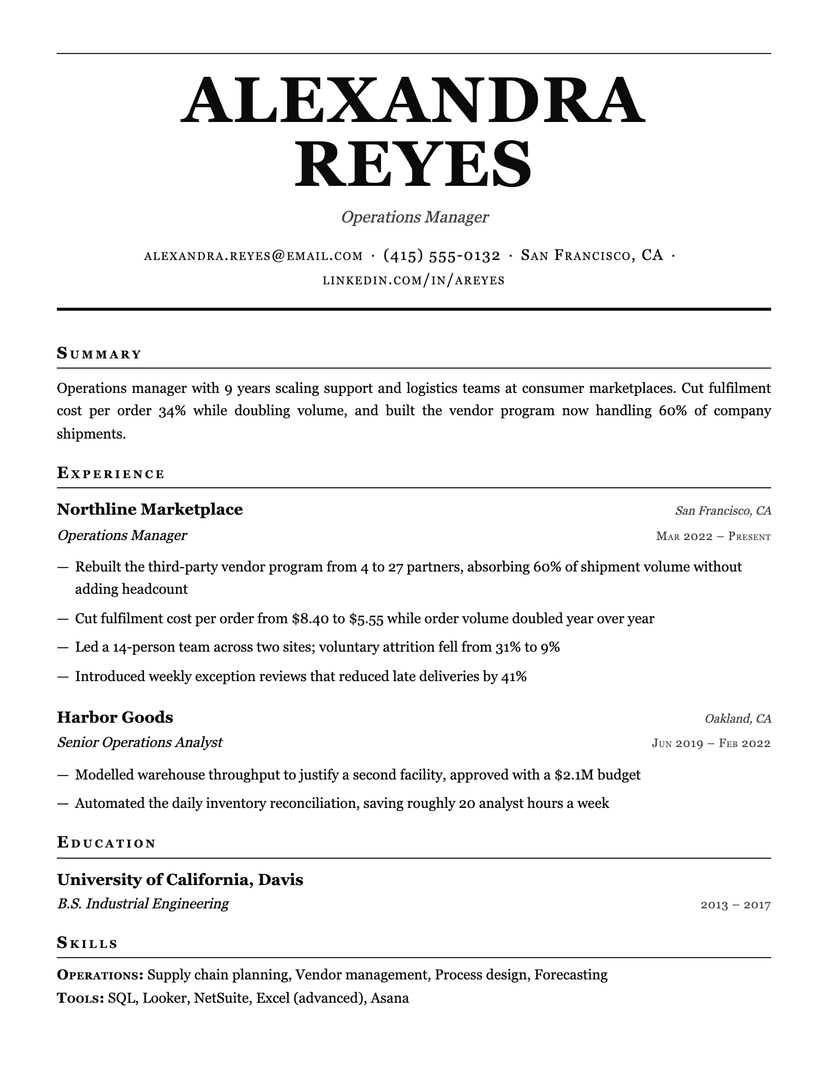
Broadsheet
serif · traditional

Editorial
modern · editorial
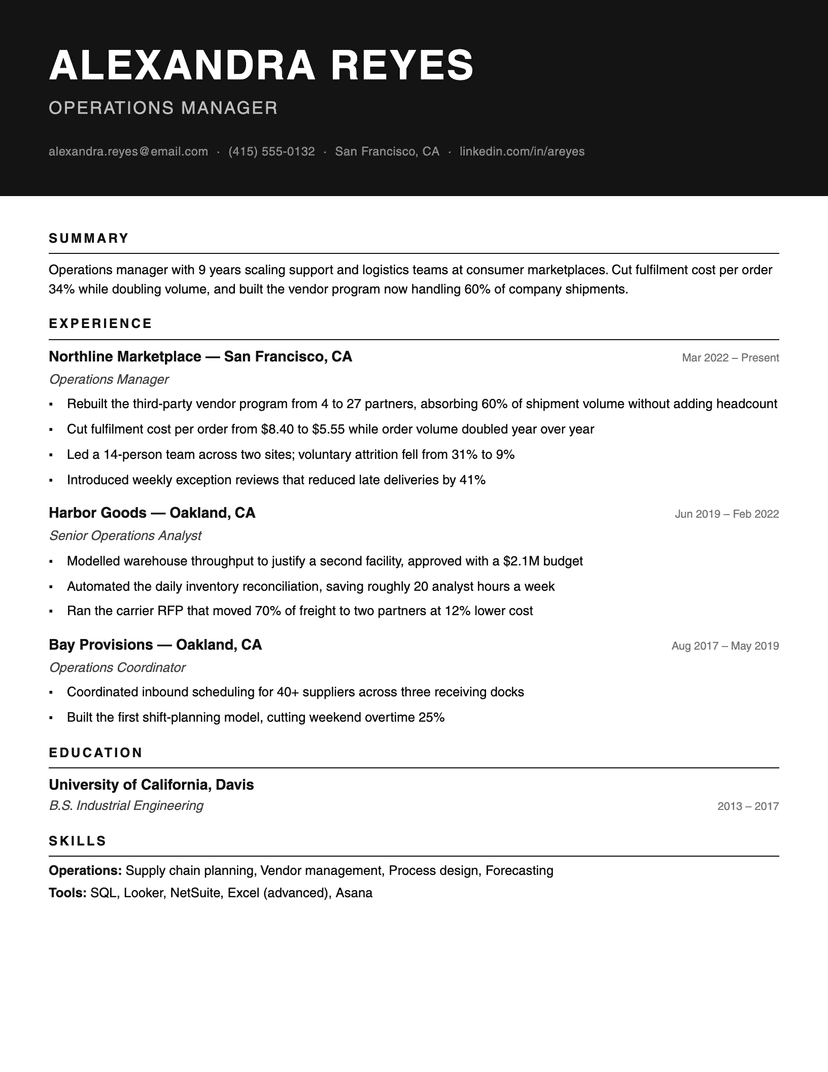
Ink Block
bold · monochrome
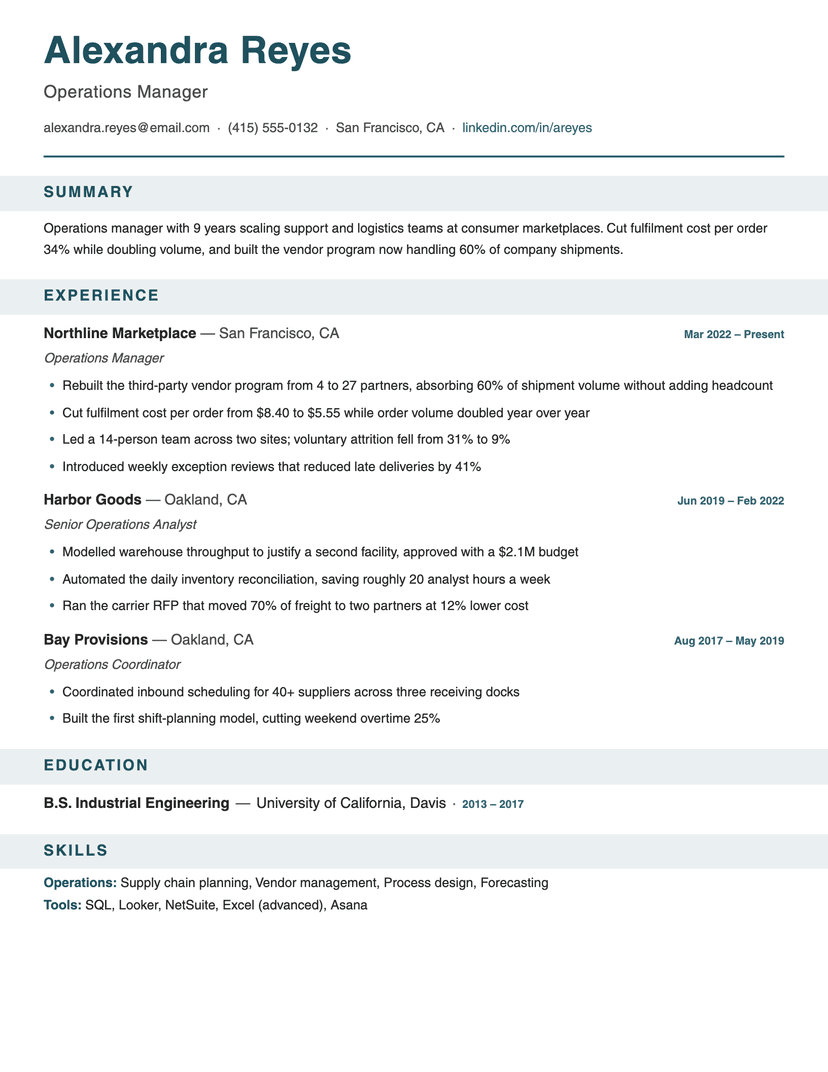
Banner
bold · structured
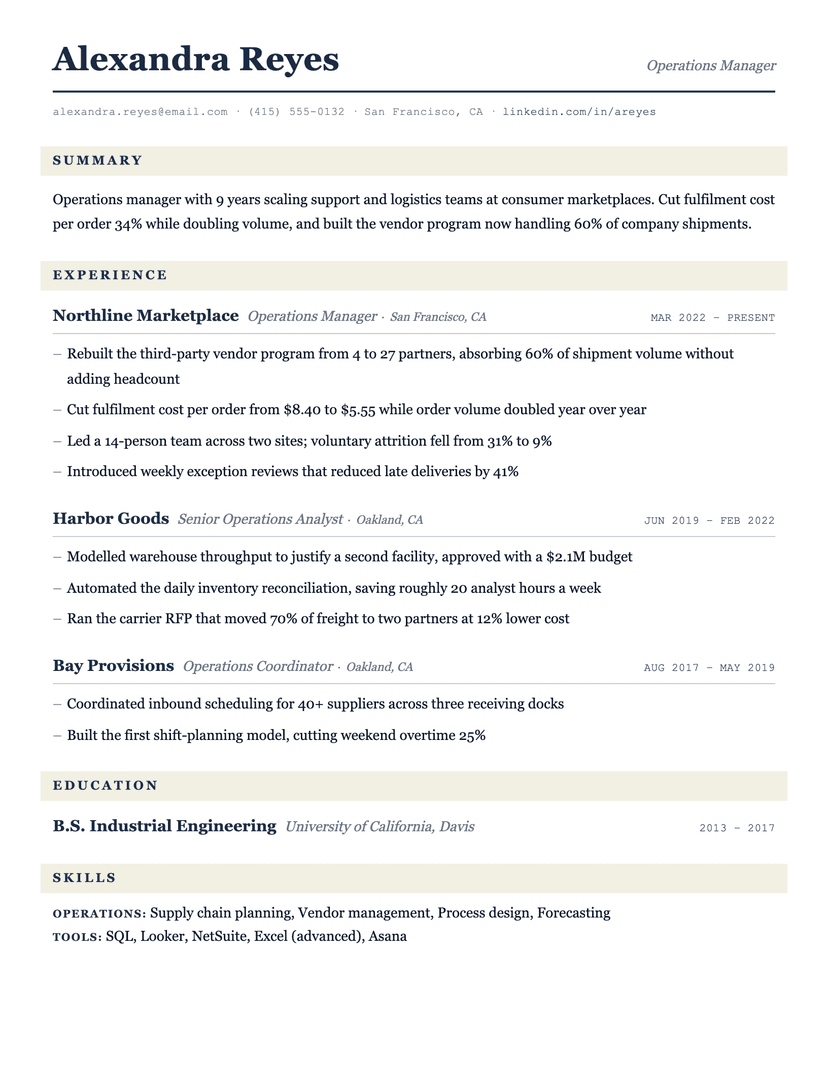
Ledger
serif · traditional
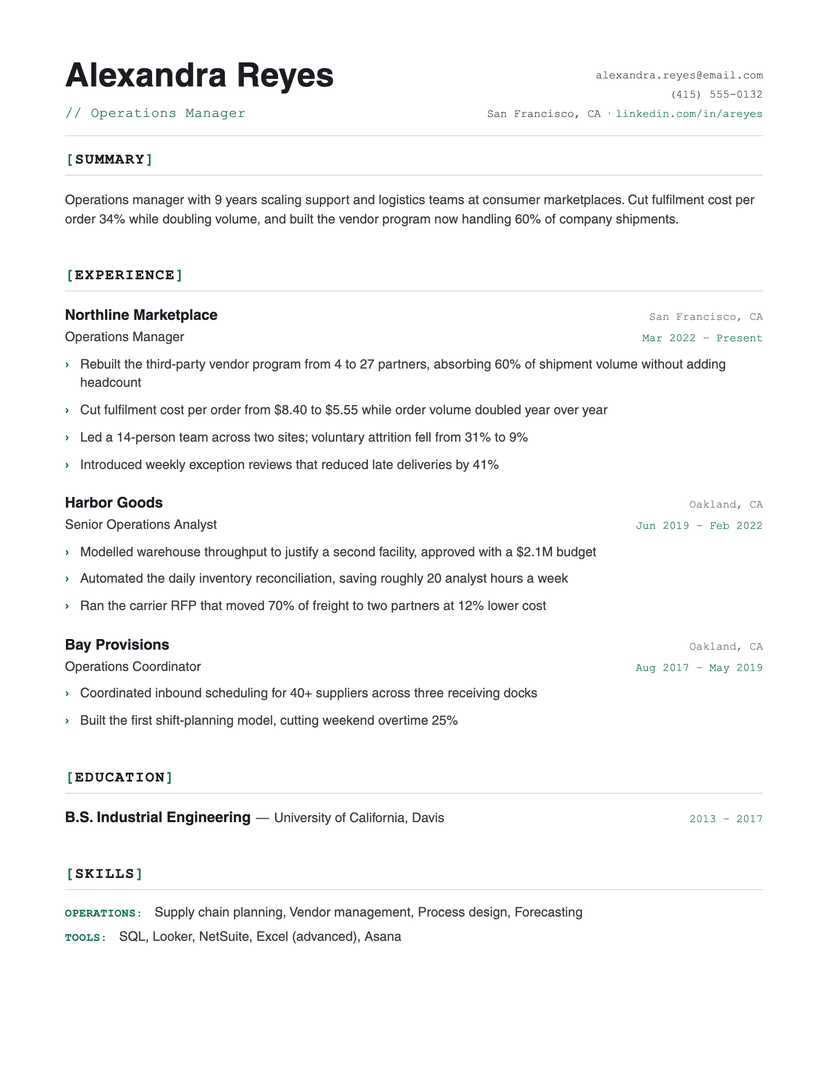
Bracket
technical · monospace
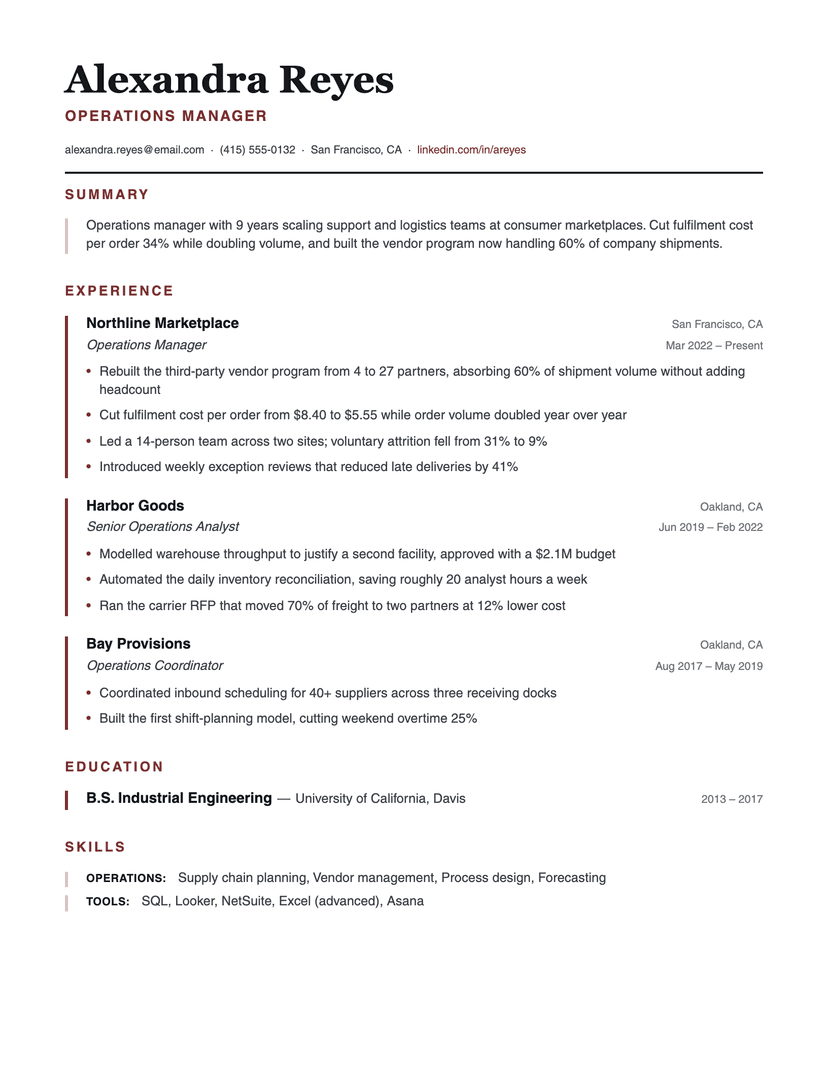
Left Rule
structured · serif-header
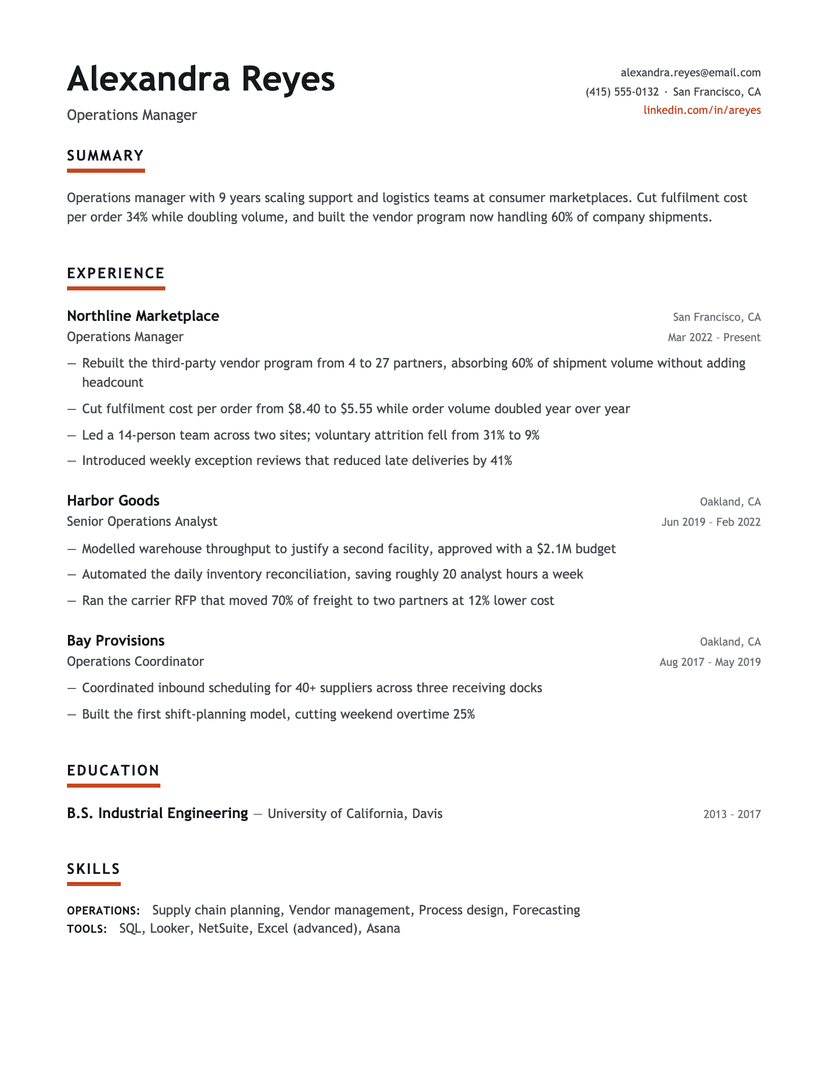
Underline Accent
modern · monochrome
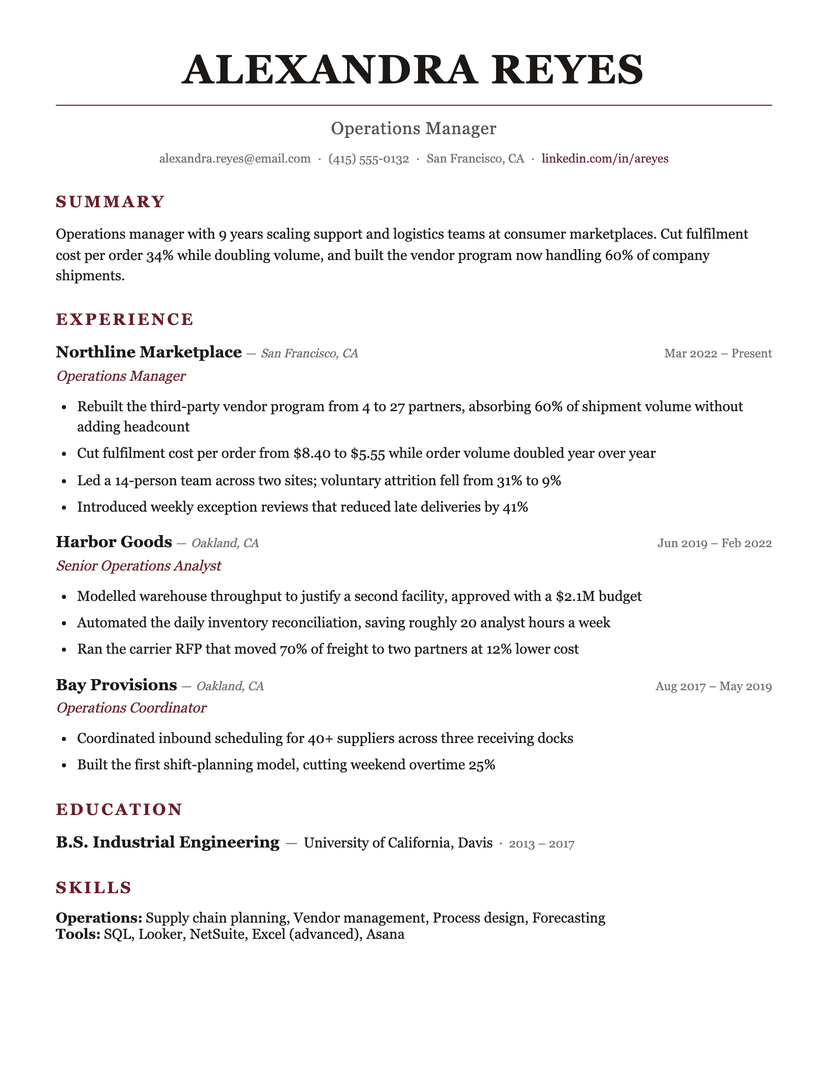
Burgundy
formal · serif
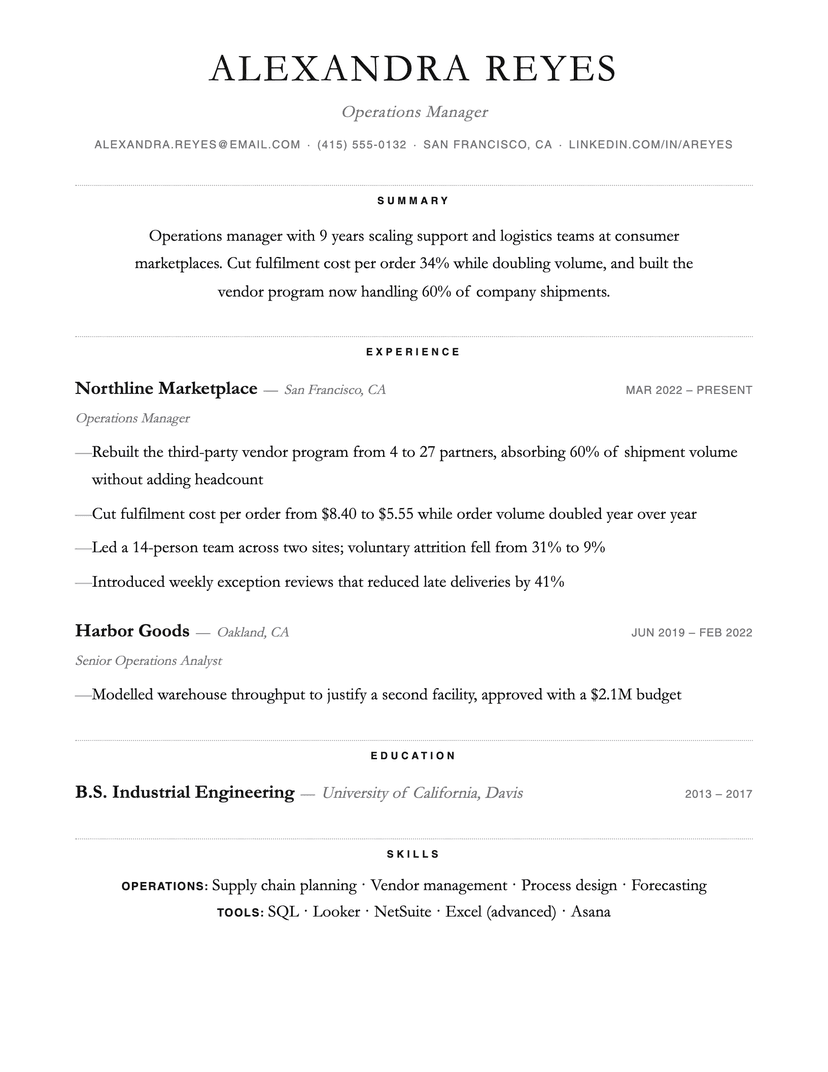
Dotted
minimal · centered

Numbered
systematic · editorial
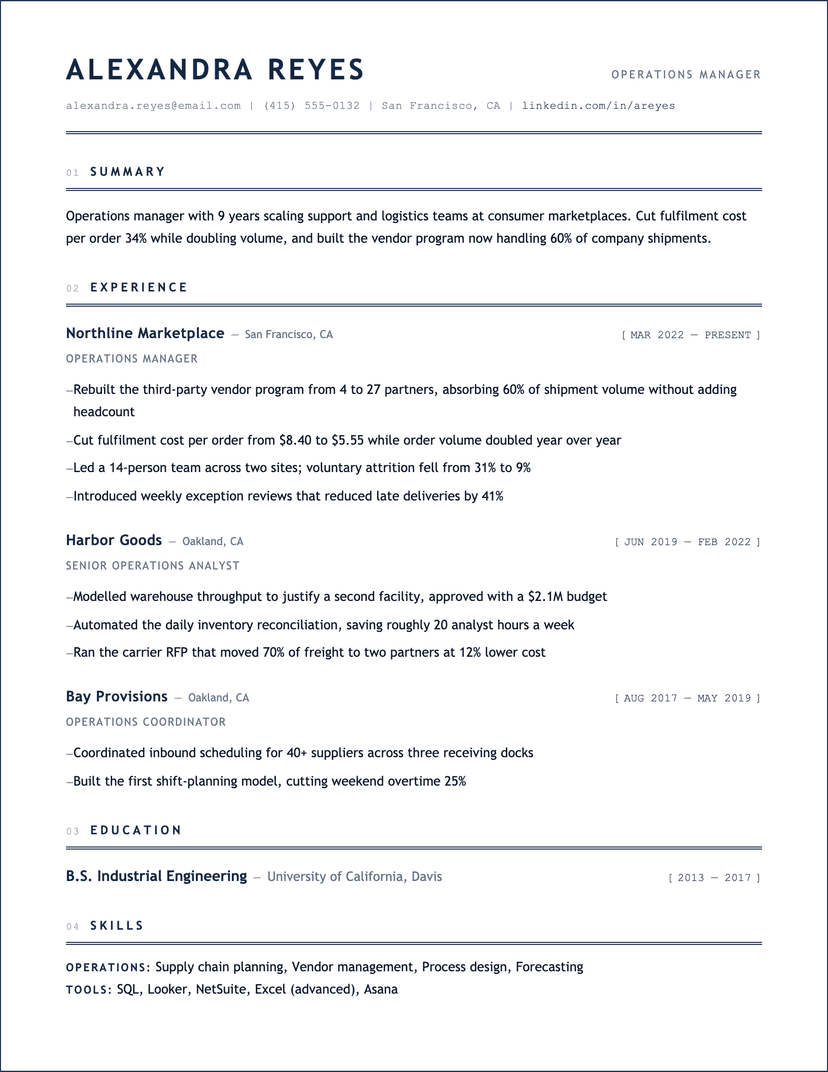
Blueprint
technical · structured
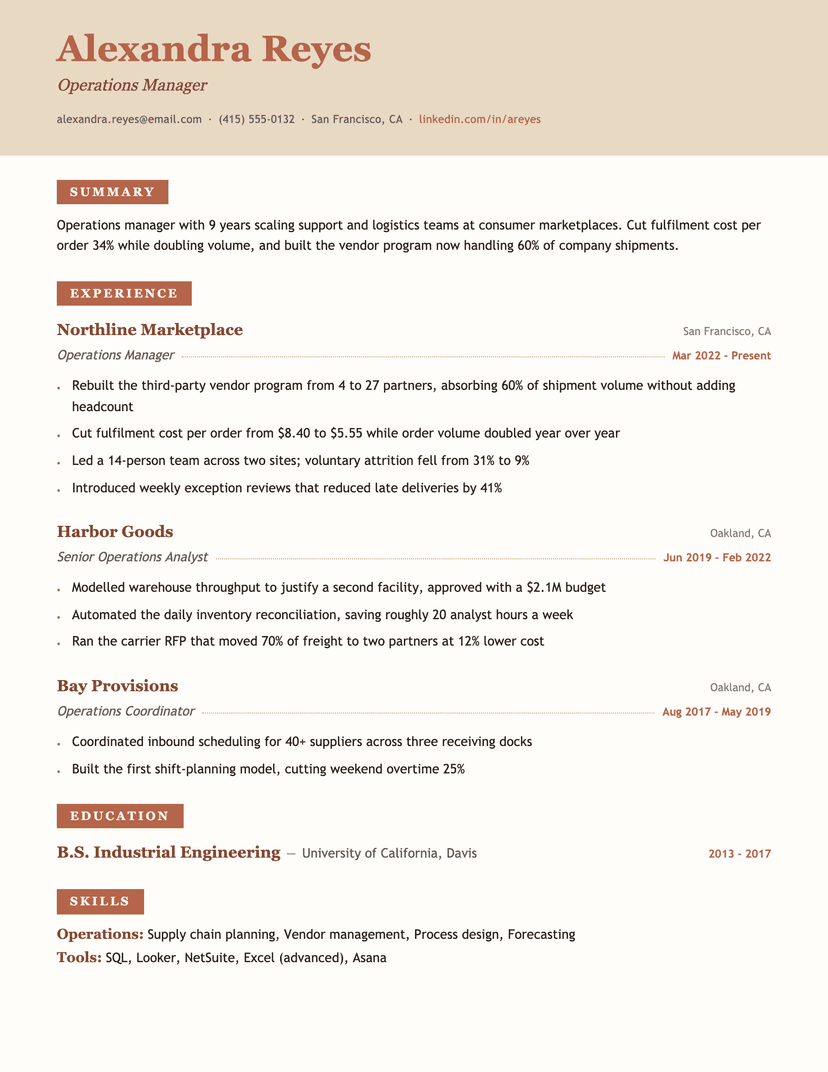
Terracotta
warm · serif
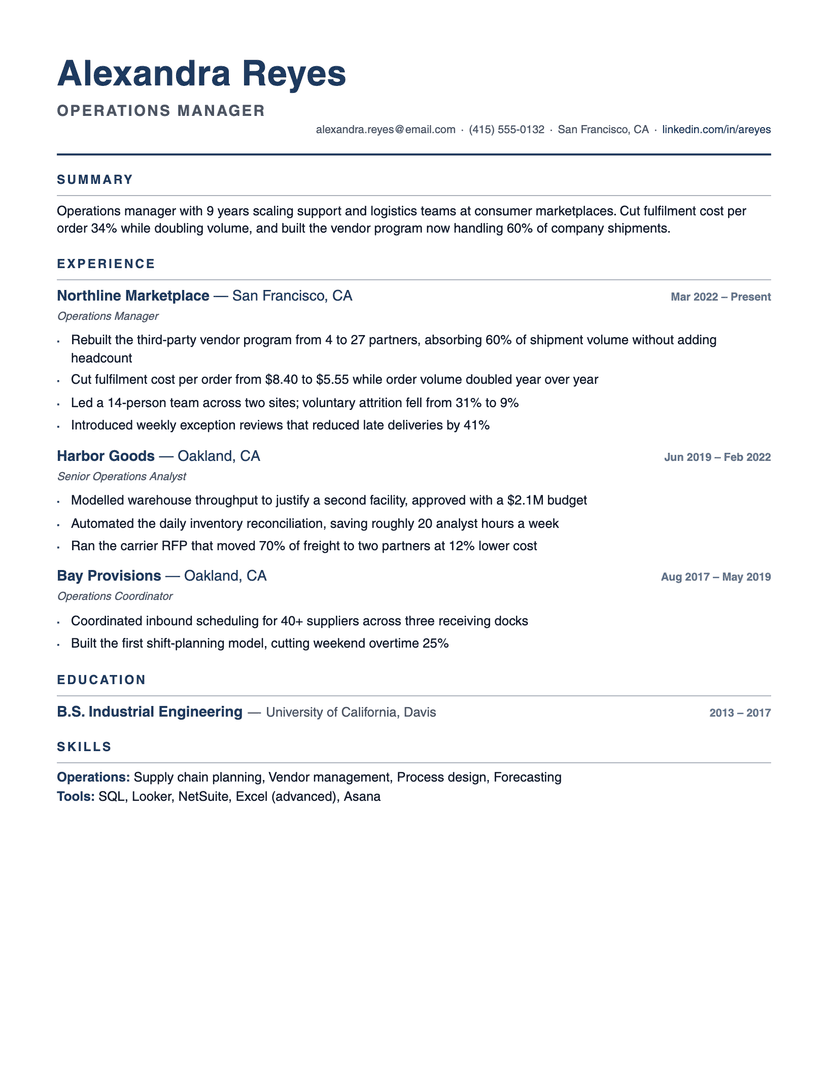
Compact Pro
compact · dense
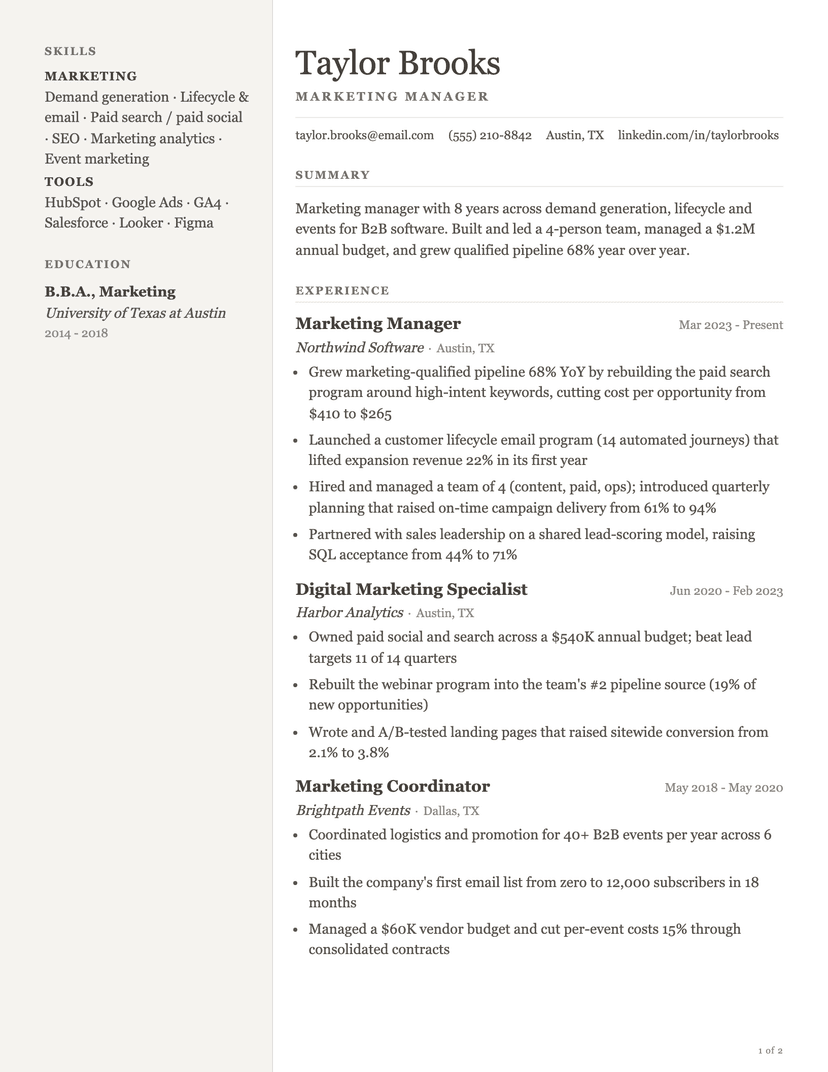
Pallas
serif · two-column
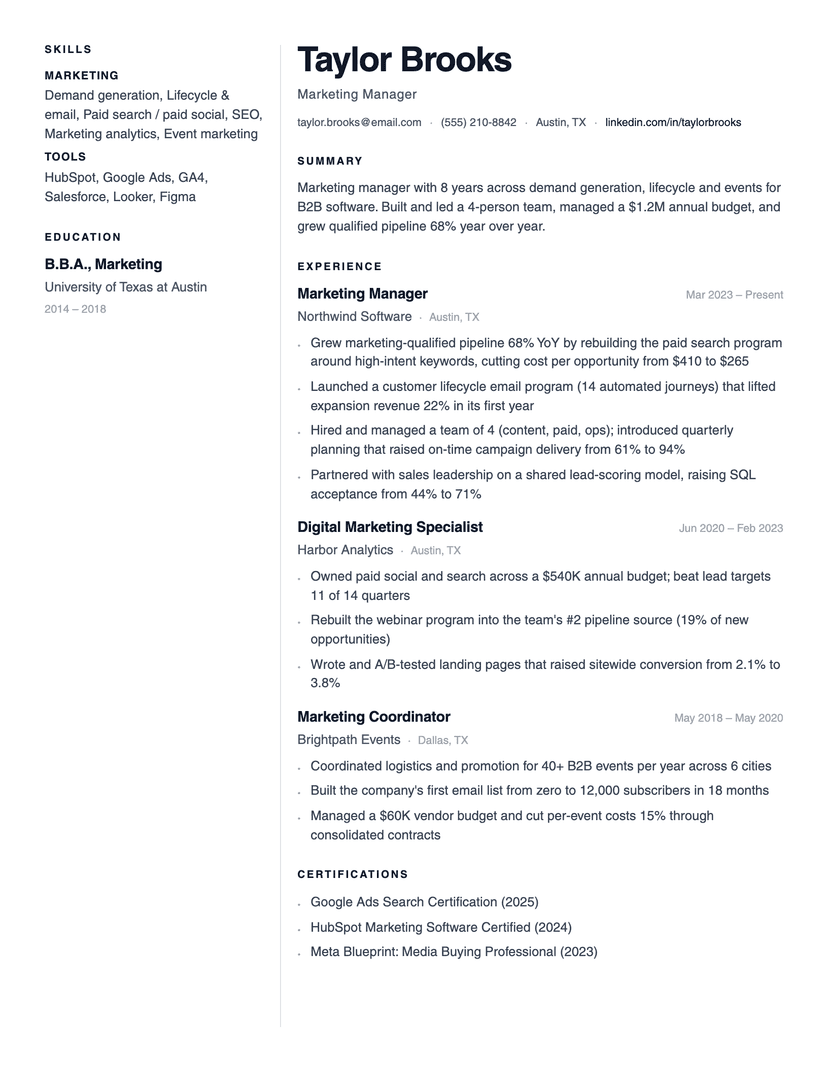
Lumen
minimal · two-column
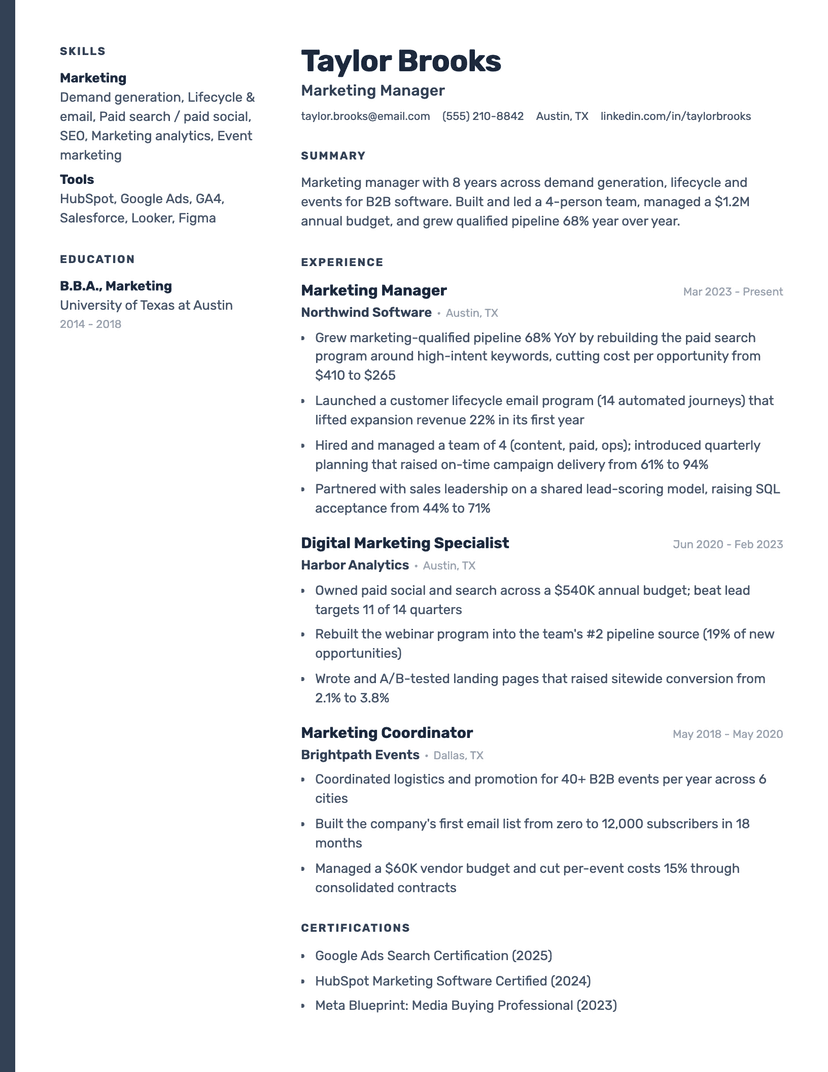
Slate Rail
two-column · modern
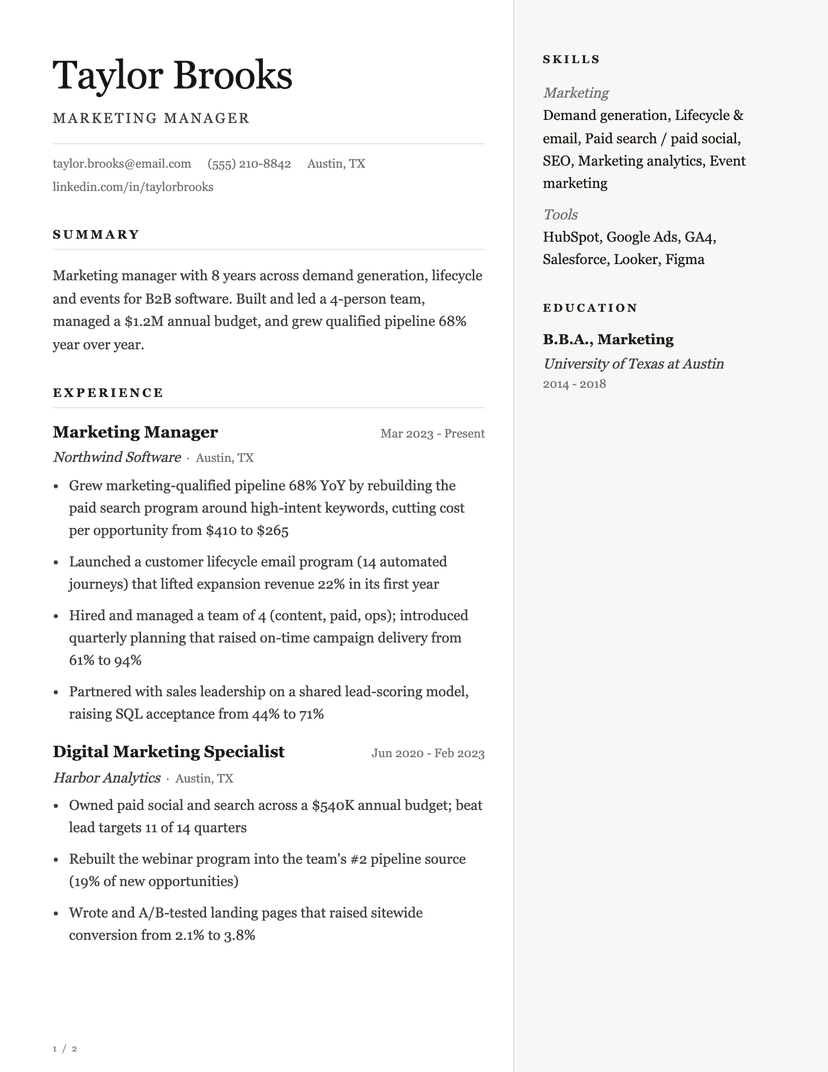
Ovation
serif · monochrome
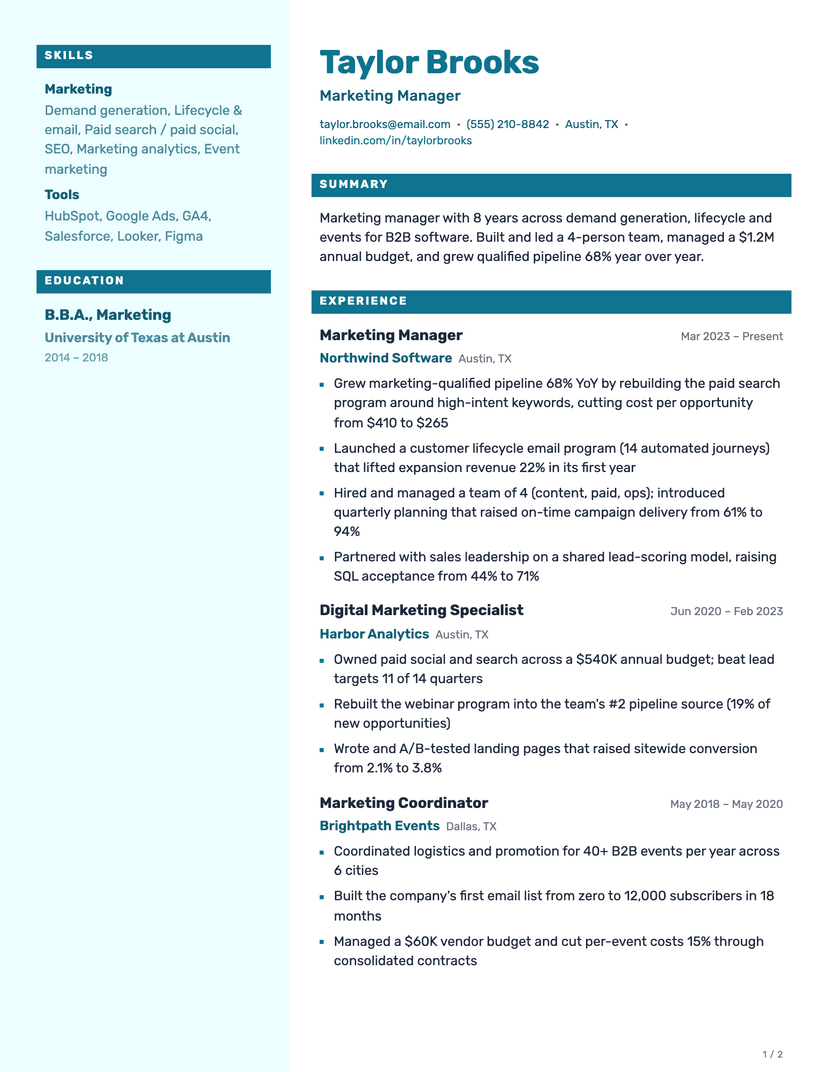
Fathom
two-column · modern

Aperture
two-column · modern
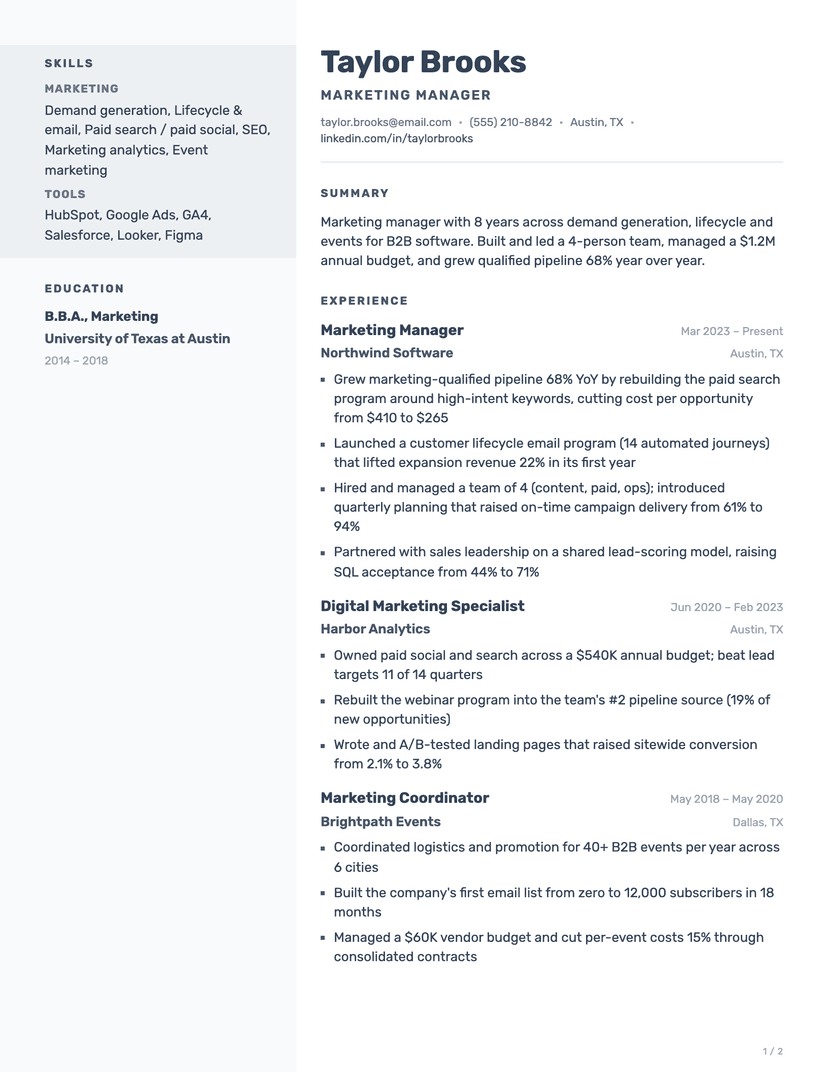
Cadence
two-column · modern
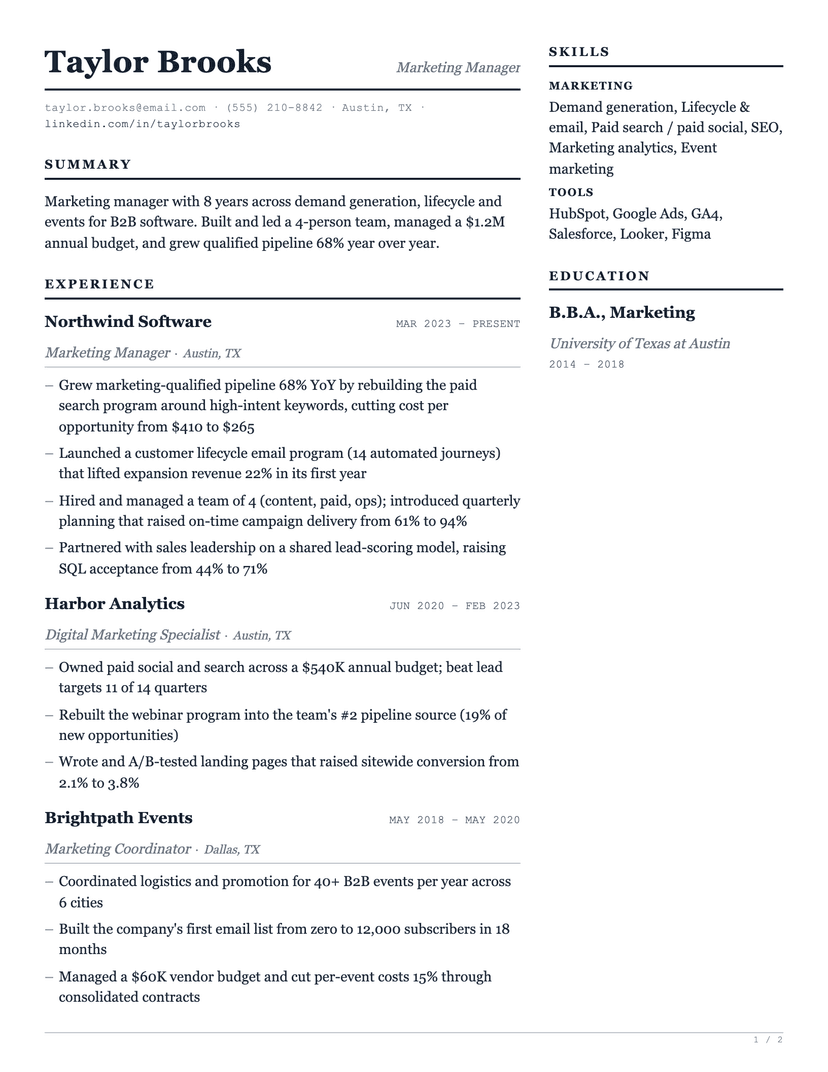
Ledger Two
two-column · serif

Porcelain
minimal · light
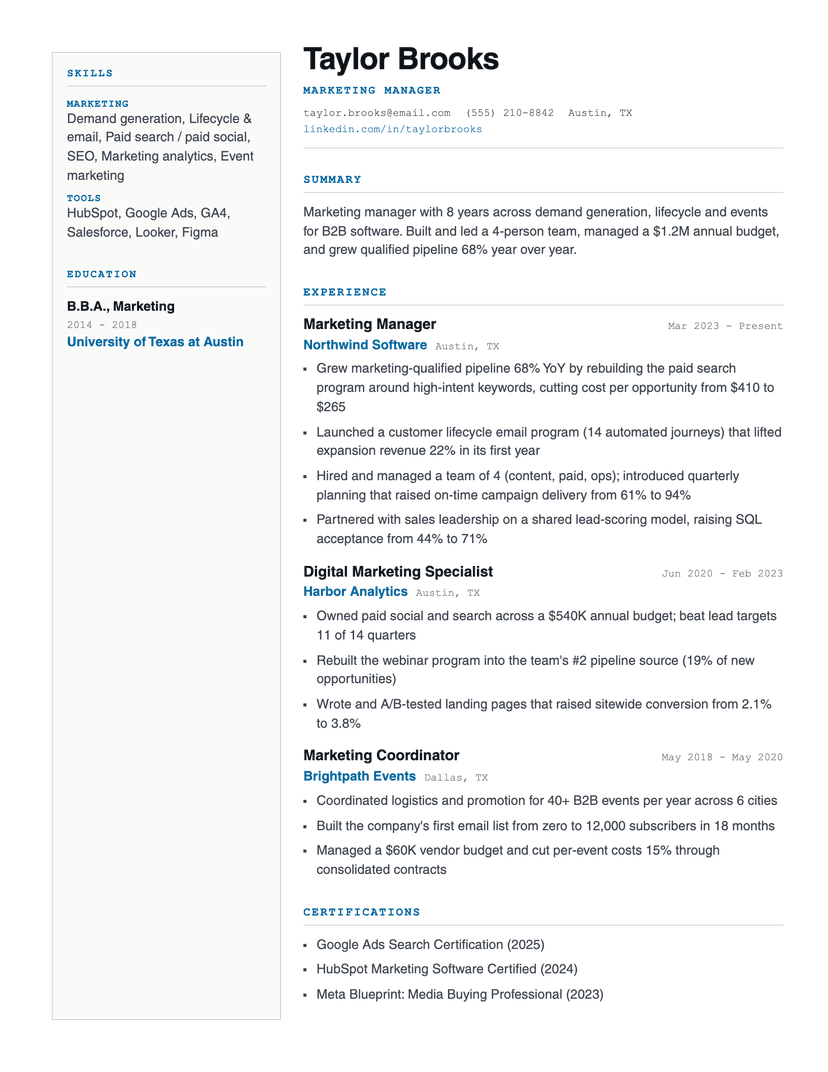
Foundry
two-column · technical
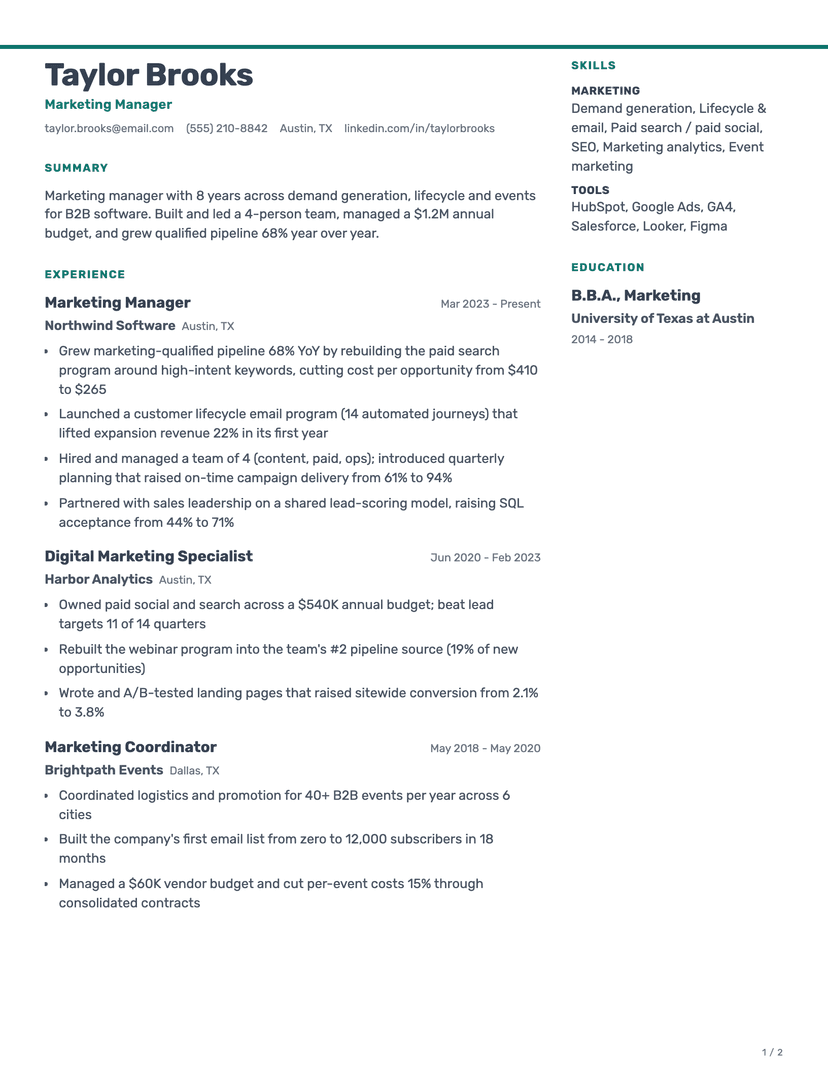
Halyard
two-column · modern
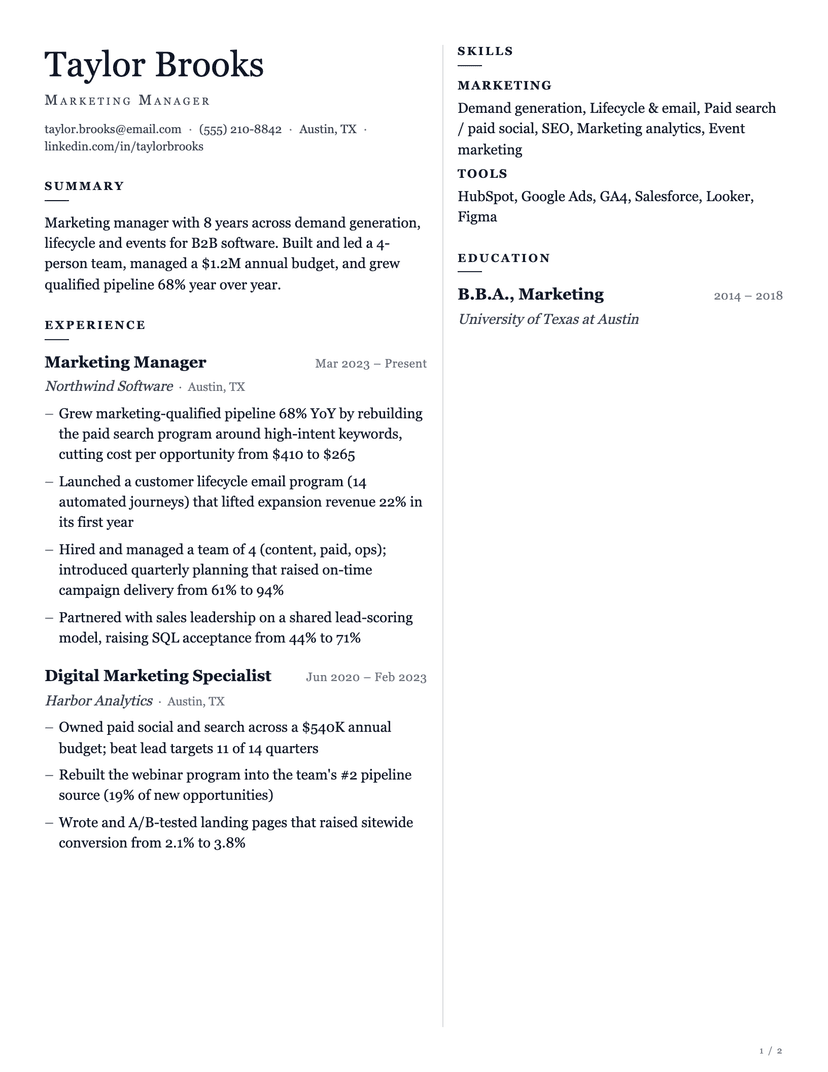
Corbel
two-column · serif
Writing a software engineer resume
Tech-stack keywords: match the posting, then prove it in a bullet
Engineering screeners — human and parser alike — match stack terms literally. If the posting says Go, Kubernetes and PostgreSQL, those exact words need to appear; "golang" usually still matches but "container orchestration" does not match "Kubernetes." Keep a compact skills section grouped by kind (languages / infrastructure / practices), and make sure every skill you'd defend in an interview also appears inside an experience bullet doing real work — "Cut p99 latency (Go, Redis)" is worth ten entries in a skills list.
Resist the 30-item skill dump. Senior engineers reviewing resumes read a long undifferentiated list as junior signal — it says you can't tell your core stack from things you touched once. Twelve to fifteen skills you'd happily whiteboard about beats an alphabet of frameworks.
Impact bullets: latency, scale, and money
The strongest engineering bullets pin the work to a system-level number: latency (840ms to 210ms p99), scale (2M orders/month, 30K requests/day), reliability (MTTD from 22 to 6 minutes), or money ($96K/year in licensing, $18K/quarter in refunds). "Improved performance of the checkout service" is unfalsifiable; "cut p99 checkout latency 75% on a 2M-order/month path" invites exactly the follow-up questions you want in an interview.
The parenthetical-stack pattern — result first, tools in parentheses — solves the keyword problem without stuffing: "eliminated duplicate-charge incidents (idempotency keys, Postgres advisory locks)." The reader gets the outcome, the parser gets the nouns, and the bullet stays one line.
Projects for early-career, and why the template source matters
If you have under ~3 years of experience, a projects section is your experience section's peer, not an appendix. The bar: each project should be linkable (GitHub repo or live URL), state its stack, and carry one number — stars, users, requests/day, dataset size. Two maintained projects with real usage beat eight tutorial clones; hiring engineers click the links, and a repo with a README, tests and recent commits is the most verifiable claim on the whole document.
Engineers distrust template mills for a concrete reason: those sites optimize for visual novelty — two-column layouts, icons, skill bars — which both parses worse and signals to engineering reviewers that you optimized the wrong thing. Jake's format won the community for the opposite reasons: dense, single-column, content-first, and born as an open LaTeX file engineers could read and modify. That's why this page reproduces the format exactly — the original's typeface included — instead of a lookalike built in a page editor.
Frequently asked questions
What resume template do software engineers actually use?+
The de-facto community standard is Jake's resume — a dense single-column LaTeX template that spread through GitHub and r/EngineeringResumes. This page's recommended template is a faithful implementation of that format — the original Computer Modern typeface included — downloadable as PDF, Word or Google Docs, with no LaTeX toolchain involved.
Do I need LaTeX or Overleaf to use Jake's format?+
No. The template here reproduces Jake's format exactly — including the Computer Modern typeface the original compiles in — and you edit it in the browser, then download PDF, Word or Google Docs. The LaTeX source is where the design came from, not something you need to install.
Should a software engineer resume include a projects section?+
Under about 3 years of experience: yes, and place it right after experience. Each project needs a link (GitHub or live), the stack, and one number — users, stars, requests/day. Past mid-level, projects earn space only if they're substantial (a maintained open-source tool, something with real users); otherwise let production work carry the resume.
How long should a software engineer resume be?+
One page up to roughly 8-10 years of experience — this is one of the few fields where the one-page norm is genuinely enforced, because the reviewers are engineers who prize density. Staff-plus candidates with patents, publications or a long open-source record can justify two; almost nobody else can.
What to actually write
The complete, annotated software engineer resume example — real bullets, not placeholders.
Templates for other roles
Already have a resume? See exactly what an ATS parses out of it.
Run the free ATS checker